If you could design a perfect city where everyone was happy, what would the first rule be?
Over a thousand years ago, a man named Al-Farabi wandered through the busy markets and quiet libraries of Baghdad, asking that exact question. He became so famous for his wisdom that people called him the Second Teacher, placing him right after the ancient Greek thinker Aristotle.
Imagine a world where books are so precious they are hand-copied by candlelight. In the 10th century, the city of Baghdad was the center of this world. People traveled for months on camels and horses just to reach its libraries.

Imagine the House of Wisdom in Baghdad. It is a massive building filled with thousands of scrolls from Greece, India, and Persia. Translators are working in every corner, turning ancient secrets into Arabic so the world can read them again.
Al-Farabi was one of these travelers. He was born in a place called Farab, in what we now call Kazakhstan. He was a quiet man who loved the outdoors, often seen wearing his simple Central Asian clothes while studying in the gardens of the palace.

Mira says:
"I love that he wore his traveling clothes even in a palace. It’s like he was always ready for the next big idea to arrive."
He didn't just want to read one type of book. He wanted to understand how everything fit together. He studied stars, math, medicine, and music. But most of all, he studied logic, which he called the tool that helps us tell the difference between what is true and what just sounds true.
The Rules of the Thinking Game
Al-Farabi believed that our minds work a lot like a language. Just as grammar has rules for how to build a sentence, logic has rules for how to build a thought. He called logic a universal language because it belongs to everyone, no matter what country they are from.

Logic is to the mind what grammar is to speech.
Think of logic like the blueprint for a house. If the blueprint is wrong, the house will fall down, no matter how pretty the paint is. Al-Farabi wanted to give people the best blueprints possible so their ideas would stay strong.
Try building a 'Logic Chain' like Al-Farabi. Start with two facts and see if they lead to a third one. For example: 1. All cats love to nap. 2. My pet Luna is a cat. Therefore: Luna loves to nap! This is called a syllogism.
He spent years studying the works of Aristotle, an ancient Greek philosopher who lived 1,200 years before him. While others found Aristotle difficult, Al-Farabi found him brilliant. He wrote long explanations of Aristotle's ideas to help other people understand them, which is why he earned his famous nickname.
The Science of Music
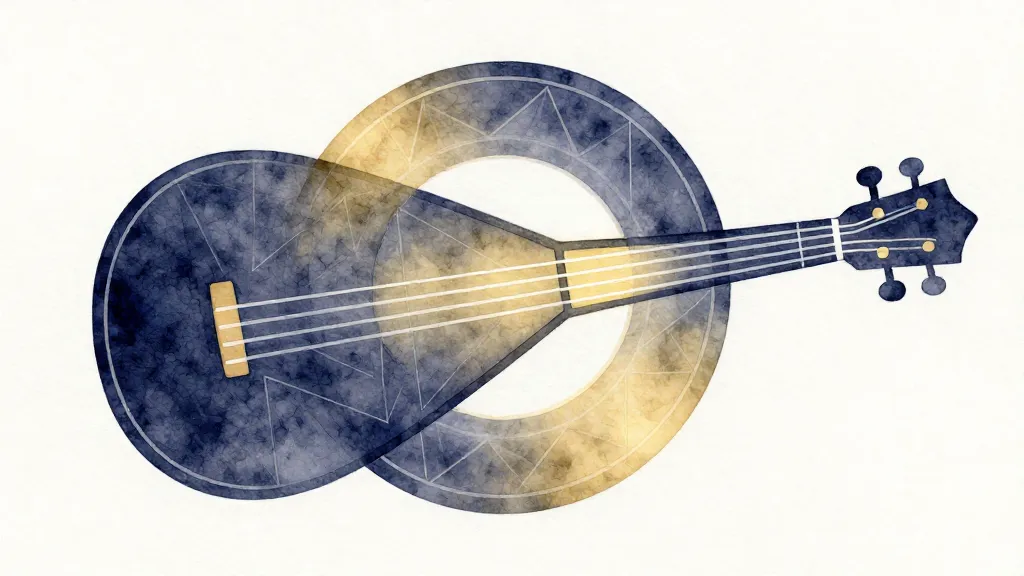
While he was a master of logic, Al-Farabi was also a famous musician. Legend says he could play his lute, called an ud, and make people laugh, cry, or even fall asleep just by changing the notes. But for him, music wasn't just about feelings: it was about math.

Finn says:
"Wait, so if I'm doing my math homework, am I technically practicing music? I wonder if a calculator can play a song."
He wrote a massive book called The Great Book of Music. In it, he explained how the vibrations of strings relate to numbers. He believed that when we hear a beautiful song, our souls are responding to the mathematical order of the universe.

Al-Farabi was such a talented musician that he is often credited with inventing the Rabab, a stringed instrument that is the distant ancestor of the modern violin!
He even invented new musical instruments! By combining his knowledge of physics and art, he found ways to create sounds that no one had ever heard before. He saw music as a bridge between the physical world we touch and the invisible world of our thoughts.
The Virtuous City
Al-Farabi’s biggest idea was about how we live together. He wrote a book called The Virtuous City. In this book, he compared a city to a human body. In a healthy body, every organ works together to keep the person alive and well.

The virtuous city resembles the perfect and healthy body, all of whose limbs cooperate to make the life of the animal perfect.
In a virtuous city, every person uses their unique talents to help the whole community. The baker, the teacher, the doctor, and the artist all have a role. If one person suffers, the whole city feels a little bit sick.
A leader should be a soldier who is strong enough to protect the city from enemies and keep everyone in line with strict laws.
A leader should be a philosopher who understands what is fair and uses wisdom to help people want to be good to each other.
But who should lead this city? Al-Farabi thought the leader should be a philosopher-king. This leader needs to be someone who is not only smart but also very kind. They must understand the deep truths of the world but also know how to explain them in stories that everyone can understand.
Mira says:
"The city-as-a-body idea is so interesting. It makes me think about how my classroom works. When one person is sad, the whole room feels different."
He believed the goal of a city wasn't just to be rich or powerful. The real goal was happiness. But for Al-Farabi, happiness wasn't just about having fun. It was the feeling of satisfaction you get when you understand the world and help others.
A Bridge Between Worlds
Al-Farabi lived during a time when people were trying to figure out if you could be a person of faith and a person of reason at the same time. Some thought you had to choose between religion and philosophy. Al-Farabi disagreed.
Al-Farabi was rumored to speak 70 different languages! While that might be a bit of an exaggeration, he definitely mastered many tongues to read the wisdom of different cultures.
He argued that there is only one Truth, but there are many ways to talk about it. Philosophy uses logic and proof, while religion uses symbols and stories. He believed they were like two different paths leading to the same mountain peak.

Happiness is the goal that every human seeks.
This idea was very bold. It meant that people from different religions could use logic to talk to each other. It made him a hero to later thinkers like Ibn Sina and even philosophers in Europe hundreds of years later.
Al-Farabi Through the Ages
Why Al-Farabi Matters Today
We still live in cities, and we still struggle to make them happy places. Al-Farabi reminds us that a community is only as strong as its logic and its kindness. He shows us that being a scientist and being an artist aren't two different things: they are both ways of exploring the wonder of being alive.
Something to Think About
If you were the architect of a Virtuous City, what is one thing you would change about the world to help people reach their true potential?
There are no right or wrong answers here. Al-Farabi believed that every city is different because every group of people is unique.
Questions About Philosophy
Why was he called the Second Teacher?
Did Al-Farabi believe in science?
What is his most famous book?
The Song of the Universe
Al-Farabi left us with a beautiful thought: that whether we are solving a math problem, playing a song, or helping a neighbor, we are all part of the same logical harmony. Next time you hear a piece of music, remember the scholar who believed those notes were the keys to a better world.
