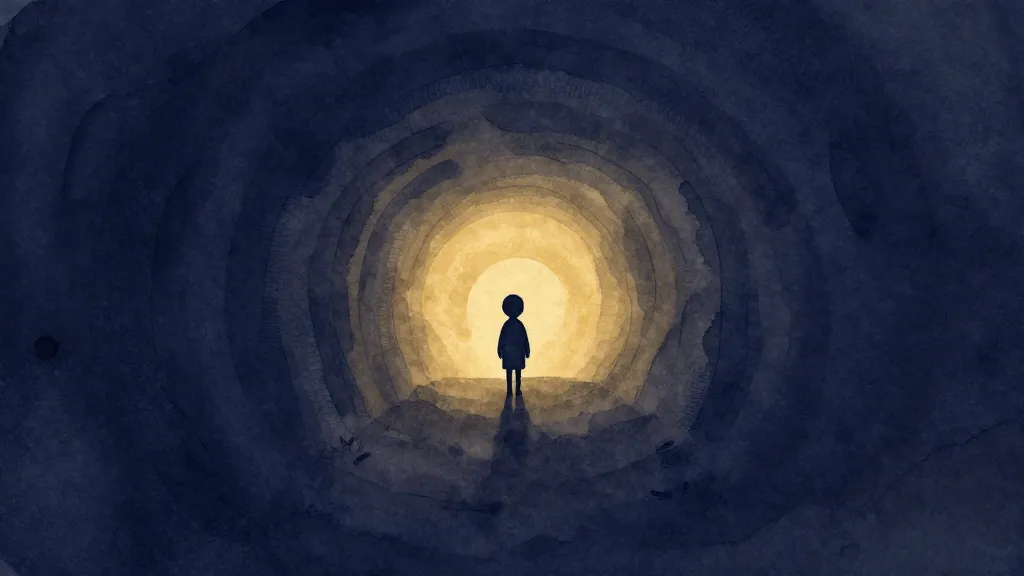
Imagine you have lived your entire life inside a dark room, watching shapes move across a wall.
This isn't just a spooky story: it is the Allegory of the Cave, one of the most famous ideas in the history of philosophy. Created by a man named Plato in Ancient Greece, this thought experiment asks us to wonder if the things we see every day are actually real.
Imagine a long, narrow cave that stretches deep into the earth. At the bottom of this cave, a group of prisoners has lived since they were children.
They are seated facing a stone wall, and they cannot turn their heads. Behind them, a great fire burns, casting a flickering orange light throughout the damp cavern.

Imagine the smell of damp stone and the sound of a crackling fire. You can't turn your head, so all you see is a flat gray wall where shapes of giant spiders and strange tall people flicker and dance in the orange glow.
Between the fire and the prisoners, there is a raised path. People walk along this path carrying objects: statues of lions, vases, and wooden trees.
As these people pass by, their shapes cast shadows on the wall in front of the prisoners. The prisoners watch these shadows dance and drift every single day.
The Only World They Know
Because the prisoners have never seen anything else, they believe the shadows are the real things. When a shadow of a bird passes by, they say, "Look, a bird!"
To them, there is no such thing as a three dimensional object or a real animal. There are only the flat, gray shapes on the stone wall.

Finn says:
"Wait, if they've never seen a real bird, would they even have a word for 'shadow'? Or would they just think that's what a bird is?"
If the people walking behind them talk, the sound echoes off the wall. The prisoners believe it is the shadows themselves that are speaking.
They might even have contests to see who can best predict which shadow will appear next. In their world, the person who knows the most about shadows is considered the smartest person in the cave.
The direction in which education starts a man will determine his future life.
The Great Escape
Now, imagine that one prisoner is suddenly released from his chains. He stands up for the first time in his life, feeling his legs shake and his joints ache.
As he turns around, the light from the fire hits his eyes. It is sharp and painful because he has only ever looked at the darkness.
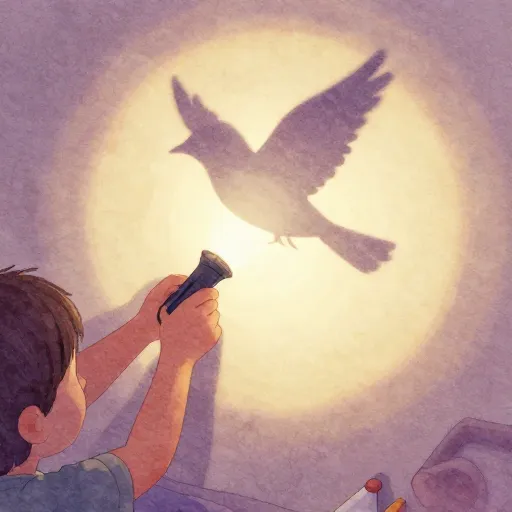
Try making shadow puppets on your wall tonight using a flashlight. See how the shadow of your hand looks totally different from your actual hand. Is the shadow 'real'? Or is it just a sign that your hand is there?
At first, he wants to turn back to the shadows because they are easier to look at. He might think the fire and the wooden objects are tricks or illusions.
But slowly, someone leads him out of the cave and into the world above. The transition is not easy, and his eyes sting with every step toward the surface.

Mira says:
"It reminds me of when you wake up from a really vivid dream. For a second, the dream feels more real than your actual bedroom."
Seeing the Sun
When he finally reaches the outside world, the sunlight is overwhelming. He has to look at reflections in the water first, then at the shadows of trees on the grass.
Eventually, his eyes adjust enough to look at the stars and the moon. Finally, he is able to look directly at the sun itself.
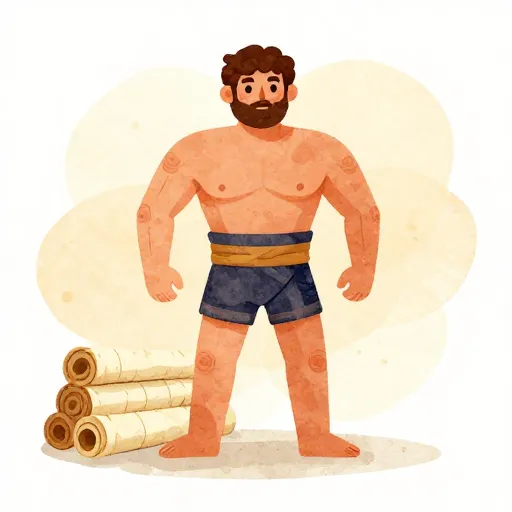
Plato wasn't his real name! It was a nickname that meant 'Broad' or 'Wide.' Some historians think it was because he had very broad shoulders from being a wrestler before he became a philosopher.
He realizes that the sun is the source of all light and life. It makes the plants grow and allows him to see the vibrant colors of the world.
He remembers the cave and the shadows of the wooden lions. He laughs when he realizes how small and gray his old world was compared to this one.
The Difficult Return
Plato tells us that the prisoner would feel sorry for his friends who are still in the dark. He decides to go back down into the cave to tell them the truth.
But there is a problem: his eyes are no longer used to the darkness. He stumbles and trips in the shadows as he makes his way back to his old seat.
The escaped prisoner is better off because he knows the truth about the world, even if the light hurts his eyes at first.
The people in the cave are happy and comfortable. Why should they have to suffer through the pain of the sun if they like their shadows?
When he tells the others about the sun, the grass, and the real lions, they laugh at him. They see him stumbling and think that his trip outside has ruined his eyesight.
They believe the cave is the only reality that matters. They might even become angry if he tries to pull them away from their comfortable shadows.
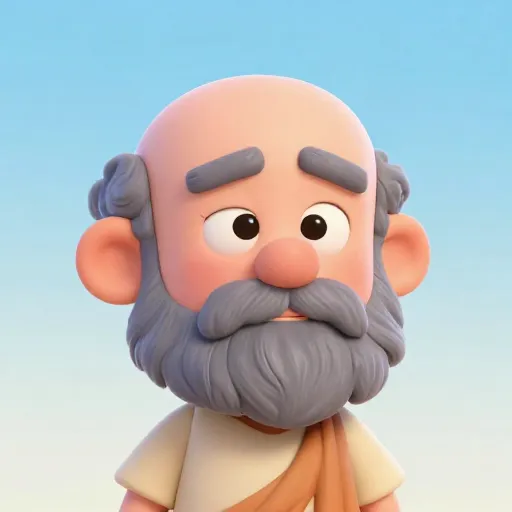
The unexamined life is not worth living.
Who Was Plato?
This story was written over 2,400 years ago in Athens, a city in Ancient Greece. It appears in a famous book called The Republic, which explores how to create a perfect society.
Plato was a student of another thinker named Socrates. Socrates was known for asking difficult questions that made people rethink what they knew.
Finn says:
"Plato's teacher Socrates was actually arrested for asking too many questions. I guess the people in the cave really didn't like being told they were wrong."
Plato used the cave as a way to explain the job of a philosopher. He believed that most people are like the prisoners, looking at "shadows" of the truth.
A philosopher is someone who tries to turn around and find the real source of light, even if it is difficult or painful at first.
Through the Ages
The story of the cave has traveled through time, changing how people think in every century. It is a story about wisdom and how we find it.
Through the Ages
In the modern world, we have our own versions of the cave. Some people think that social media or television screens are like the shadows on the wall.
We might see a picture of a place and think we know what it is like, but the real place is much bigger and more complex. Reality is often more than what we see at first glance.

The famous movie 'The Matrix' is actually a modern version of Plato's Cave! In the movie, people live in a computer simulation (the cave) and have to decide if they want to wake up to the real world.
Learning to See
Plato wasn't trying to say that the world we see is fake. Instead, he wanted us to realize that our perspective can be limited.
There is always more to learn and deeper truths to find if we are brave enough to keep asking questions. This process is called enlightenment, and it never really ends.
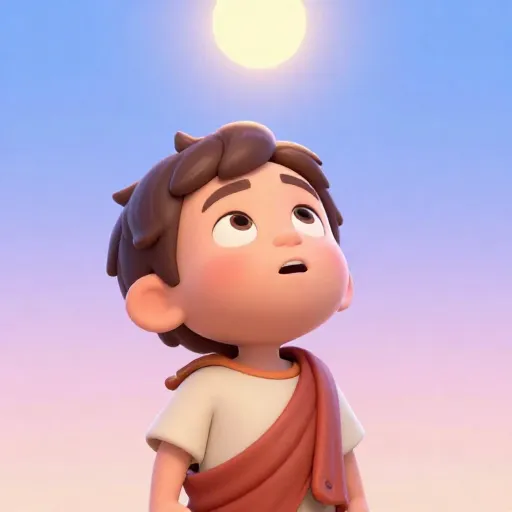
And when he remembers his first habitation... do you not suppose that he would felicitate himself on the change?
Something to Think About
If you were the prisoner who escaped, would you stay in the sunlight or go back to help your friends?
There is no right or wrong answer here. Some people think it is better to be safe and happy, while others think truth is the most important thing of all. What do you think?
When we learn something new, we are a bit like the prisoner stepping into the light. It might be confusing or even a little scary to change our minds, but it allows us to see the world as it truly is.
Philosophy is the tool we use to keep turning toward the sun, making sure we aren't just staring at shadows.
Questions About Philosophy
What is an allegory?
Why did the other prisoners laugh at the one who returned?
Is the Cave story a real historical event?
Keep Looking Up
The next time you look at a screen or a shadow on the wall, remember Plato's cave. The world is full of layers, and there is always something deeper to discover if you are willing to look behind the curtain. Keep asking questions, keep being curious, and never be afraid to step into the light.
