Have you ever wondered why we have manners, or why we feel a special duty to take care of our families?
Over 2,500 years ago, a teacher in China began asking how people could live in peace during a time of great chaos. His ideas grew into Confucianism, a way of life that focuses on harmony, respect, and the belief that everyone can become a better person.
Imagine living in a world where everything feels messy. Kingdoms are at war, neighbors do not trust each other, and it seems like nobody remembers how to be kind.
This was the world of a man named Kong Fuzi, whom we call Confucius today. He lived in ancient China during a time of constant fighting, but he did not think the answer was more war.
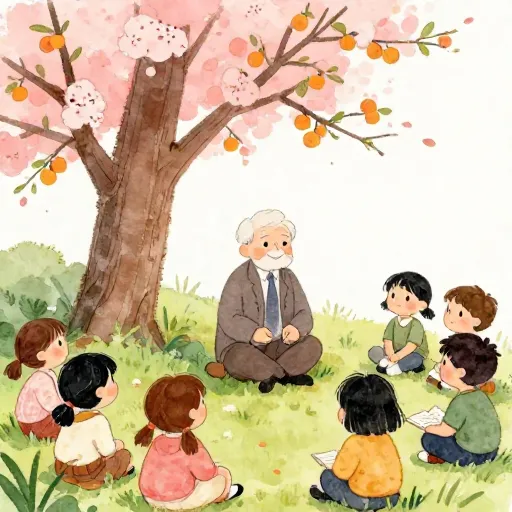
Imagine a dusty road in ancient China. A man sits under an apricot tree, surrounded by a small group of students. He isn't giving a loud speech: he is asking questions and listening to their answers. He doesn't have a palace or an army, just a collection of old books and a belief that humans can be better than they are.
Confucius believed that if people could fix their own hearts and their own families, the whole world would eventually find peace. He did not claim to be a god or a magician: he was a teacher who looked at the past to find a way forward.
He spent his life traveling, talking to leaders, and teaching students that being a good person is something you have to practice, just like playing an instrument or a sport.
The Heart of the Matter: Ren
At the very center of his teaching is a word called Ren. It is often translated as 'humaneness' or 'benevolence,' but you can think of it as the 'seed of kindness' inside every person.
Confucius believed that we are not born perfect, but we are born with the ability to care for others. Ren is what happens when we let that care grow until it guides everything we do.
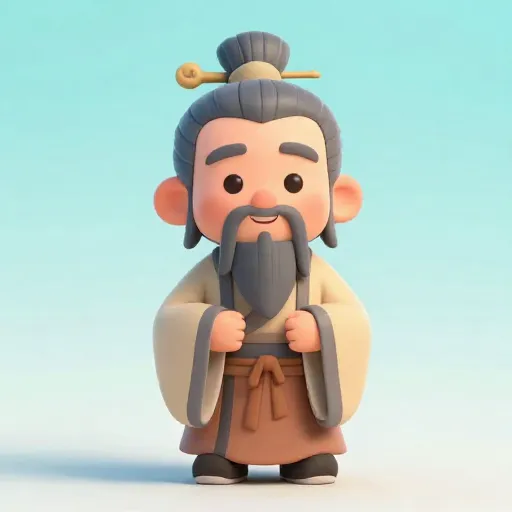
What you do not want done to yourself, do not do to others.
How do we grow this kindness? Confucius thought it starts with how we treat the people closest to us.
- If you are kind to your siblings, you are practicing Ren.
- If you help a friend without being asked, you are practicing Ren.
- If you think about how your actions affect others, you are practicing Ren.

Mira says:
"It's like he's saying that being kind is a skill. You aren't just 'good' or 'bad' by accident, you actually have to work at it every day, like practicing the piano!"
The Importance of Ritual: Li
If Ren is the feeling of kindness in your heart, then Li is the way you show it to the world. Today, we might use the word 'ritual' or 'etiquette' to describe this idea.
To Confucius, Li was like the choreography of a dance. It includes the way we greet people, how we eat our meals, and even the way we stand when talking to an elder.
Think of a 'ritual' you do every day, like the way your family says goodbye when you go to school or the way you set the table. For one day, try to do these things with extra focus and care. Does it change how you feel about the people you are with? Confucius would say you are practicing Li!
He believed that when we follow these shared rules, we show respect for one another. It is like a secret language that tells the people around us, 'I see you, and I value you.'
Without these small acts of politeness, Confucius worried that society would become rough and selfish. He thought that doing the right thing on the outside eventually helps us feel the right thing on the inside.
Family First: Xiao
One of the most famous parts of Confucianism is Xiao, or 'filial piety.' This is a fancy way of saying that we have a deep responsibility to love and respect our parents and ancestors.
In many modern cultures, we focus a lot on being independent and doing things our own way. But in the world of Confucius, you were never just an individual: you were a link in a long, long chain.
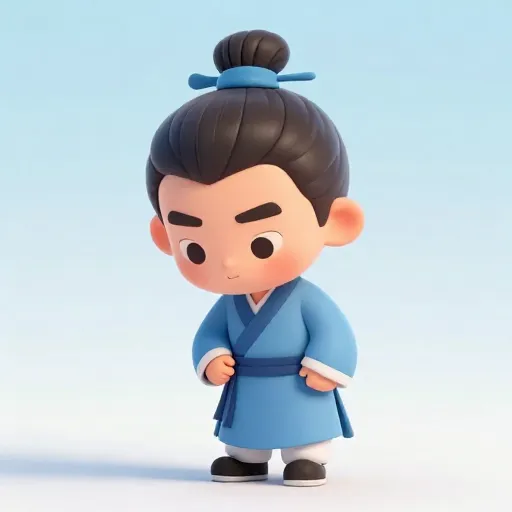
A youth, when at home, should be filial, and, abroad, respectful to his elders.
Confucius taught that the family is the 'school of love.' If you cannot learn to be kind and respectful to your parents, how can you ever be a good citizen or a wise leader?
- Children should care for their parents when they grow old.
- Families should remember their ancestors through stories and traditions.
- Respect flows upward from children to parents, but love also flows downward from parents to children.

Finn says:
"Wait, so if I'm nice to my little brother, I'm actually helping the whole world find peace? That's a huge responsibility for just sharing my Lego sets."
Becoming a Junzi
Confucius had a goal for all his students. He wanted them to become a Junzi, which means a 'superior person' or an 'exemplary person.'
Being a Junzi has nothing to do with how much money you have or what family you were born into. It is all about your character and your willingness to keep learning.
Confucius wasn't actually his real name! In China, he is known as Kong Fuzi, which means 'Master Kong.' The name 'Confucius' is a Latin version created by European scholars hundreds of years later.
A Junzi is someone who is always trying to do the right thing, even when no one is watching. They are humble, they admit when they are wrong, and they never stop trying to understand the world.
Confucius believed that the best leaders were not the strongest or the richest, but those who were the most virtuous. He thought that if a leader acted like a Junzi, the people would follow them naturally, like grass bending in the wind.
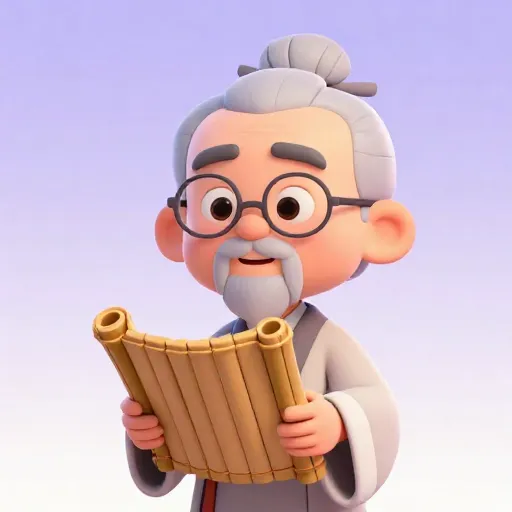
To know what you know and know what you do not know, that is true knowledge.
A World of Order
To make this all work, Confucius described five main relationships that hold society together. He believed that if everyone in these pairs did their duty, the world would be in balance.
- Ruler and Subject: The leader must be fair, and the people must be loyal.
- Father and Son: The father must be loving, and the son must be respectful.
- Husband and Wife: They must support and care for each other.
- Older Sibling and Younger Sibling: The older should be a good example, and the younger should listen.
- Friend and Friend: They should treat each other with honesty and equality.
Confucianism says that rules and rituals are necessary to keep us grounded and help us live together peacefully. Without them, we are just a collection of selfish individuals.
Taoism (another Chinese philosophy) suggests that too many rules make us stiff and fake. They believe we should be more like water - flowing naturally and following our own inner spirit.
Notice that in almost every relationship, there is someone with more experience and someone with less. Confucius believed that this order wasn't about being 'better' than someone else: it was about everyone knowing their part in the big human family.
When we know our place, we feel safe. When we feel safe, we can focus on being kind.
Through the Ages
The Power of Learning
Confucius loved books, music, and history. He believed that education was the only way to truly transform a person's life.
He was one of the first teachers in history to believe that education should be for everyone, not just for the children of kings. He welcomed any student who was eager to learn, even if they could only pay him with a bundle of dried meat.
Mira says:
"I love that he thought anyone could be a 'superior person' just by learning. It doesn't matter who your parents are, it only matters how much you care about the truth."
His students eventually collected his sayings into a famous book called the Analects. For thousands of years, students in China had to memorize this book to work in the government.
Even today, the idea that learning makes you a better person is a huge part of cultures in China, Korea, Japan, and Vietnam. This is often called the 'Confucian Heritage' of these countries.
Is Confucianism a Religion?
This is a tricky question that even grown-up scholars argue about! Confucius rarely talked about gods, spirits, or what happens after we die.
When people asked him about the afterlife, he often said that we should focus on living this life well first. Because of this, many people see Confucianism as a philosophy - a way of thinking and acting.
For nearly 2,000 years, if you wanted a job in the Chinese government, you had to pass a huge test on Confucianism. Some people studied for their whole lives just to pass it! It was the world's first 'civil service exam.'
However, because it involves rituals, honoring ancestors, and thinking about the 'Mandate of Heaven' (the idea that the universe wants us to be good), it feels like a religion to many people.
In the end, it might be both. It is a guide for how to be a human being, how to live in a family, and how to build a world where everyone belongs.
Something to Think About
If you could create one new 'ritual' for your family or school that would make people feel more respected, what would it be?
There isn't a right or wrong way to answer this. Confucius believed that every community needs its own ways to show kindness and order. What does your community need most right now?
Questions About Philosophy
Did Confucius write any books?
Is Confucianism only for people in China?
What did Confucius think about kids?
A Long Conversation
Confucianism isn't a list of dry rules: it is an ongoing conversation about what it means to be a good human being. It asks us to look at the people around us and ask, 'How can I make this relationship better?' Whether you are at the dinner table or on the playground, the 'Art of Living Together' is a project that never really ends.