
Can a person's character be more powerful than a king's army?
Over 2,500 years ago, a teacher wandered through the Warring States period of ancient China, searching for a way to bring peace back to a broken land. This man, known to us as Confucius, believed that the secret to a stable society wasn't found in laws or weapons, but in the small, daily ways we treat one another.
Imagine you are standing on a dusty road in the State of Lu in the year 510 BCE. Around you, the world feels shaky: kingdoms are fighting for power, and people have forgotten how to be kind. In the middle of this chaos, a man with a tall hat and a calm face sits under a tree, surrounded by students.
He is not talking about magic or spirits. He is talking about how to be a 'gentleman' or a 'superior person.' To him, this doesn't mean having a lot of money or a high title. It means having a heart that is trained to do the right thing.
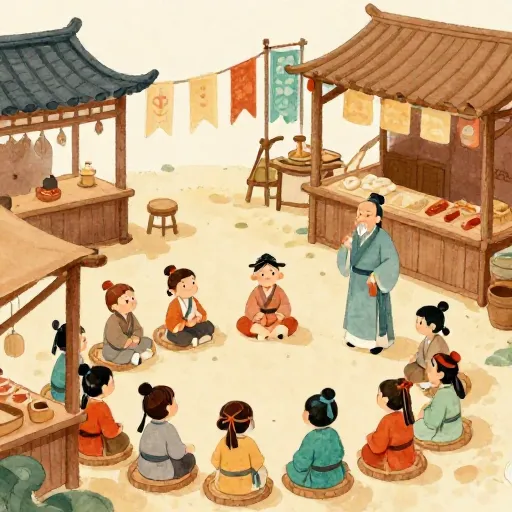
Imagine a dusty marketplace in 500 BCE. While most people are shouting about prices or politics, a small group of students is gathered around a man who is calmly explaining that being 'great' has nothing to do with how many horses you own, but how you treat the person selling you grain.
His name was Kong Fuzi, which we now call Confucius. He didn't write his ideas down in big books himself. Instead, his students listened to his conversations and later collected them into a book called The Analects.
This book is not a list of rules. It is more like a collection of snapshots: moments where the teacher explains how to live with balance and grace in a world that often lacks both.

Finn says:
"If Confucius lived in a time of war, I wonder if he ever felt scared that his 'kindness' ideas weren't strong enough to stop the fighting?"
The Muscle of Goodness
Confucius believed in a concept called Ren. This word is often translated as 'humaneness' or 'goodness,' but it is much more active than just being 'nice.' Think of it like a muscle you have to exercise every single day.
If you want to be a great runner, you don't just run once: you practice. Confucius taught that if you want to be a person of Ren, you have to practice seeing the humanity in every person you meet.
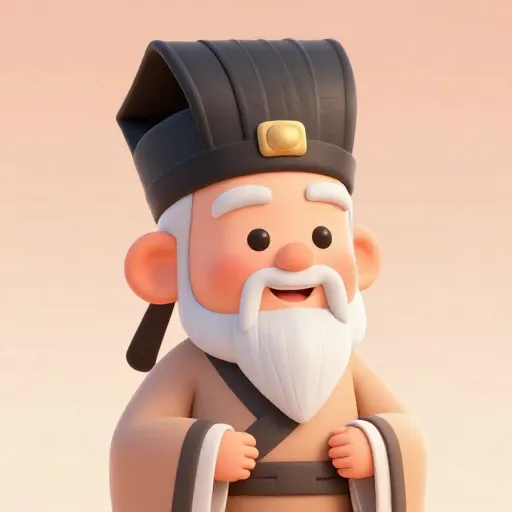
Everything has beauty, but not everyone sees it.
What does Ren look like in real life?
- It is stopping to help someone who has dropped their books.
- It is listening to a friend even when you want to talk about yourself.
- It is choosing not to join in when others are being mean.
We call him Confucius, but that's a Latin version of his name. In China, he is known as Kong Fuzi, which simply means 'Master Kong.' The 'Fuzi' part is a title of high respect for a teacher.
The Dance of Daily Life
If Ren is the feeling of goodness in your heart, then Li is the way you show that goodness to the world. The word Li translates to 'ritual' or 'proper conduct.'
When we hear the word ritual, we might think of big ceremonies with candles and robes. But for Confucius, Li was in the little things: how you greet your teacher, how you sit at the dinner table, or how you hand an object to someone with both hands to show respect.
Confucius believed rituals make life meaningful. Try creating a 'Family Li' for dinner tonight. Maybe it is a specific way you set the table, or a 'thank you' you say to the person who cooked the food. Notice how it changes the feeling of the meal.
He believed that these small gestures were like the steps of a dance. If everyone knows the steps, nobody bumps into each other. These rituals aren't about being stiff or boring: they are about creating a rhythm that makes everyone feel safe and respected.
Imagine a world where nobody ever said 'thank you' or 'excuse me.' It would feel jagged and sharp. Confucius taught that Li is the 'glue' that keeps the world from falling apart.

Mira says:
"I like the idea that saying 'please' is like a dance step. It makes the world feel like we are all part of a big, careful performance together."
Growing from the Roots
Confucius was very interested in where we first learn to be good. He decided that the 'root' of a person’s character is their family. He used the term Xiao, or Filial Piety, to describe the respect and care children should show their parents and ancestors.
- First, you learn to love and respect your parents.
- Then, that respect grows to include your teachers and elders.
- Finally, you treat all people in your community with that same care.
If the roots of the tree (the family) are strong, the branches (the society) will be healthy. He believed that a child who learns to be kind at home will naturally become a citizen who brings peace to the country.
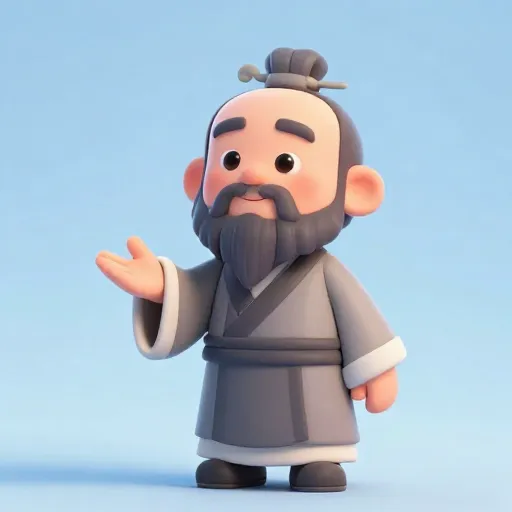
Our greatest glory is not in never falling, but in rising every time we fall.
The Silver Rule
You might have heard of the Golden Rule: 'Do unto others as you would have them do unto you.' Confucius had a version called the Silver Rule, which he thought was even more practical.
He said: 'Do not do to others what you do not want done to yourself.' It is a simple shift in thinking. Instead of guessing what might make someone happy, you simply think about what would hurt you, and you make sure you don't do that to anyone else.
Confucius believed that rituals, rules, and studying history are the best ways to keep society peaceful and people happy.
The Taoists believed that too many rules make people fake. They thought we should live simply and follow our natural instincts like animals do.
Becoming a Junzi
Confucius spent his whole life trying to become a Junzi. This is often translated as a 'noble person' or 'sage.' To him, a Junzi was someone who was always learning and always trying to improve themselves.
A Junzi doesn't blame others when things go wrong. They look inside themselves first. They are not perfect, but they are honest about their mistakes. In fact, Confucius said that the only real mistake is the one you don't learn from.
Finn says:
"He says a noble person looks at their own mistakes first. That sounds really hard to do when you're actually in an argument!"
A Different Way of Thinking
Not everyone in China agreed with Confucius. Some people, who followed a philosophy called Taoism, thought his focus on rituals and rules was too much. They believed people should be more like water: flowing and natural, rather than following a strict 'dance.'
Confucius, however, felt that humans need structure to thrive. He saw life as a garden: a garden needs a fence and a path (the rules) so that the beautiful flowers (the people) have a safe place to grow.
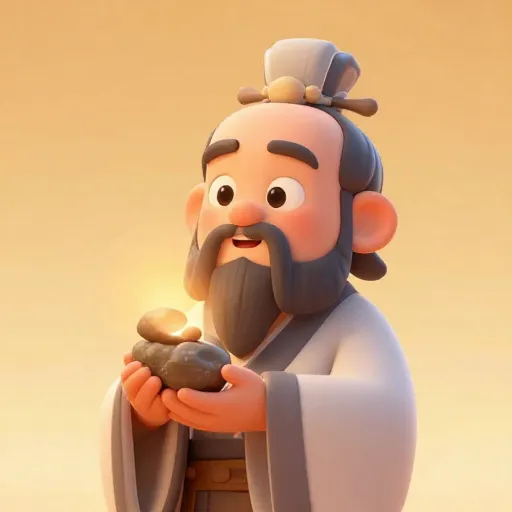
Better a diamond with a flaw than a pebble without.
The Long Journey of an Idea
Confucius died thinking he had failed because he never found a king who would fully listen to him. But after he died, his ideas became the foundation of Chinese life for thousands of years.
During the Han Dynasty, his teachings became so important that people had to pass Civil Service Exams based on his books to get a job in the government. His ideas traveled to Korea, Japan, and Vietnam, shaping how millions of people lived their lives.
The Journey of the Master's Ideas
Later on, thinkers created Neo-Confucianism, which blended his social ideas with deeper questions about the universe. Even today, when you see someone bowing out of respect or placing a high value on education, you are seeing the shadow of the teacher from the State of Lu.
Something to Think About
If you could design one 'ritual' that everyone in the world had to do every day to make things more peaceful, what would it be?
Confucius believed that small actions change the world. There is no right or wrong answer: just think about what small movement could make a big difference.
Questions About Philosophy
Was Confucius a god or a religious leader?
Why did he care so much about old traditions?
Did Confucius think girls could be 'Junzi' too?
A Path Without an End
Confucius once said that he was not a creator, but a 'transmitter' of ancient wisdom. He believed that the path to being a good person is a journey that lasts your entire life. It is a path made of small steps: a kind word here, a respectful gesture there, and the courage to keep learning when things get difficult. As you go about your day, you might find yourself practicing 'Ren' without even realizing it.
