Have you ever been told something that sounded just a little bit too strange to be true?
Maybe it was a rumor at school or a flashy commercial on TV. To find the truth, we need critical thinking, a mental toolkit that helps us decide what to believe and what to question using logic and evidence.
Imagine you are walking through a busy marketplace in Ancient Greece over two thousand years ago. The air smells like roasted lamb, dusty stone, and salty olives. People are shouting prices, and goats are bleating in the background. In the middle of this chaos, a man with a messy beard and no shoes is asking people very annoying questions.
This man is Socrates. He doesn't want to sell you a vase or a rug. He wants to know why you think the things you think. This was the birth of critical thinking, a way of looking at the world that values questions more than easy answers.

Imagine you are standing in the center of the Agora in Athens. To your left, a group of politicians is arguing about new laws. To your right, a philosopher is drawing circles in the sand to explain geometry. The sun is hot, and you can hear the clink of metal as a blacksmith works nearby. This was a place where ideas were as common as fruit and fish.
At its heart, this idea is about being a mental detective. Most of the time, our brains run on autopilot. We believe things because our friends believe them, or because they feel right in the moment. Critical thinking is the act of hitting the pause button.
It is the process of looking at a piece of information and asking: Is this true? How do I know? What if the opposite is also true? This might sound simple, but it is one of the most powerful things a human can do.

Finn says:
"If Socrates was always asking people questions, did he ever get in trouble for it? It sounds like he was being a bit of a pest, but in a good way."
Socrates believed that most people go through life like sleepwalkers. They follow rules and believe stories without ever wondering where they came from. He developed a style of questioning now called the Socratic Method.
Instead of giving a speech, he would ask a friend a simple question like: What is courage? When the friend gave an answer, Socrates would ask another question, then another, until they both realized that the topic was much deeper than they first thought.
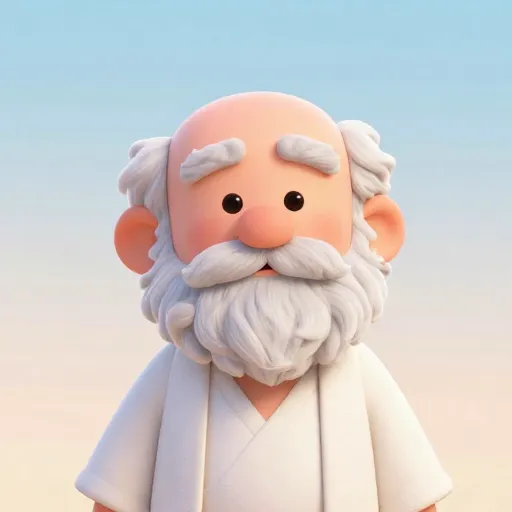
The unexamined life is not worth living.
In the modern world, we aren't usually standing in Greek marketplaces. Instead, we are standing in a flood of information from the internet, books, and advertisements. Critical thinking is the filter we use to catch the garbage and keep the gold.
To use this filter, we have to look for evidence. This is the proof that supports a claim. If someone tells you it is raining, the evidence is the sound of water hitting the roof or the sight of puddles. Without evidence, a statement is just a guess.
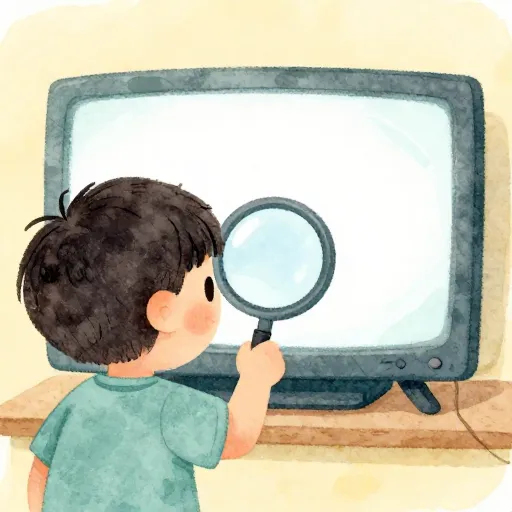
Next time you see a commercial for a toy or a snack, try to be a 'Fact Ninja.' Ask yourself: What is this ad actually saying? Are they showing me evidence that the toy is fun, or are they just using bright colors and loud music to make me feel a certain way? See if you can spot three things that aren't actually facts.
Sometimes, we stop thinking clearly because of bias. A bias is like a smudge on your glasses that makes you see things in a blurry or tilted way. Our brains love to find information that proves we are already right, which is called confirmation bias.
It feels good to be right, but it is much more interesting to be curious. A critical thinker tries to clean their glasses by looking for information that might prove them wrong. This is called intellectual humility, and it is a sign of a very strong mind.

Mira says:
"I noticed that when I'm really hungry, I'm much worse at thinking clearly. Maybe my stomach has its own bias for snacks!"
When you start to look at your own thoughts this way, you realize that many things we call facts are actually assumptions. An assumption is something we take for granted without checking. For example, if you see a dark cloud and assume it will rain, you are making a logical guess based on experience.
However, if you assume a new kid at school is mean because they look grumpy, you might be making a mistake. Critical thinking helps you separate what you actually know from what you are just guessing. It allows you to wait until you have more information before you make up your mind.

Education is not an affair of telling and being told, but an active and constructive process.
In the history of science, this kind of thinking led to the Scientific Method. About a thousand years ago, a thinker named Al-Hasan Ibn al-Haytham lived in Cairo, Egypt. He realized that our eyes and our brains can easily be fooled by shadows and light.
He argued that we shouldn't believe what we read in old books just because the authors were famous. Instead, we should perform experiments to see if the ideas actually work in the real world. He showed that being a skeptic, someone who doubts until they see proof, is the best way to find the truth.

The word 'critical' comes from the Greek word 'kritikos,' which means being able to discern or judge. It doesn't mean being mean or criticizing someone like you might do if you don't like their shoes. It means having the skill to tell the difference between what is solid and what is shaky.
The Journey of Critical Thinking
Critical thinking isn't just about being smart in a lab or a classroom. It is also about how we treat other people. When we use our thinking skills to understand someone else's perspective, we are practicing empathy.
By asking, Why does this person feel this way? we are looking past our own bubble. We might find that their logic makes sense from where they are standing. This doesn't mean we have to agree with everyone, but it means we understand that the world is big and full of different viewpoints.
Finn says:
"I wonder if robots can use critical thinking, or if they just follow the rules they were given. Can you be a critical thinker if you don't have feelings?"
One of the hardest parts of this journey is that it never really ends. There is no final level where you know everything perfectly. In fact, the more you learn, the more you realize how much you don't know.
This can feel a bit scary, but it is also exciting. It means the world is always full of mysteries waiting to be solved. If you keep your mind open and your questions ready, you will never be bored, because there is always a deeper layer to discover.

Reserve your right to think, for even to think wrongly is better than not to think at all.
Sometimes, people think that critical thinking means being negative or pointing out everyone else's mistakes. That isn't quite right. It is actually an act of care. By thinking carefully, you are showing that you value the truth enough to work for it.
You are deciding that your mind is your own, and you won't let it be filled with ideas that haven't been tested. This is the difference between being a passenger in your own head and being the driver. You get to decide which roads to take and which signs to follow.
I don't believe anything until I see proof. It is safer to doubt everything first so I never get fooled by a lie.
If I doubt everything, I might miss out on amazing things that are true. It is better to be open-minded and trust people first.
As you grow up, you will find that adults don't always have the answers either. Sometimes, the most honest thing a person can say is: I don't know, let's find out. This is where the real fun begins.
When we admit we don't know, we create space for a new idea to grow. Critical thinking is the garden where those ideas are planted, watered with questions, and pruned with logic. It is a lifelong habit of staying awake to the wonder of the world.
Something to Think About
If you had a 'Question Jar' where you could put one thing you want to test or investigate today, what would it be?
There are no right or wrong answers here. Thinking about what we don't know is the first step toward becoming a great thinker.
Questions About Philosophy
Is critical thinking the same as being smart?
Does critical thinking make you lose your imagination?
How can I practice critical thinking at home?
The Adventure of the Mind
Critical thinking is a skill that grows stronger every time you use it. It is like a muscle for your brain. By staying curious and being brave enough to ask 'Why?', you are joining a long line of thinkers who have changed the world. Remember, the goal isn't to win an argument: it is to get closer to the truth, and that is a journey that lasts a lifetime.
