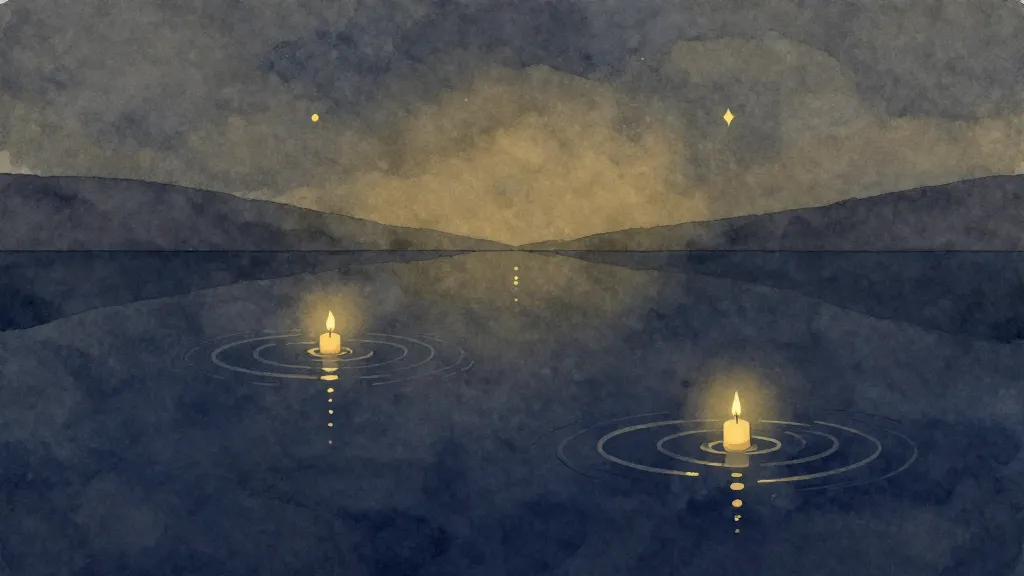
How do you know that the sun will rise tomorrow morning?
Most people would say they know because it happens every day. But a Scottish philosopher named David Hume asked if we can ever be 100% sure. He was a leader of the Enlightenment, a time when people started using science and reason to question everything they thought they knew.
Imagine walking through the streets of Edinburgh, Scotland, in the year 1740. The air is thick with the smell of coal smoke and the sound of horses clopping on cobblestones. This city was the heart of a movement called the Scottish Enlightenment.
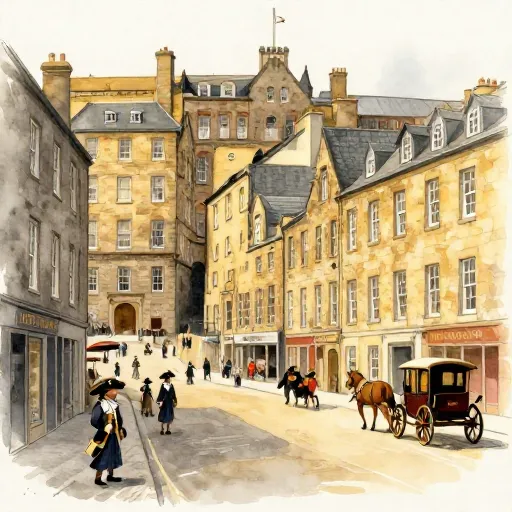
Imagine a city built on a giant rock, where the houses are so tall they block out the sun. In the 1700s, Edinburgh was so crowded that people lived in 'lands' - early skyscrapers made of stone. Scientists, poets, and philosophers lived right next door to blacksmiths and bakers, constantly meeting in coffee houses to argue about the stars and the soul.
In a small, crowded study filled with stacks of parchment, you might find David Hume. He was a man who loved good food, funny stories, and very difficult questions. He didn't want to just guess how the world worked: he wanted to find the evidence.
The Library of the Mind
Hume believed that when we are born, our minds are like empty rooms. To fill the room, we need to go outside and experience things. He called the things we feel right now impressions.

All our ideas are nothing but copies of our impressions, or, in other words, that it is impossible for us to think of any thing, which we have not antecedently felt.
When you bite into a sour lemon, that zingy, sharp feeling is an impression. It is bright, strong, and impossible to ignore. But when you remember that lemon the next day, the feeling is weaker. Hume called these faint memories ideas.
Finn says:
"So if I imagine a fire-breathing dragon, am I just mashing together my memories of a lizard, a campfire, and a bird? My brain is like a giant LEGO set!"
He argued that every single idea in your head, even the weirdest ones, comes from a real impression you had before. If you imagine a purple flying elephant, your mind is just mixing the color purple, the concept of flying, and the shape of an elephant together.
The Mystery of Cause and Effect
One of Hume’s most famous puzzles involves a game of pool, or billiards. Imagine a red ball sitting still on a green table. A white ball rolls toward it, hits it, and the red ball moves away.

Find two toys, like two cars or two blocks. Slide one into the other so the second one moves. Now, try to 'see' the power that made the second toy move. Can you see it? Or do you just see one toy stop and the other start? Hume says the 'power' is a ghost in our minds, not something we can actually see!
You might say the white ball caused the red ball to move. But Hume says if you look very closely, you never actually see the 'cause.' You see the white ball move, you hear a 'clack,' and then you see the red ball move.

Custom, then, is the great guide of human life.
We assume the first ball made the second ball move because we have seen it happen a thousand times. But Hume points out that we are just seeing one thing happen after another. We are filling in the blanks with our imagination.

Mira says:
"It's like watching a movie. We see a sequence of pictures and our brains turn it into a story. Hume is saying the real world might just be a lot of 'pictures' that we turn into 'causes' in our heads."
This is called the problem of induction. Just because something happened the same way in the past doesn't mean it must happen that way in the future. We can't prove the sun will rise tomorrow: we just expect it to because of habit.
The Great Guide of Life
If we can't be 100% sure about anything, how do we manage to get through the day? Hume had a very comforting answer. He said that even though our logic might be shaky, our nature is strong.

Hume was so famous for his doubting that people called him 'The Great Infidel.' However, he was so well-liked and friendly that even people who totally disagreed with him wanted to be his friend. He once said that he preferred to be a 'philosopher' in his study but a 'man' in the world.
We don't need a math equation to tell us to eat when we are hungry or to pull our hand away from a hot stove. We live by custom, a kind of mental shortcut that helps us navigate the world without overthinking every single step.
We are born with certain ideas already in our heads, like math or the idea of God. We use pure logic to find the truth.
We are born as blank slates. Everything we know comes from our five senses and the habits our brains form over time.
Hume thought that being a philosopher shouldn't make you grumpy or lonely. He believed that after a long day of thinking about deep mysteries, the best thing to do was to go play cards with friends or have a nice dinner.
Who Are You, Anyway?
If you look in a mirror, you see 'you.' But if you close your eyes and look inside your mind, what do you find? Hume tried this, and he found something very strange.
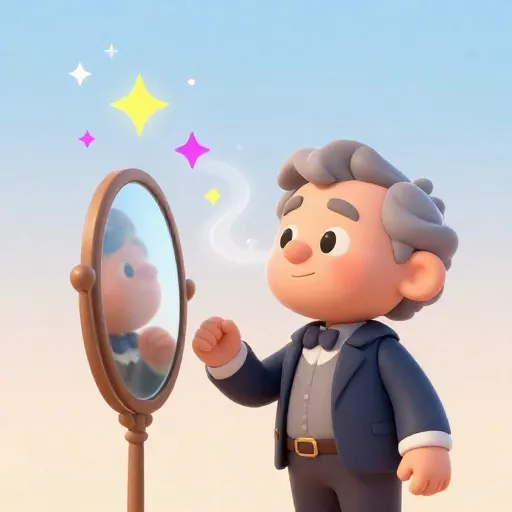
I may venture to affirm of the rest of mankind, that they are nothing but a bundle or collection of different perceptions, which succeed each other with an inconceivable rapidity.
He didn't find a permanent 'self' that stayed the same forever. Instead, he found a fast-moving stream of feelings: a bit of hunger, a memory of a song, a tickle on his nose, or a thought about tomorrow.
Finn says:
"If I'm a 'bundle of feelings,' then I'm literally a different person when I'm eating pizza than when I'm doing my homework. I like the pizza-me better!"
Hume called this the bundle theory. He argued that the 'self' is just a bundle of different perceptions following each other really fast. We are like a movie made of thousands of still pictures that look like they are moving.
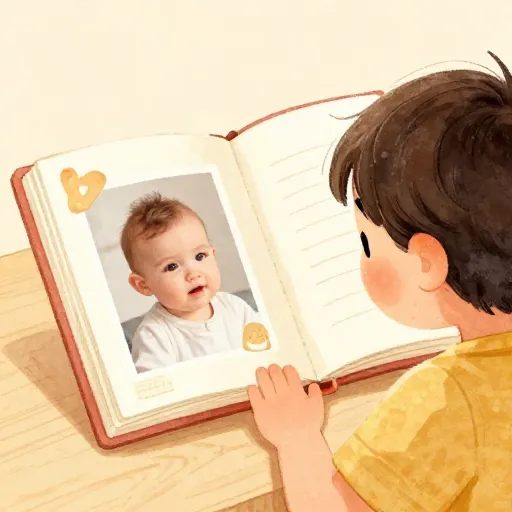
Look at a photo of yourself from three years ago. You look different, you probably like different things now, and many of the tiny cells in your body have been replaced. If everything about you has changed, what is the 'thing' that makes you the same person? Hume would say the only thing connecting you is your memory!
Why Hume Still Matters
Hume was a master of skepticism, which means he was careful about what he believed. He taught us that it is okay to say "I don't know" and that we should always look for evidence before we decide something is true.
The Journey of the 'Doubt' Idea
His ideas changed how scientists think about experiments and how psychologists think about the human brain. He showed us that the world is much more mysterious than it looks on the surface, and that wonder is the best way to start any journey.
Something to Think About
If you could never be 100% sure about the future, would that make the world more scary or more exciting?
There isn't a right answer here. Hume thought that admitting we don't know everything was the first step toward being truly wise and kind.
Questions About Philosophy
Did David Hume believe in anything?
What is 'Empiricism'?
Why did he talk about billiard balls?
Keep Wondering
David Hume showed us that even the most 'obvious' things in the world are worth questioning. By looking at the world with fresh eyes, he turned every day into a mystery waiting to be explored. The next time you see something happen, ask yourself: is it a 'cause,' or is it just a habit of the world?
