
Imagine you are walking down a quiet street and you spot a shiny, ten-dollar bill lying on the sidewalk.
There is nobody around to see you pick it up. This moment, where your brain starts weighing what to do next, is the beginning of Ethics, the branch of philosophy that explores how we decide what is right and wrong through Reason and reflection.
Imagine you found that money. One part of you thinks about the ice cream you could buy. Another part wonders if the person who lost it is worried. This tug-of-war in your mind is something humans have been doing for thousands of years.
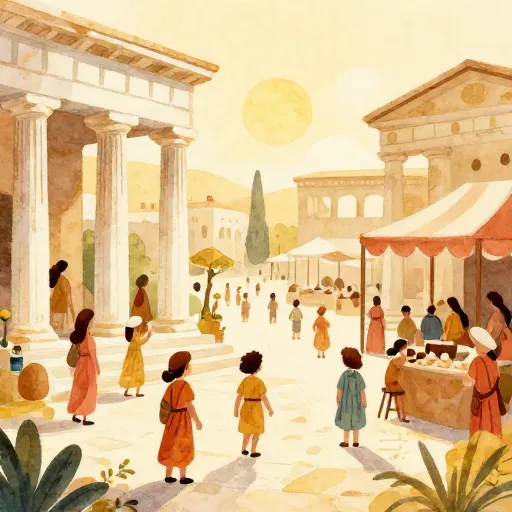
Imagine the busy marketplace in Ancient Athens. You smell roasting meat and salty olives. You hear hundreds of people arguing about politics and the price of grain. In the middle of it all, a man with no shoes is stopping people to ask them why they think they are good. This was the birthplace of Western ethics.
Scientists believe humans have always had a sense of fairness. Even in very ancient times, people had to work together to survive. If one person took all the food while others did the hunting, the group would fall apart. This basic need for balance grew into what we now call Morality, the set of rules or habits that help us live together.
But ethics is a bit different from just following rules. Rules tell you what to do, but ethics asks why you should do it. It is the difference between stopping at a red light because you don't want a ticket, and stopping because you care about the safety of other people.
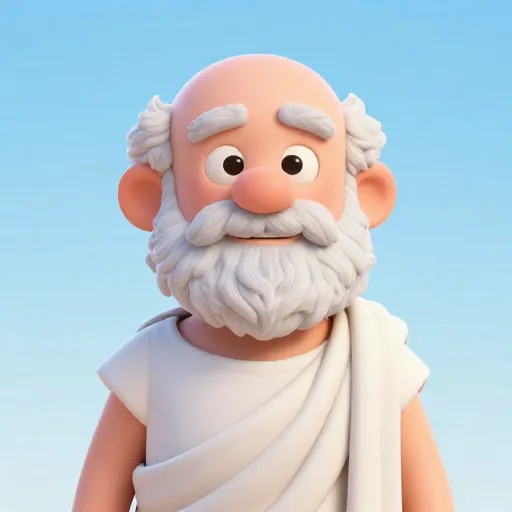
The unexamined life is not worth living.
The Sunny Streets of Athens
To see where these big questions really started to take shape, we have to travel back about 2,400 years to Ancient Greece. Specifically, we are going to the city of Athens. This was a place where people loved to talk, argue, and think in the open air.
There was a man named Socrates who spent his whole day in the marketplace, which was called the Agora. He didn't have a classroom or a textbook. Instead, he just walked up to people and asked them questions that seemed simple but were actually very hard. He would ask, "What is justice?" or "What is courage?"

Finn says:
"Wait, if Socrates just asked questions all day, how did he ever get anything done? What if he asked a question and the answer was just 'I don't know'?"
Socrates believed that we often do the wrong thing simply because we haven't thought about it enough. He thought that if we truly understood what was good, we would naturally want to do it. He called this the "unexamined life," and he thought it was very boring and even a bit dangerous.

The word 'Ethics' comes from the Greek word 'ethos,' which means 'character' or 'custom.' It originally described the way a group of people lived together in their home or 'haunt.'
His student, Plato, took these ideas further. Plato thought that being "good" was like seeing a bright light. Once you saw it clearly, you could never go back to living in the dark. But it was Plato's own student, Aristotle, who gave us one of the most practical ways to think about ethics.
Aristotle and the Golden Mean
Aristotle didn't think being good was about following a long list of laws. Instead, he thought it was about building a strong Character. He believed that we become good by doing good things over and over again until they become habits.
He came up with a famous idea called the Golden Mean. He noticed that most things in life have two extremes: too much or too little. Being a good person meant finding the perfect balance right in the middle.
The Broken Vase: Imagine you accidentally break a vase while playing. Nobody saw it. A 'Rule' person might say 'Always tell the truth.' A 'Consequence' person might think 'If I tell, my parents will be sad. If I don't, nobody is sad.' Which do you think is better? Why?
Take the example of courage. If you have too little of it, you are a coward. If you have too much, you are reckless and take silly risks. Courage is the "golden mean" in the middle. Aristotle thought we should use our minds to find that middle spot in everything we do.

Mira says:
"The 'Golden Mean' makes so much sense! It's like how a bowl of soup is bad if it's freezing or boiling, but just right when it's in the middle."
Why Do We Do It?
As time went on, thinkers started to disagree about the most important part of a choice. Is it the reason why you did it, or is it what actually happens as a result? This split created two of the biggest schools of thought in ethics.
One group, led later by a man named John Stuart Mill, focused on the Consequence. They believed that the right choice is whichever one creates the most happiness for the most people. This is called Utilitarianism.
Focuses on the ending. The best action is the one that makes the most people happy. If you have to tell a small lie to save a surprise party, you do it!
Focuses on the action itself. Some things, like lying, are always wrong. You should tell the truth even if it ruins the surprise, because truth is a duty.
Imagine you have one extra ticket to a movie. You could give it to your best friend, or you could give it to a new kid who has no friends at all. A utilitarian might say giving it to the new kid is better because it creates a bigger "jump" in happiness for the whole group.
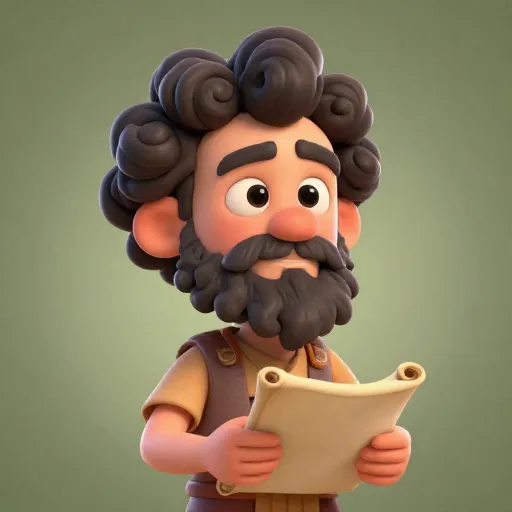
We are what we repeatedly do. Excellence, then, is not an act, but a habit.
On the other side was a thinker named Immanuel Kant. He didn't care about the results as much as the rules. He believed we have a Duty to do what is right, no matter what happens next. He came up with a test: before you do something, ask yourself, "What if everyone in the whole world did this?"
If the world would become a mess because everyone was doing it (like lying or stealing), then you shouldn't do it. Not even once. To Kant, being good meant being consistent and following your own internal laws.
Finn says:
"If I ask myself 'What if everyone did this?' before I ate a whole box of cookies, I think the world would have a serious cookie shortage. Does that make it wrong?"
Through the Ages
Ethics didn't stay in Ancient Greece or the libraries of Europe. It traveled around the world, changing as humans discovered new things about themselves and the planet.
Through the Ages
In the modern world, ethics has become even more complex. We now have to think about how our choices affect people on the other side of the ocean, or even the animals and plants that share our planet. This requires a lot of Empathy, the ability to understand and share the feelings of another person.
Some people think of ethics like a set of scales, weighing different interests. Others think of it like a mirror, reflecting the kind of person we want to be. There is rarely one "perfect" answer that everyone agrees on, and that is actually the point.
Almost every religion and culture in history has some version of the 'Golden Rule.' In ancient China, Confucius said: 'Do not do to others what you do not want done to yourself.' It is one of the most universal ethical ideas in human history.
The Hardest Choices
Sometimes, we face a Dilemma. This is a situation where there are two choices, and both of them feel a little bit right and a little bit wrong. Philosophers love these because they force us to look at our own values.
One of the most famous examples is the Trolley Problem. It asks if it is okay to hurt one person to save five people. It sounds like a math problem, but it is actually a heart problem. It asks us if every life is equal, or if we should always just count the numbers.

The moral life is not a matter of following rules, but of developing a sense of what is important.
When you face a hard choice, you are practicing Integrity. This means being the same person on the inside that you show to the world. It means doing the right thing even when you are pretty sure nobody is ever going to find out what you did.
Ethics isn't about being perfect. It is about being curious. It is about stopping for a second before you act and wondering, "What kind of world am I building with this choice?" Even if you don't have the answer yet, just asking the question makes you a philosopher.
Something to Think About
If you could make one new rule that every person in the world had to follow, what would it be?
There isn't a right or wrong answer here. Think about what would make the world feel better to live in, and then wonder if there might be any unexpected side effects to your rule.
Questions About Philosophy
Is ethics the same thing as the law?
How do I know if I'm being ethical?
Why do people disagree about what is right?
Your Internal Compass
Thinking about ethics doesn't mean you will never make a mistake. It just means you are paying attention. Every time you stop to wonder 'Is this the right thing to do?', you are joining a conversation that has been going on for thousands of years. Keep asking, keep wondering, and keep building the character you want to live with.
