Have you ever stood in the middle of a playground and suddenly wondered why you were there, or what you were supposed to be doing?
This feeling of wondering about your own place in the world is the starting point of Existentialism. It is a way of thinking that says you aren't born with a pre-written story, but instead, you get to create your own meaning through the choices you make every single day.
Imagine you are holding a brand new, perfectly white notebook. There are no lines, no pictures, and no instructions on the cover.
Most things in the world come with a purpose already attached to them. A hammer is made to hit nails, and a pencil is made to write words.
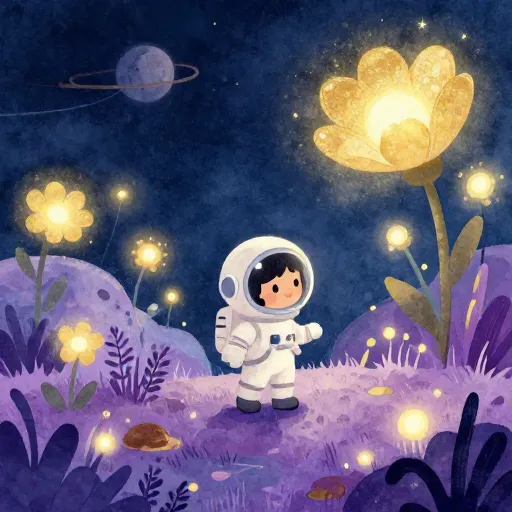
Imagine you are an explorer who has just landed on a brand-new planet. There are no roads, no signs, and no one there to tell you where to go. You have a backpack full of tools, but you have to decide which mountain to climb or which river to follow. This is what existentialists think being born is like.
But people are different. Existentialists believe that humans are the only things in the universe that show up first and figure out their purpose later.
This school of thought is called Existentialism. It suggests that your life is a project that only you can finish.
Finn says:
"If there's no instruction manual for being a kid, does that mean I'm allowed to just... figure it out as I go? That feels like a lot of pressure, but also kind of like a sandbox game where you can build anything."
The Café Philosophers
To understand where these ideas came from, we have to travel back to Paris, France, in the 1940s. The city was recovering from a long, difficult war.
People were tired of being told what to do by leaders and old traditions. They wanted to know if life still had a point after so much sadness.
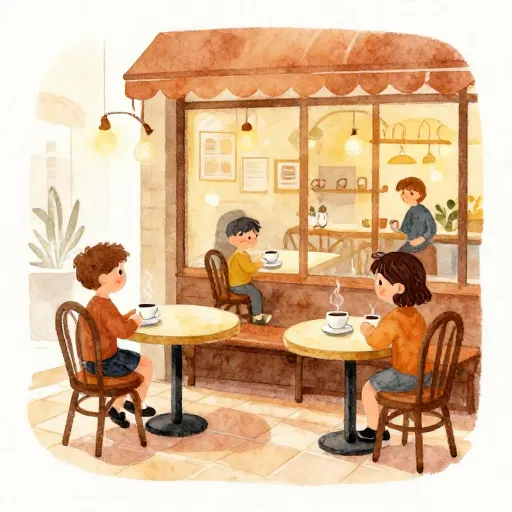
Sartre and de Beauvoir were famous for working in cafes like 'Les Deux Magots' in Paris. They didn't have quiet offices, so they wrote their world-changing books while people chatted and drank hot chocolate around them. Sometimes they stayed so long they almost felt like the furniture!
In small, smoky cafes along the River Seine, thinkers like Jean-Paul Sartre and Simone de Beauvoir sat for hours. They drank coffee, wrote on napkins, and argued about what it meant to be truly free.
They believed that because the world didn't give us a clear set of rules, we were responsible for making our own. This was a radical and exciting way to look at the world.
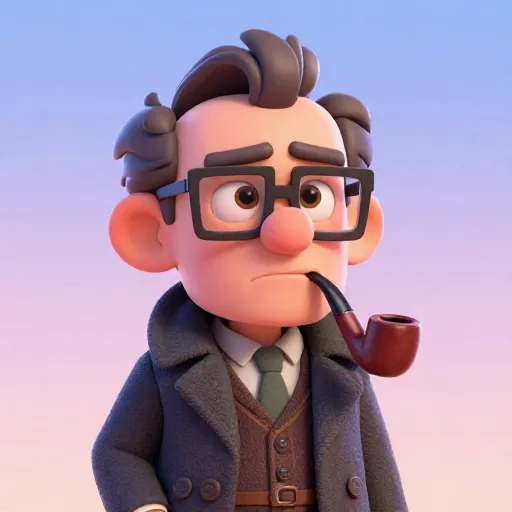
Man is condemned to be free; because once thrown into the world, he is responsible for everything he does.
Existence vs. Essence
Sartre had a famous phrase for this: "existence precedes essence." It sounds complicated, but it is actually a very simple idea about how things are made.
Think about a paper knife. Before someone makes it, they have an idea of what it is for: cutting paper.
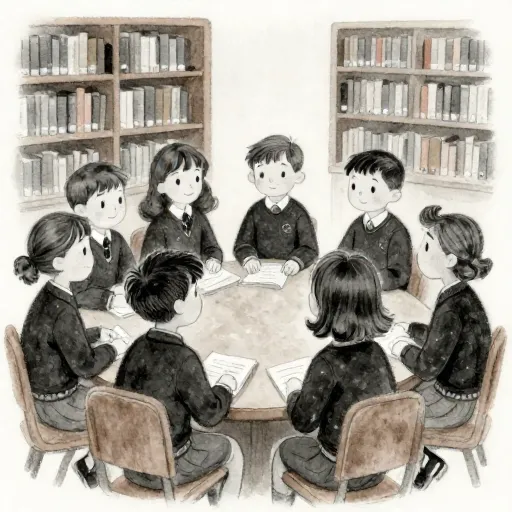
Existentialism became super popular with teenagers in the 1950s. They wore black turtlenecks, listened to jazz, and read philosophy books to show they were thinking for themselves and didn't want to just be like their parents.
That idea is its essence. Its purpose is decided before it even exists in the real world.
But Sartre argued that for a human being, there is no pre-made plan. We exist first, and then we define who we are through what we do.

Mira says:
"I like the idea that I'm not a 'thing' like a chair. A chair can't decide to become a bookshelf one day, but I can decide to be a scientist this morning and a poet by dinner time. My 'essence' is always changing."
The Dizziness of Freedom
Being the author of your own story sounds wonderful, but it can also feel a bit overwhelming. Philosophers call this feeling anxiety or "dread."
It isn't a bad kind of anxiety, like being scared of a spider. It is more like the dizzy feeling you get when you stand on a high diving board.
The Blank Page Challenge: Take a piece of paper and a pen. Sit for two minutes without anyone telling you what to draw or write. Notice how it feels. Is it exciting to have total freedom, or is it a little bit scary to start from nothing? That feeling is exactly what existentialism is all about.
Søren Kierkegaard, a thinker from Denmark, called this the "dizziness of freedom." He realized that when you have infinite choices, it can be hard to pick just one.
If you can be anything, how do you know if you are making the right choice? Existentialists say there is no "right" choice hidden in the stars: there is only the choice you make and the responsibility you take for it.
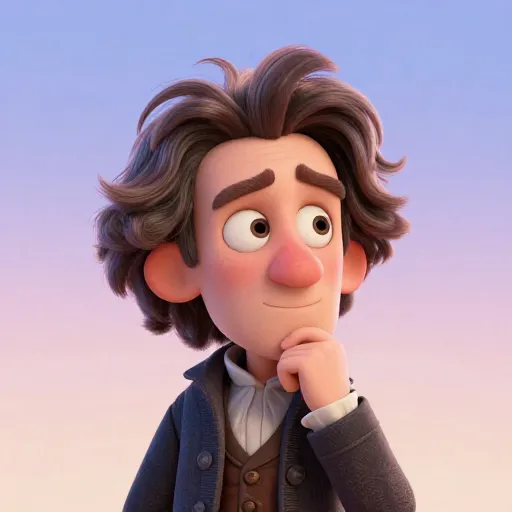
Life can only be understood backwards; but it must be lived forwards.
The Absurd and the Coffee Cup
Another famous existentialist was Albert Camus. He was interested in something he called the absurd.
The absurd is what happens when humans try to find clear meaning in a universe that doesn't seem to have any. It is like asking a question to a room that stays completely silent.
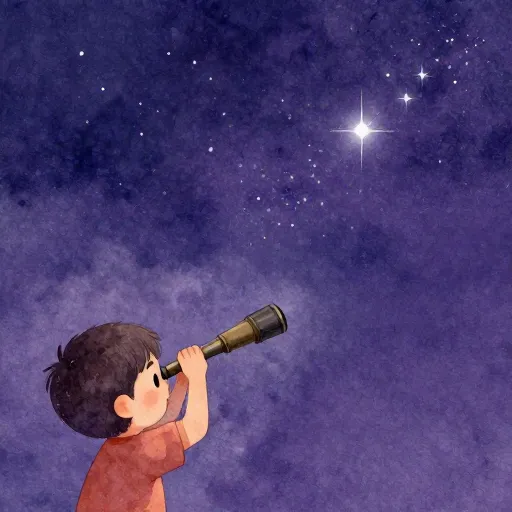
Think about a time you tried to find your favorite toy in a messy room, but you couldn't find it anywhere. You kept looking and looking, even though it felt impossible. Camus says life is like that search. Even if the 'meaning' is hard to find, the act of looking is what makes us truly alive.
Camus used an old Greek myth about a man named Sisyphus to explain this. Sisyphus was punished by the gods and had to roll a giant rock up a hill, only for it to roll back down every time he reached the top.
Instead of being sad about it, Camus said we should imagine Sisyphus was happy. He was happy because he owned the task, and he kept going anyway.
The struggle itself toward the heights is enough to fill a man's heart. One must imagine Sisyphus happy.
Being Your Real Self
One of the biggest goals in existentialism is authenticity. This means being your true self instead of just following the crowd or doing what others expect.
It is very easy to act like a character in someone else's play. You might dress a certain way because your friends do, or say you like a movie just because it is popular.
Finn says:
"So being 'authentic' is like when I play the music I actually like, even if my friends think it's weird? It's like choosing to be the main character of my own life instead of a background extra in theirs."
Existentialists call this "bad faith." It happens when we pretend we don't have a choice, or when we hide our true subjectivity (our personal way of seeing the world).
To be authentic, you have to look at your own life and ask: "Is this what I actually want to do, or am I just following a script?"
Everything happens for a reason. Your life has a destiny or a 'plan' that you are meant to follow, like a character in a movie script.
There is no pre-written plan. You are the writer of the movie, and you decide what happens in the next scene based on your own values.
Through the Ages
Existentialism didn't just appear out of nowhere. It grew over a long time as people started to look at the world differently.
Existentialism Through the Ages
Why it Matters Today
Even though these ideas are decades old, they matter more than ever. We live in a world where screens and ads are constantly trying to tell us who to be and what to buy.
Existentialism reminds us that we have a secret power. We are the ones who decide what is valuable.
If you decide that collecting odd-shaped rocks is the most important thing in the world, then for you, it is. You create the value by giving it your attention and your time.
It can be a bit scary to realize that the universe doesn't have a map for you. But it is also the ultimate adventure because it means you get to do the drawing.
Something to Think About
If you were the only person in the world who could decide what was 'good' or 'important,' what would you choose to value most today?
There are no right or wrong answers here. In existentialism, your answer is true because you are the one choosing it.
Questions About Philosophy
Is existentialism just about being sad?
Do existentialists believe in rules?
How can I practice existentialism as a kid?
The Pen is in Your Hand
Existentialism can feel like a heavy backpack at first because it puts so much responsibility on us. But once you get used to the weight, you realize it's actually the weight of your own wings. You aren't just a passenger in your life: you are the pilot, the navigator, and the one who decides where the journey ends. What will you choose to do next?
