
Have you ever wondered why we choose the friends we do, or why some friendships feel like they could last forever while others fade away?
For thousands of years, humans have treated friendship as one of life's greatest mysteries. Philosophers have studied the virtue of kindness, the power of empathy, and the balance of reciprocity to understand how we connect with one another.
Imagine you are walking through a city made of white marble under a bright, hot sun. The year is 330 BCE, and you are in Athens, Greece. People are everywhere: merchants shouting about olives, goats bleating in the streets, and groups of thinkers gathered under the shade of long porches called stoas.
In a quiet garden just outside the city walls, a man named Aristotle is walking with his students. He doesn't sit behind a desk: he walks while he teaches because he believes moving helps the mind work. He is talking about something he calls Philia, the Greek word for the deep bond of friendship.
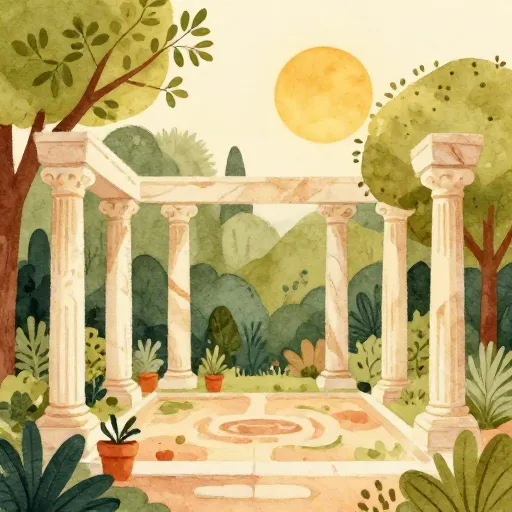
Imagine you are in the Lyceum, Aristotle's school. Instead of sitting at desks, you are walking through rows of plane trees. The air smells of dry grass and dust. Your teacher isn't looking at a book: he's looking at you, asking what you think it means to be a good person. This was the birthplace of some of our biggest ideas about friendship.
Aristotle believed that being a good friend was not just a nice thing to do. He thought it was a skill you had to practice, like playing an instrument or training for a race. To him, friendship was the highest form of virtue, which means acting with excellence and goodness.
He watched how people interacted and realized that not all friendships are the same. Some people are friends because they enjoy playing the same games, while others are friends because they help each other with homework. He started to categorize these connections into three distinct levels.

Mira says:
"If I only like a friend because they have a pool, am I actually friends with the pool instead of the person?"
The first level he identified was the friendship of utility. This is a friendship where both people get something useful out of the relationship. In the ancient world, this might have been two merchants who helped each other sell grain: today, it might be the person you partner with for a science project because they are great at drawing diagrams.
These friendships are important, but Aristotle noticed they often end when the task is finished. If you only talk to someone because they have a cool video game, the friendship might fade once you finish the game. This is not a bad thing: it is just a simple, practical level of connection.
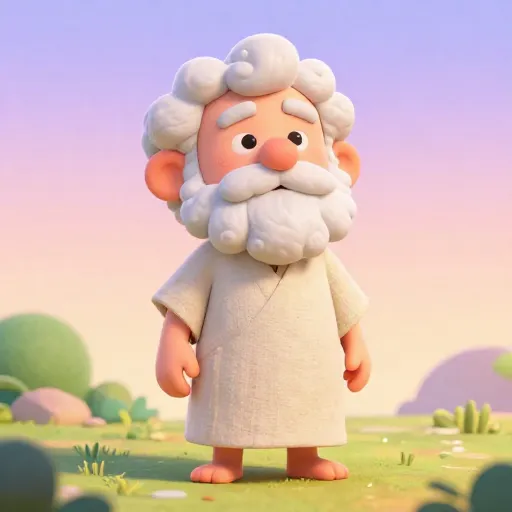
What is a friend? A single soul dwelling in two bodies.
The second level is the friendship of pleasure. This is the type of friend you have because they make you laugh or because you both love the same soccer team. You spend time together because it is fun, and the feeling of being together is delightful.
Many of our earliest friendships start here. We find someone who shares our sense of humor or our love for building complex block towers. Aristotle thought these were wonderful, but he warned that people change. If the thing you both find fun changes, the friendship might have to change too.
Friendship is best when the other person is exactly like you. You like the same things, think the same way, and never have to explain yourself because they already 'get' it.
Friendship is best when the other person is totally different. They challenge your ideas, show you new worlds, and help you see things from a perspective you never would have found alone.
The third and highest level is the friendship of character. This is what Aristotle called a "perfect" friendship. In this bond, you don't just like what the person does or what they have: you like who they are on the inside. You want what is best for them, even if it doesn't benefit you at all.
In a character friendship, you see your own goodness reflected in the other person. You help each other become better people. This type of connection takes a long time to build because you have to truly know someone's heart. It is rare, but it is the kind of friendship that can last a lifetime.

Finn says:
"I wonder if you can have a character friendship with someone you've never actually met, like a pen pal or a person in a book?"
As the centuries passed, the way we thought about friendship shifted. During the Renaissance, a time of great art and new ideas in Europe, a French writer named Michel de Montaigne took Aristotle's ideas even further. He had a best friend named Etienne, and when people asked why they were so close, he struggled to explain it.
Montaigne believed that at the heart of a great friendship is a mystery. It isn't just about sharing hobbies or being useful. Instead, it is a feeling that your soul and your friend's soul have mixed together so much that you can't see the seam where they joined.
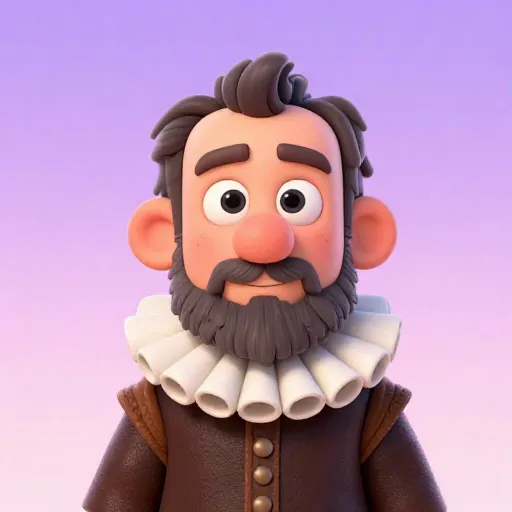
If you press me to say why I loved him, I can say no more than because it was he, because it was I.
This idea introduces us to vulnerability. To be a truly great friend, you have to be willing to show your real self: the parts that are scared, the parts that are messy, and the parts that aren't sure of the answer. This is where the warmth of friendship really grows.
When you are vulnerable, you give your friend a gift: the gift of trust. In return, they provide a "holding space" for your feelings. This means they listen without trying to fix everything right away, allowing you to just be yourself without being judged.
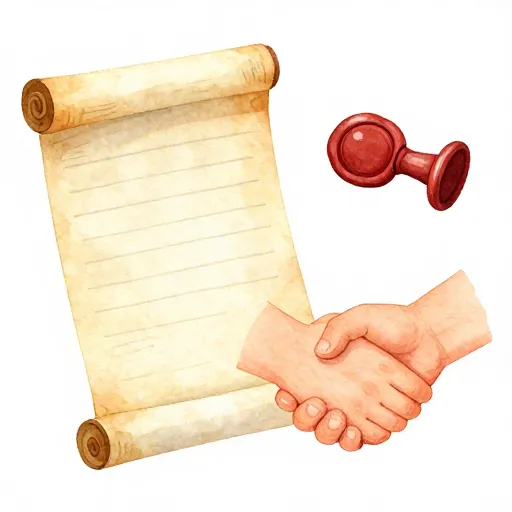
In ancient Rome, friendship was often seen as a formal agreement. People would sometimes sign 'friendship contracts' to help each other in business and politics. It wasn't just about feelings: it was a serious commitment to have someone's back no matter what.
However, being a good friend isn't always about being perfectly happy together. Sometimes, friends disagree. In fact, a healthy friendship needs space for conflict. If you never disagree, it might mean one person is hiding their true thoughts just to keep the peace.
Learning how to argue kindly is a major part of friendship. It involves listening to the other person's side and explaining your own feelings without being mean. History shows us that the strongest bonds are often those that have survived a big disagreement and came out stronger on the other side.
Mira says:
"My grandmother says that a true friend is someone who knows your song and sings it back to you when you’ve forgotten the words."
As we grow up, our friendships often go through a process of calibration. This is like tuning an instrument to make sure it sounds right. We learn that we don't need to be everything to everyone. You might have one friend for deep talks and another friend for high-energy adventures.
Friendship Through the Ages
In the modern world, friendship looks different than it did in Aristotle's garden. We have digital friends, long-distance friends, and friends we see every day at school. But the core questions remain the same: How do we show up for people? How do we keep our promises?
Next time you are with a friend, try being a 'Deep Listener.' For three minutes, just listen to them talk without interrupting or saying 'Me too!' When they finish, try to summarize what they said. You might be surprised by how much more you learn about them when you aren't waiting for your turn to speak.
One of the most important parts of being a good friend is presence. This doesn't just mean being in the same room: it means really noticing the other person. It means seeing when they are quiet and asking if they are okay, or noticing when they are proud of something and celebrating with them.
This leads us to the idea of the mirror. A good friend acts as a mirror that shows us our best self. When we feel discouraged, a friend reminds us of our strengths. When we are being unkind, a good friend might gently point it out because they want us to be our best version.

Friendship is unnecessary, like philosophy, like art... It has no survival value: rather it is one of those things which give value to survival.
Sometimes, the hardest part of friendship is letting it change. People grow at different speeds. You might find that a friend you were inseparable from last year now has different interests. This can feel sad, but it is a natural part of the human experience.
Instead of holding on too tight, we can practice appreciation for the time we had. Some friends are in our lives for a season to teach us something specific, while others stay for the whole journey. Both types of friends are valuable and help us learn how to love the world.

Scientists have found that having good friends can actually make you physically healthier. When you spend time with a close friend, your brain releases a chemical called oxytocin, which helps lower stress and makes you feel safe and happy.
Ultimately, being a good friend starts with being a friend to yourself. If you are kind to yourself when you make a mistake, it is much easier to be kind to a friend when they make one. Friendship is a giant experiment in how to be human together, and there is no single "right" way to do it.
It is a journey of discovery that never really ends. Every time you listen, every time you share a secret, and every time you stand up for someone, you are participating in a tradition that is as old as humanity itself. You are building the world, one connection at a time.
Something to Think About
If you could only use one word to describe what a friend is, what would it be?
There is no right or wrong answer to this. Your word might change depending on how you feel today, or who you are thinking about. That is the beauty of friendship: it is an idea that grows and changes just like you do.
Questions About Philosophy
What if I don't have a 'best' friend?
Is it normal for friends to fight?
How do I make new friends?
Keep Exploring the Connection
Friendship is a quiet force that moves the world. Every time you are a good friend, you are adding to a story that has been told for thousands of years. Keep asking questions, keep being curious about others, and most importantly, keep being a friend to yourself.