Have you ever felt like you were living in two different worlds at once?
In the 12th century, a thinker named Ibn Rushd lived in a place called Al-Andalus, where he tried to solve a giant puzzle: how can we use our Reason to study the world while still keeping our faith in things we cannot see?
Imagine a city where the streets are paved with smooth stone and lit by oil lamps at night. While most of Europe was still living in small villages, Córdoba in the 1100s was a place of libraries, gardens, and constant debate. This was the heart of Al-Andalus, a region in what we now call Spain, where Muslims, Christians, and Jews lived and worked together.
Ibn Rushd was born into a family of famous judges. In his house, thinking wasn't just a hobby: it was a way of life. He grew up learning how to settle arguments using rules and evidence. He was a Polymath, which is a fancy way of saying his brain was curious about everything: medicine, law, stars, and the deepest questions of the universe.
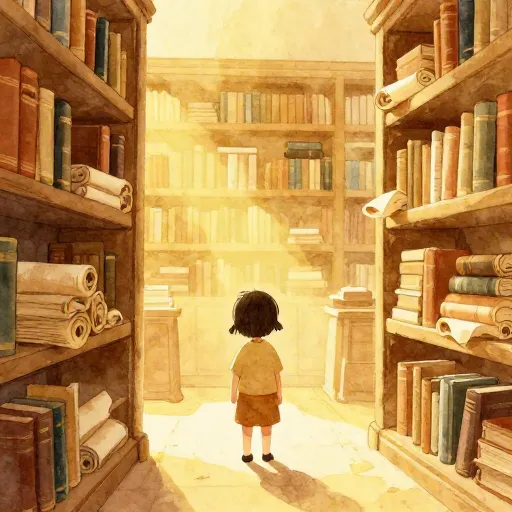
Imagine you are walking through the Library of Córdoba. There are over 400,000 books here, all written by hand. The air smells like old paper, leather, and dried ink. In a corner, a group of scholars is arguing about the distance to the moon, while nearby, a doctor is drawing a diagram of how the human eye works.
As he grew older, Ibn Rushd noticed something interesting. Some people thought that you had to choose between being a person of faith and being a person of logic. They thought that if you used your mind to ask too many questions about how the world worked, you were turning your back on your religion. Ibn Rushd didn't agree.
He believed that the universe was like a giant, beautiful machine designed by a creator. If that was true, then using your brain to understand the machine was actually a way of showing respect to the one who built it. He saw the world as a place where you didn't have to pick a side.

Finn says:
"I wonder if my science teacher and my art teacher are actually talking about the same thing, just using different words?"
The Two Paths to the Mountain Top
Ibn Rushd had a very famous idea about how truth works. He suggested that there are different ways of explaining the same big secret. Imagine there is a high mountain top that everyone wants to reach. Some people take a winding path through the woods, while others take a steep, rocky trail.
One path is the way of stories and symbols, which helps everyone understand the world through their heart. The other path is the way of Logic and philosophy, which uses proof and careful thinking. Ibn Rushd argued that just because the paths look different doesn't mean they aren't going to the same place.

Truth does not contradict truth.
He called this the "harmony" between philosophy and religion. To him, they were like two different lenses on a pair of glasses. If you look through only one lens, you see part of the picture. If you look through both, the world suddenly comes into focus.
This was a brave thing to say. At the time, some powerful leaders were afraid that if people thought too much for themselves, they would stop following the rules. Ibn Rushd disagreed. He believed that the more you understood the world, the more you would appreciate the wonders of life.

Think like a detective using Ibn Rushd's logic. If you see a puddle on the floor (an observation), you can use your mind to find the cause. If the roof isn't leaking and nobody spilled a drink, but it rained outside and there are wet footprints, what does your logic tell you happened? Logic is just connecting the dots!
The Man Who Explained the World
Ibn Rushd didn't just come up with his own ideas: he also loved the ideas of people who lived long before him. He was especially obsessed with a Greek philosopher named Aristotle. Aristotle had lived about 1,500 years before Ibn Rushd, but his books were still some of the smartest ever written.

Mira says:
"It's like how a map of the city and a photo of the city look different, but they are both showing you the exact same place."
There was just one problem. Aristotle's books were incredibly hard to read. They were like giant, complicated puzzles with missing pieces. Ibn Rushd spent years writing a Commentary on almost every single thing Aristotle ever wrote. A commentary is like a very long, very smart set of notes that explains what a book actually means.
He did such a good job that for hundreds of years afterward, people across the world simply called him "The Commentator." If you wanted to understand how the world worked, you read Aristotle. But if you wanted to understand Aristotle, you had to read Ibn Rushd.
Philosophy is dangerous because it asks too many questions that might make people doubt their faith or their leaders.
Philosophy is a gift from God. Using our minds is the best way to understand the beauty and order of the creation.
The Great Debate
Not everyone was happy with Ibn Rushd's love for logic. Another famous thinker named Al-Ghazali had written a book called "The Incoherence of the Philosophers." He argued that philosophers were just guessing and that their logic often led them away from the truth.
Ibn Rushd couldn't let that stand. He wrote a book with a very funny name: The Incoherence of the Incoherence. It was basically a massive, point-by-point reply. He argued that Al-Ghazali was using logic to try and prove that logic was bad, which didn't make much sense!

The soul is not any part of the body but is the principle of life in the body.
This debate wasn't just about books. It was about how we decide what is true. Should we only believe what we are told, or should we use our own senses and minds to test things? Ibn Rushd was a champion of Observation: the idea that we should look at the world and see how it actually behaves.
Even when he was working as a physician, he used this same mindset. He was one of the first people to realize that if a person catches smallpox and survives, they usually never get it again. He was using his eyes and his mind to find patterns in nature.
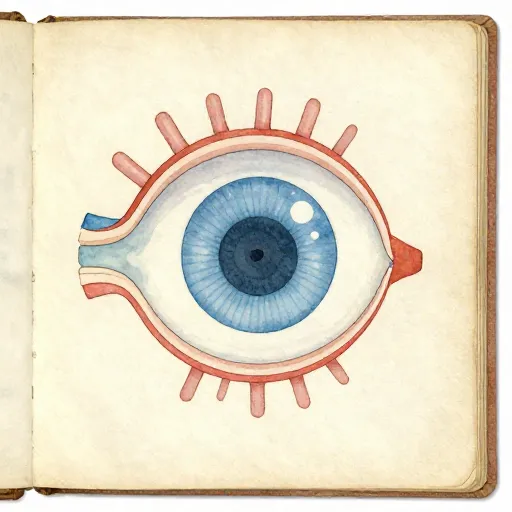
Ibn Rushd wasn't just a philosopher, he was a medical pioneer! He wrote a book called 'The Generalities of Medicine' which was used as a textbook by doctors for hundreds of years. He was one of the first to correctly describe how the retina in your eye works.
Through the Ages
Ibn Rushd's ideas traveled in ways he never could have imagined. After he died, his books were translated from Arabic into Latin and Hebrew. They flew across borders like seeds caught in the wind, landing in the hands of people who spoke different languages and followed different religions.
The Journey of an Idea
In Europe, his work helped spark a way of thinking called Scholasticism. This was a movement where students in the first universities started using logic to talk about their own faith. Without Ibn Rushd, famous thinkers like Thomas Aquinas might never have written their most important books.
He even ended up in a very famous painting. If you go to the Vatican in Rome, you can see a giant wall painted by the artist Raphael. It shows all the greatest thinkers in history together in one room. There, tucked in among the Greeks and Romans, is Ibn Rushd in his yellow turban, leaning over to catch a glimpse of a book.
Mira says:
"I love that his ideas traveled through so many different languages. It shows that good questions don't belong to just one group of people."
The Wisdom of Uncertainty
Toward the end of his life, things got difficult for Ibn Rushd. The political mood in Al-Andalus changed. A new group of leaders came to power who didn't like his emphasis on reason. His books were burned, and he was sent away to live in a small town outside of Córdoba.
He must have felt very lonely, watching his life's work go up in smoke. But he didn't give up on his ideas. He knew that you can burn a piece of paper, but you can't burn a thought. Eventually, he was invited back to the palace, but he died shortly after.

Logic is nothing more than an instrument by which we separate truth from falsehood.
Today, we remember him as a bridge. He bridged the gap between the ancient world and the modern world. He bridged the gap between the Middle East and Europe. And most importantly, he bridged the gap between our hearts and our heads.

Because his name was hard for people in Europe to pronounce, they turned 'Ibn Rushd' into 'Averroes.' That is why you will see both names in history books today!
Ibn Rushd teaches us that being smart doesn't mean you have to stop being full of wonder. He shows us that the more we learn about how a flower grows or how the stars move, the more amazing the universe feels. He invites us to use every tool we have: our eyes, our minds, and our spirits: to understand the world we live in.
Something to Think About
If you had two different ways of looking at a problem, and they gave you two different answers, how would you decide which one to follow?
Ibn Rushd believed that deep down, the answers would eventually meet. Think about a time you felt one way in your heart but another way in your head. Is it possible for both feelings to be true at the same time?
Questions About Philosophy
Was Ibn Rushd a scientist or a religious leader?
Why was he called 'The Commentator'?
Did he get in trouble for his ideas?
A World of Bridges
Ibn Rushd's life reminds us that the world is not made of separate, walled-off rooms. Instead, it is a giant web of connected ideas. Whether you are looking through a microscope, reading a holy book, or gazing at the stars, you are participating in the same great human journey of asking: Why are we here? And isn't it wonderful that we get to find out?