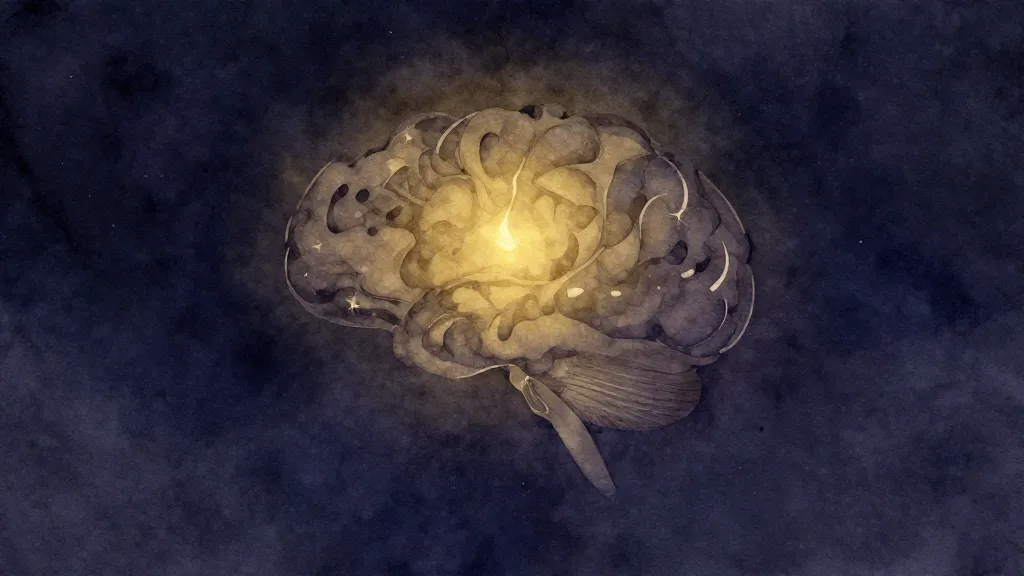
If you closed your eyes and floated in a dark room where you couldn't feel the floor, see the walls, or hear any sounds, would you still know that you existed?
Over a thousand years ago, during the Golden Age of Islam, a brilliant thinker named Ibn Sina asked this very question. He wasn't just a philosopher: he was a doctor, a scientist, and a traveler who used logic to explore the mysteries of the human body and the soul.
Imagine you are in the city of Bukhara, a bustling hub on the ancient Silk Road, around the year 990. The air smells of roasted lamb, expensive spices, and the dusty leather of thousands of books.
In the middle of this city lives a young boy who is remarkably busy. While other ten-year-olds are playing games, this boy has already memorized the entire Quran. By the time he is sixteen, he is already treating patients and discovering new ways to understand medicine.

By the age of ten, Ibn Sina had already memorized the entire Quran and several books of Persian poetry. He was what we call a 'prodigy,' someone who masters difficult subjects at a very young age.
This boy was Ibn Sina, known in the West as Avicenna. He lived during a time when the Islamic world was the center of global learning. While much of Europe was in a period of quiet, cities like Bukhara and Baghdad were glowing with new ideas.
Ibn Sina didn't just want to learn one thing. He wanted to understand the entire universe, from the way blood moves through our veins to why the stars stay in the sky.
The Library of the Sultan
When Ibn Sina was seventeen, something happened that changed his life forever. The local Sultan fell dangerously ill, and none of the older, famous doctors could cure him.
Young Ibn Sina was called to the palace. Using his sharp mind and careful observation, he managed to help the Sultan recover. As a reward, he didn't ask for gold or jewels.

Finn says:
"If I could have any reward for helping a Sultan, I think I’d pick a library too. Imagine having every book in the world in one room! Do you think he ever got bored, or is it impossible to be bored when you have that much to learn?"
Instead, he asked for permission to use the Sultan’s private library. This wasn't just a room with a few shelves. It was a massive collection of scrolls and books from every corner of the world, including the lost wisdom of the ancient Greeks.
Ibn Sina spent his days and nights there. He read everything from the math of Euclid to the philosophy of Aristotle. He claimed that by the age of eighteen, he had learned everything he needed to know: for the rest of his life, he simply spent his time making those ideas deeper.

Imagine a library with high vaulted ceilings where the sound of your footsteps echoes against the stone. There are thousands of hand-written scrolls, each one a different treasure. Some are about the stars, some about medicine, and some are stories from far-away lands. This was Ibn Sina's playground.
The Flying Man Experiment
One of Ibn Sina’s most famous ideas is a thought experiment called the "Flying Man." A thought experiment is like a laboratory in your mind where you test ideas that you can't test in real life.
He asked people to imagine a person created in mid-air, fully grown but with their eyes covered. This person’s arms and legs are spread out so they aren't touching their own body. There is no sound, no smell, and no light.
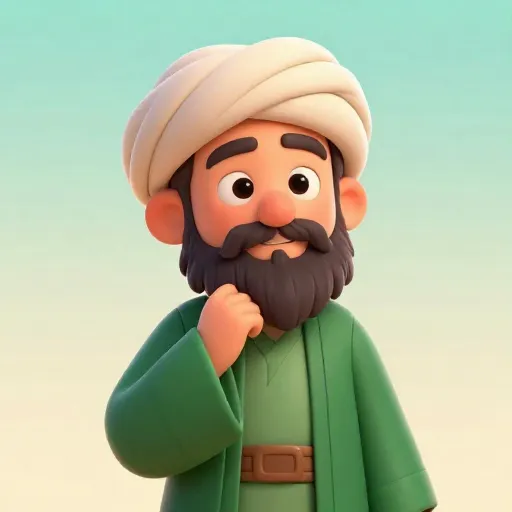
The human soul is a separate substance from the body, and it can perceive itself without any help from the senses.
In this state, the person has no senses. They can't see their hands, feel the ground, or hear their own breath. Ibn Sina then asked: would this person know that they exist?
His answer was a confident "Yes." Even without a body to feel or eyes to see, the person would still have a sense of "I am." To Ibn Sina, this proved that the soul or the mind is something separate from the physical body.

Mira says:
"The Flying Man idea reminds me of when I’m daydreaming so hard that I forget I’m sitting in a classroom. My 'self' is off exploring a castle while my body is just sitting at a desk. Maybe Ibn Sina was the first person to really explain what a daydream feels like!"
This was a huge idea because it suggested that who we are deep down isn't just made of skin, bones, and muscles. It's something that exists even when the physical world disappears.
The Prince of Physicians
While he was thinking about the soul, Ibn Sina was also very interested in the physical body. He wrote a massive book called the Canon of Medicine.
Before Ibn Sina, medicine was often a mix of guesswork and old stories. Ibn Sina wanted to make it a science. He believed that doctors should use empiricism, which means making decisions based on what you actually see and test.

Sit quietly and close your eyes. Try to 'feel' your mind without moving your body. If you couldn't feel your toes or the chair beneath you, would you still feel like 'you' are there? This is the starting point of Ibn Sina's most famous mystery.
He was one of the first to realize that some diseases could be spread through the air or water. He even suggested that people should be kept apart when they were sick to stop a virus from spreading, an idea we call quarantine today.
His book was so well-organized and smart that it became the most important medical textbook in the world for over 600 years. Doctors in universities from Oxford to Paris used his words to learn how to heal people.

Medicine is the science by which we learn the various states of the human body, in health and when not in health, and the means by which health is likely to be lost and, when lost, is likely to be restored.
A Life on the Move
The world Ibn Sina lived in was beautiful but often dangerous. Kingdoms were constantly rising and falling. Because he was so famous and smart, many rulers wanted him to work for them, but others saw him as a threat.
He spent much of his life traveling across Persia (modern-day Iran). Sometimes he was a high-ranking government official, and other times he was hiding in a friend's house or even in prison.
Many people in the ancient world thought healing was a spiritual art or depended on magic and tradition.
Ibn Sina argued that medicine should be a science based on logic, testing, and observing exactly what happens to a patient.
Even when he was in prison or traveling on a bumpy camel across the desert, he never stopped writing. He would dictate his ideas to his students as they rode along. He believed that the mind should never be idle, no matter where the body happened to be.
He was trying to do something very difficult: bridge the gap between reason and faith. He used Greek logic to explain things about God and the universe, showing that science and religion didn't have to be enemies.
The Gift of Doubt and Certainty
Ibn Sina wasn't afraid to say when he found something difficult. He once read a book by Aristotle forty times until he had memorized it, but he still didn't understand what it meant!
He only understood it after finding a small, cheap book by another philosopher named Al-Farabi in a market. This humble moment shows that even the smartest person in the world needs help from others to unlock big ideas.
Finn says:
"It’s kind of a relief that even Ibn Sina had to read a book forty times to get it. Sometimes I feel like I'm the only one who doesn't 'get' a lesson right away. I guess even geniuses need a little help from a different perspective sometimes."
He taught us that thinking is a journey. You start with what you can see (medicine), move to what you can think (logic), and eventually reach what you can only wonder about (the soul).
Ibn Sina's Legacy Through the Ages
How He Changed the World
Ibn Sina's influence is like a long thread woven through history. He saved the ideas of the ancient Greeks by translating them and adding his own brilliant discoveries. Without him, we might have lost some of the most important philosophy in history.
He also gave us the idea of the "Self." When later philosophers like René Descartes said, "I think, therefore I am," they were walking on a path that Ibn Sina had cleared hundreds of years earlier with his Flying Man.

I prefer a short life with width to a narrow one with length.
He reminds us that being a "polymath": someone who is an expert in many different things: is possible. You don't have to choose between being a scientist and being a dreamer. You can be both.
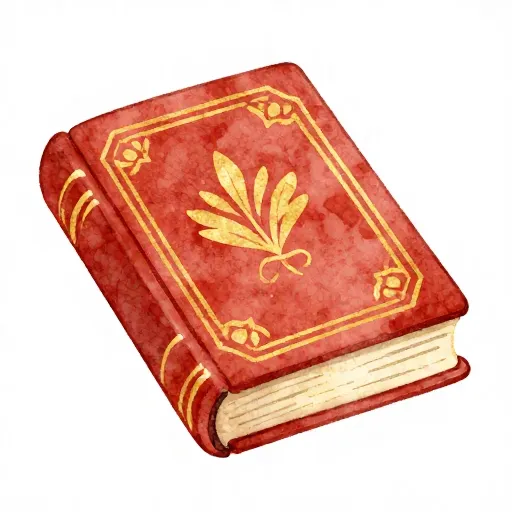
Ibn Sina’s book, The Canon of Medicine, was so famous that it was the standard medical textbook in Europe for over 600 years. That’s longer than the United States has been a country!
Today, we still use the scientific method he helped build. We still ask the same questions about the mind that he asked in the quiet libraries of Bukhara. Ibn Sina showed us that the more we look inside ourselves, the more we find a universe worth exploring.
Something to Think About
If you had a robot body but your same mind, would you still be the same person?
Ibn Sina believed our 'self' is separate from our physical parts. There is no right or wrong answer here: just a very interesting thing to wonder about!
Questions About Philosophy
Was Ibn Sina a real person?
What is his most important discovery?
Why do people call him Avicenna?
Keep Exploring
Ibn Sina's life shows us that curiosity has no limits. Whether he was looking at a patient's fever or the distant stars, he used the same tool: his mind. The next time you feel a 'spark' of an idea, remember that you are doing exactly what the Prince of Physicians did a thousand years ago.
