Close your eyes and try to imagine a color you have never seen before.
It is impossible, isn't it? This puzzle was at the heart of John Locke's work, a philosopher who believed that our minds begin as a tabula rasa, or a blank slate, and that every single thing we know comes from our senses and our experiences.
Imagine walking through the streets of London in the 1600s. The air smells like coal smoke and roasted meat. The ground is made of bumpy cobblestones.
At this time, most people believed that you were born already knowing certain things. They thought God or nature put big ideas into your head before you even took your first breath.
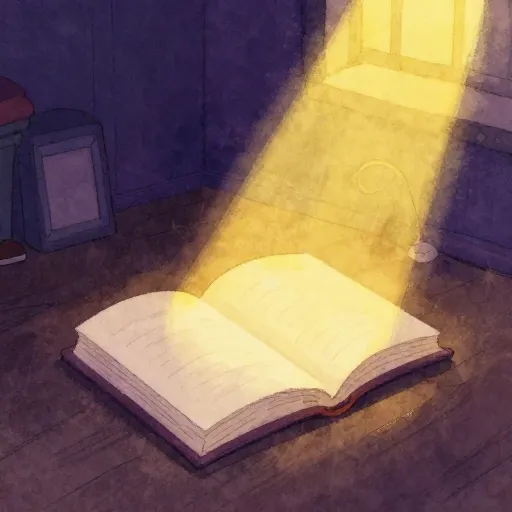
Imagine you were born in a room with no light, no sound, and no touch. Locke would say your mind would be completely empty. You wouldn't even know what a 'thing' is. It is only when the door opens and the first ray of sunlight hits your eye that your mind starts to work.
John Locke, a quiet man with a long nose and a very busy brain, didn't agree. He was a doctor, which meant he spent his time looking at facts and evidence.
He watched how babies looked at the world with wide, empty eyes. He noticed that they didn't know what 'hot' was until they touched something warm.
The Great Blank Slate
Locke argued that at birth, the human mind is like a piece of white paper with nothing written on it. He called this the tabula rasa.
Everything you know today: the taste of a strawberry, the sound of a dog barking, the feeling of being happy: came from the outside world. It traveled through your eyes, ears, nose, and skin to reach your mind.

Mira says:
"So if the mind is a blank slate, that means our environment is like the artist. Everything we see and do paints a part of who we are!"
This idea is called empiricism. It means that we should only trust what we can observe and experience for ourselves.
If someone tells you there is a dragon in the shed, Locke would say you shouldn't just believe them. You have to go to the shed, look inside, and see if there are any scales or smoke.
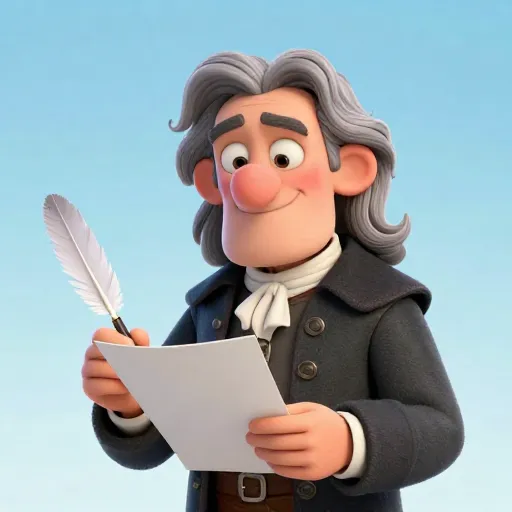
Let us then suppose the mind to be, as we say, white paper, void of all characters, without any ideas.
Locke believed that because we all start as blank slates, we are all born equal. No one is born 'better' than anyone else just because their father was a king or a lord.
This was a very dangerous thing to say in the 1600s. At that time, kings believed they had a 'Divine Right' to rule, meaning God had picked them to be the boss.
Life, Liberty, and Stuff
Locke spent a lot of time thinking about what every human being deserves just for being alive. He called these natural rights.
He argued that these rights aren't given to us by a government or a king. Instead, we are born with them, and no one should be allowed to take them away.
Take a 'Sensory Walk' around your house. Find one thing for each sense: something that feels bumpy, something that smells sweet, something that sounds high-pitched, and something that looks bright. Locke believed these four experiences are the building blocks of every complex thought you have!
Locke’s list of rights was simple: Life, Liberty, and Property. 'Life' means you have the right to exist and be safe. 'Liberty' means you should be free to make your own choices.
'Property' was a big deal to Locke. He believed that if you work hard to pick apples or build a chair, that stuff belongs to you. It is an extension of your hard work.
Finn says:
"I wonder if my 'Property' includes my Lego creations? I definitely worked hard on those, so I guess Locke would say they are officially mine!"
But what happens if someone tries to steal your apples or stop your freedom? This is where Locke’s idea of the social contract comes in.
He thought that people naturally want to protect their rights, so they team up to create a government. It is like a giant deal or a 'contract' we all sign together.
The King is the father of the country. He gets his power from God, and the people must obey him like children obey a parent.
The government is a contract. People give up a little bit of freedom so the government can protect their rights. If the government fails, the deal is off.
The Boss of the Bosses
In Locke's world, the government isn't the master of the people. It is the servant of the people.
If a government stops protecting your rights, or starts taking your property unfairly, Locke said the people have a 'right to rebel.'
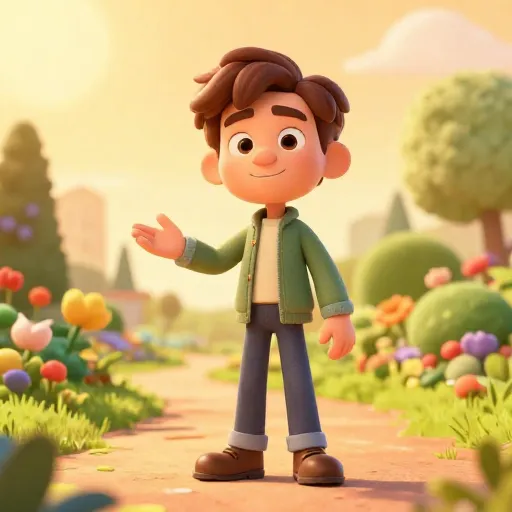
The end of law is not to abolish or restrain, but to preserve and enlarge freedom.
Think about a referee in a soccer game. We agree to follow the referee's rules so the game is fair. But if the referee starts stealing the ball and scoring goals for themselves, they aren't doing their job anymore.
Locke believed we should be able to fire the referee and get a new one. This idea eventually helped lead to the creation of democracy in places like the United States.
Learning by Playing
Locke didn't just write about kings and laws. He also wrote about how children should learn.
At the time, school was often scary. Teachers would make kids memorize long lists of Latin words and hit them with sticks if they got them wrong.
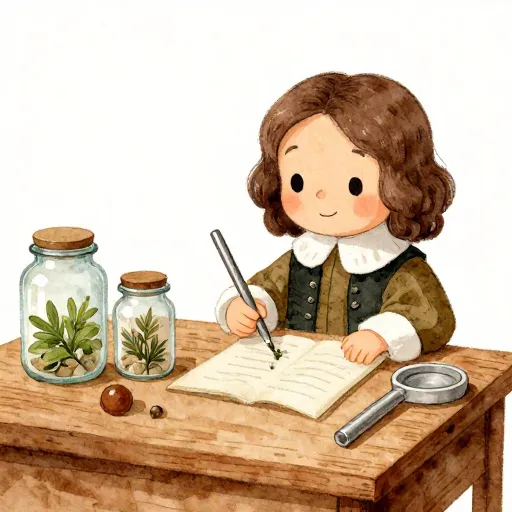
Locke was once a personal doctor to a powerful man named Lord Ashley. Ashley had a very bad liver problem, and Locke performed a daring surgery to save him, even using a silver tube to help him heal! Because Locke saved his life, the Lord helped Locke share his big ideas with the world.
Locke hated this. He thought children should learn through play and curiosity. He wanted education to be like a game that makes you want to know more.
He even suggested that kids should have blocks with letters on them to help them learn to read. He believed that if you force a child to learn, their mind will 'shut its windows' like a house in a storm.
The Person Inside
One of Locke's strangest and most interesting ideas was about identity. He wanted to know: what makes you, 'you'?
He didn't think it was your body, because your body changes as you grow. He didn't think it was your soul, because we can't see or measure that.
Mira says:
"If memories make us who we are, what happens to the parts of being a baby that we forget? Is that version of us just gone forever?"
Locke decided that you are 'you' because of your consciousness and your memories. You are the same person you were yesterday because you can remember being that person.
If you woke up tomorrow in the body of a giant beetle (like in a famous story), but you still remembered your birthday and your favorite food, Locke would say you are still you.
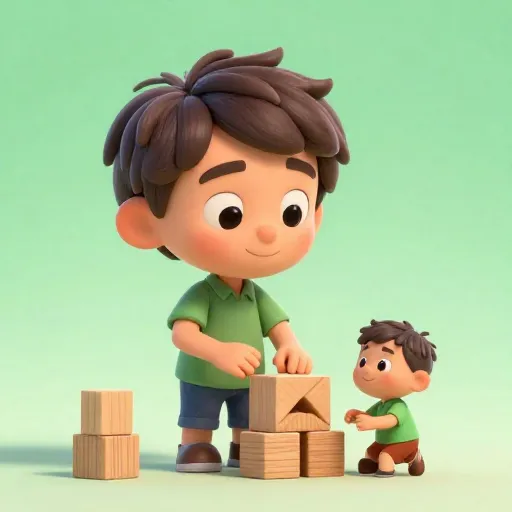
The little and almost insensible impressions on our tender infancies have very important and lasting consequences.
Making Room for Everyone
Finally, Locke was a big believer in tolerance. He lived through a time when people in England were fighting and even dying over religion.
Locke wrote a famous letter saying that the government should stay out of people's private beliefs. He thought that you cannot force someone to truly believe something.
Locke's ideas were so powerful that they crossed the ocean. When Thomas Jefferson wrote the Declaration of Independence for the United States, he used Locke's ideas. He only changed one thing: he swapped 'Property' for 'The Pursuit of Happiness'!
You can force someone to go to a certain church, but you can't force their mind to agree. He believed a peaceful society is one where everyone is free to find their own truth.
Through the Ages
Locke's ideas were like seeds planted in a garden. They took a long time to grow, but eventually, they changed the way the entire world thinks about freedom, learning, and what it means to be a human being.
He reminds us that we aren't born with all the answers. Instead, we are born with the tools to find them: our eyes, our ears, and our wonderful, blank-slate minds.
Something to Think About
If you could add one more thing to Locke's list of 'Natural Rights' (Life, Liberty, and Property), what would it be?
There is no right or wrong answer here. Think about what every single person in the world needs to feel safe and happy.
Questions About Philosophy
Did John Locke believe in God?
Was Locke the first person to think of democracy?
What did Locke think about bad habits?
The Never-Ending Story
John Locke's life reminds us that ideas can be just as powerful as armies. He didn't lead a revolution with a sword, but his words gave people the courage to imagine a world where they were in charge of their own lives. Next time you learn something new, remember: you are adding another beautiful line to your own blank slate.