Imagine a world where there are no rules, no teachers, and no one to tell you what is right or wrong.
In Ancient China, a group of thinkers looked at a world filled with war and decided that humans were too messy to be left to their own devices. They created Legalism, a philosophy built on the idea that strict laws and clear rewards were the only way to keep a society from falling apart.
More than two thousand years ago, China was not one big country. It was a collection of smaller kingdoms that were constantly fighting each other. This time was called the Warring States period, and it was a very scary time to be alive.
Families were lost, farms were destroyed, and kings were always looking for a way to become the most powerful. Everyone was asking the same question: how do we bring peace back to the land? Some people thought being kind was the answer, but the Legalists had a different idea.
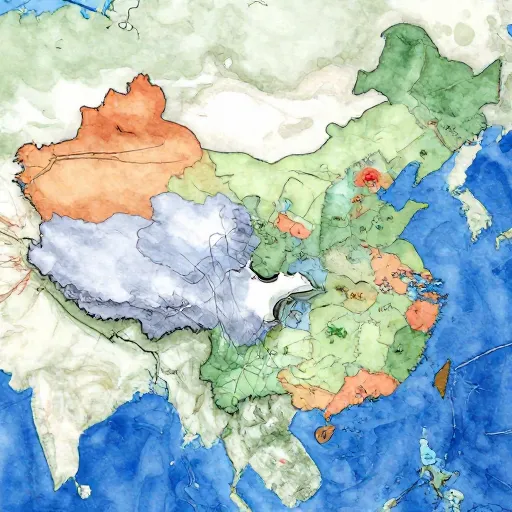
Imagine a map of China that looks like a shattered mirror. Each piece is a kingdom with its own king, its own army, and its own rules. To cross from one 'piece' to another, you might need to change your money, your language, and even your clothes. This was the chaos the Legalists wanted to fix.
They believed that humans were naturally selfish. If you leave a bowl of candy on a table, a Legalist would say that everyone will try to take the whole bowl unless there is a rule stopping them. This view of Human Nature is the foundation of everything they taught.

Finn says:
"If everyone is just looking out for themselves, does that mean rules are the only things that keep us friends?"
The Architect of Order: Han Fei
The most famous Legalist thinker was a man named Han Fei. He was a prince who had a very hard time speaking because he stuttered, so he poured all of his energy into writing. He didn't want to talk about feelings or ancient traditions; he wanted to talk about how things actually worked.
Han Fei looked at the world like a giant machine. If the machine is broken, you don't pray for it to get better, and you don't ask the machine to be 'nicer.' You fix the parts and you make sure every gear turns exactly the way it is supposed to.

The law does not fawn on the noble... Whatever the law applies to, the wise cannot reject nor the brave deny.
For Han Fei, the King was the most important part of this machine. But the King shouldn't rule by being a 'nice guy.' Instead, he should rule using three special tools: Fa, Shu, and Shi.
- Fa means the Law. These laws must be written down clearly so that everyone, from the richest lord to the poorest farmer, knows exactly what happens if they break them.
- Shu means the Method. This is how the King manages his helpers to make sure they aren't lying to him or getting too powerful.
- Shi means Power. It is the authority that comes with being the King, like the weight of a heavy mountain.
People are basically good. If you lead them with kindness and show them how to be virtuous, they will naturally do the right thing.
People are basically selfish. They only do the right thing because they want a reward or because they are afraid of getting in trouble.
The Two Handles
How do you get people to follow these laws? The Legalists believed in something they called the Two Handles. Imagine you are holding a bucket with two handles: one is called 'Reward' and the other is called 'Punishment.'
If you do something good for the state, like growing extra food or winning a battle, the King gives you a reward. Maybe it's money, or a higher rank. If you break the law, the punishment is swift and often very harsh.

Mira says:
"It sounds like Legalism treats people like they are part of a computer program. If you follow the code, the program works. If you don't, there's a bug."
They didn't care why you broke the law. They didn't care if you were tired, or hungry, or if you thought the law was unfair. In the world of Legalism, the law is like a hot stove: if you touch it, you get burned, no matter who you are.
Think about your favorite board game. What would happen if there were no rules? What if the rules changed every time someone felt sad or happy? Try playing a game for five minutes where anyone can do anything. Then, play with the strict rules. Which way feels more 'fair'?
The Man Who Moved the Pole
Before Han Fei, there was another Legalist named Shang Yang. He wanted to show the people that the law was serious. He put a three-meter wooden pole at the south gate of the capital city and made a strange announcement.
He said that anyone who could move the pole to the north gate would get ten gold pieces. People laughed. They thought it was a joke because moving a pole was so easy. Nobody moved it.

To govern a country, one must have a system that the people can trust as much as the seasons.
So, Shang Yang increased the reward to fifty gold pieces. Finally, one brave man moved the pole. Shang Yang immediately gave him the fifty gold pieces. This proved to everyone that the government meant exactly what it said: if there is a rule or a promise, it will be kept.
The Empire of Steel
Legalism was finally put to the test by a King named Ying Zheng. He loved Legalism so much that he used its ideas to conquer all the other warring states. He became the first emperor of a unified China and called himself Qin Shi Huangdi.
Under his rule, the Qin Dynasty changed everything. Because of Legalism, the Emperor didn't just want good people; he wanted a standard system. He made sure that everywhere in China used the same money, the same weights for measuring food, and even the same way of writing.
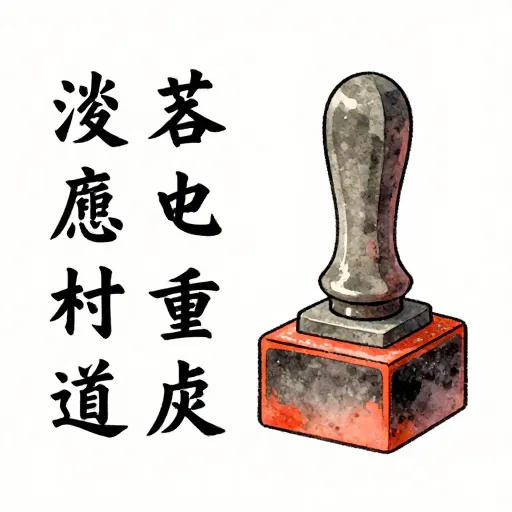
Before the Qin Dynasty, there were many different ways to write Chinese characters. The Legalists made everyone use one single style. If you used the 'wrong' handwriting on an official document, you could get into serious trouble!
This process is called Standardization. It made the country very efficient. If a cart wheel broke in the north, a wheel made in the south would fit it perfectly because they were all made to the same legal measurements. Order was everywhere.
Finn says:
"I like that all the wheels and money were the same. It must have made traveling and trading way easier, even if the rules were scary."
The Dark Side of Order
While Legalism made the country strong, it also made life very difficult for many people. The Emperor's main advisor, a Legalist named Li Si, believed that different ideas were dangerous. He thought that if people read old books about kindness or different ways of ruling, they might start to disagree with the Emperor.

I humbly propose that all historical records... be set on fire. Those who dare to talk to each other about the old books shall be executed.
This led to a terrible event known as the 'Burning of the Books.' The Emperor ordered that almost all books that weren't about farming or medicine be burned. He even punished scholars who spoke out against him. The Legalists wanted one mind for the whole empire.
The Great Wall of China was started by the Qin Emperor using Legalist methods. Thousands of people were forced to work on it. If they didn't work hard enough, the punishments were terrifying. The wall was built on order, but also on fear.
The Rise and Fall of the Steel Philosophy
Why Does it Matter Now?
The Qin Dynasty didn't last very long. After the first Emperor died, the people revolted because they were tired of the harsh punishments. But even though the dynasty ended, Legalism changed China forever.
Future emperors realized they couldn't just rule with kindness alone. They needed a balance. They often used Confucianism (which focuses on virtue and family) for the 'outside' of their government, but kept Legalist rules for the 'inside' to make sure things actually got done.
Today, we still see Legalist ideas in our world. When you see a speed limit sign, or a rule in a board game, or a computer code that says 'If X happens, then do Y,' you are seeing a little bit of Legalist logic at work.
Something to Think About
Is it better to have a world that is perfectly orderly because people are afraid of the rules, or a world that is a bit messy because people are free to choose for themselves?
There isn't a single right answer to this. Many countries today are still trying to find the perfect balance between 'too many rules' and 'not enough order.' What do you think your classroom or home needs more of?
Questions About Philosophy
Did Legalists believe in being mean?
Was Legalism the same as a dictatorship?
Are there any Legalist countries today?
The Balance of the Scale
Legalism reminds us that while rules can feel heavy, they are also what hold a big society together. As you go through your day, look for the 'Two Handles' in your own life. When are you following a rule because you want a reward, and when are you following it because you're afraid of the 'punishment' handle? Understanding why we follow rules is the first step to deciding which rules are actually worth having.