
Imagine you are the most powerful person on Earth. Everyone does what you say, you live in a palace, and you command the world's biggest army. What would you write about in your private diary?
For Marcus Aurelius, the ruler of the Roman Empire nearly 2,000 years ago, the answer wasn't gold or glory. He wrote about how to stay kind when people are mean, how to stay calm when things go wrong, and how to be a philosopher while also being a king.
It is nearly midnight in a cold, muddy camp near the Danube River. Outside the tent, the wind howls and soldiers are resting for the next battle. Inside, by the light of a flickering oil lamp, the Emperor of Rome is not looking at a map or a treasure chest. He is writing a letter to himself.

Marcus Aurelius never intended for anyone to read his diary! He called it 'To Himself.' It was only published hundreds of years after he died because people realized how much his advice could help others.
Marcus Aurelius did not want his notes to be a book. He was practicing a way of thinking called Stoicism. This wasn't a school subject with tests: it was a set of tools for living a hard life with a steady heart.
The Boy Who Didn't Want a Crown
Marcus wasn't born to be an emperor. He was a quiet boy who loved wrestling, boxing, and, most of all, reading. He was so honest that the Emperor at the time, Hadrian, gave him a nickname: Verissimus, which means "The Most Truthful."

Finn says:
"Wait, so if he didn't want to be the Emperor, why didn't he just say 'no thanks' and go back to his books? I guess when the Emperor picks you, you don't really get a choice!"
When Marcus was chosen to be the next leader, he didn't throw a party. In fact, history tells us he was quite sad about it. He knew that being the Emperor meant he would have to spend his life solving other people's problems and fighting wars he didn't want.
He decided that if he had to be a king, he would be a "Philosopher King." This was an idea from a thinker named Plato. It meant a leader who cared more about wisdom and justice than power.
He had to lead armies, sign laws, and judge criminals. He lived in a world of politics, money, and war.
He wanted to be quiet, think about the stars, and practice being a good person. He lived in a world of ideas and kindness.
The Secret Diary: Meditations
Most emperors built giant statues of themselves. Marcus did something much quieter. He wrote a diary that we now call the Meditations. He wrote it in Greek, the language of philosophy, rather than Latin, the language of Roman business.
In this diary, he gave himself advice. He reminded himself to be patient. He told himself not to get angry when his staff made mistakes. He even told himself to get out of bed in the morning when he really wanted to sleep in.

The happiness of your life depends upon the quality of your thoughts.
This quote shows how Marcus looked at the world. He believed that our feelings don't come from what happens to us. Instead, they come from what we think about what happens to us. If you think a rainy day is a disaster, you will be sad. If you think it is just water for the plants, you won't be.
The Inner Citadel
Marcus used a cool metaphor called the Inner Citadel. A citadel is a strong fortress inside a city where people go for safety. Marcus believed every person has a fortress like this inside their own mind.
- No one can break into your mind and force you to be mean.
- No one can take away your ability to be brave.
- Your thoughts are the one thing you truly own.

Try the 'Control Circle.' Draw a circle on a piece of paper. Inside the circle, write things you can control (like your effort, your words, and your kindness). Outside the circle, write things you can't control (like the weather, what other people say, or if you win a game). Next time you're stressed, look at your circle and only worry about the things inside!
He lived through a lot of tough times. There was a terrible sickness called the Antonine Plague that spread through Rome. There were constant wars on the borders. Even his own family members sometimes let him down.
Through all of it, he used his "Inner Citadel" to stay steady. He didn't try to control the weather, the war, or the plague. He only tried to control how he acted in response to them.

Mira says:
"It's like his diary was a shield. He couldn't stop the arrows from flying outside, but he could make sure they didn't hurt his feelings on the inside. I wonder if it worked every single day?"
Dealing with Grumpy People
One of the most famous parts of his diary is where he talks about other people. Being an Emperor meant meeting lots of people who wanted things from him or who were being difficult. He had a specific trick for this.
Every morning, he told himself that he was going to meet people who were ungrateful, jealous, and pushy. He didn't say this to be mean. He said it so he wouldn't be surprised when it happened.

The best revenge is to be unlike him who performed the injury.
He believed that we are all part of the same big human family. He often compared people to two rows of teeth or two hands. We were made to work together, even if we sometimes get on each other's nerves.
The View from Above
When Marcus felt overwhelmed by his huge responsibilities, he used a mental exercise called the View from Above. He would imagine himself flying high above the Earth, looking down at the tiny people below.

Imagine you are standing on the moon. From there, you can see the whole blue Earth spinning slowly. You can't see the borders of countries. You can't see the cars or the houses. You definitely can't see the argument you had with your brother this morning. Everything looks quiet, connected, and peaceful. That is the View from Above.
From up there, he could see that his problems were very small compared to the whole universe. He saw that the Roman Empire was just a tiny speck on a big planet. This helped him stop worrying about his reputation or what people would say about him after he died.
- It helps you realize that a bad grade or a lost game isn't the end of the world.
- It connects you to the rest of nature.
- It makes you feel like part of a giant, beautiful system.
Mira says:
"The 'View from Above' is my favorite. When I'm upset about a tiny scratch on my bike, I try to imagine looking at the whole neighborhood from a satellite. Suddenly, the scratch doesn't seem so giant."
Why Marcus Matters Today
Marcus Aurelius was the last of the "Five Good Emperors." After he died, the Roman Empire started to struggle. But his diary didn't disappear. It was saved by people who thought his private notes were too valuable to lose.
The Journey of the Meditations
Today, athletes, presidents, and even astronauts read his diary. They don't read it because they want to be Roman Emperors. They read it because they want to know how to be a person who stays calm when the world feels like a whirlwind.
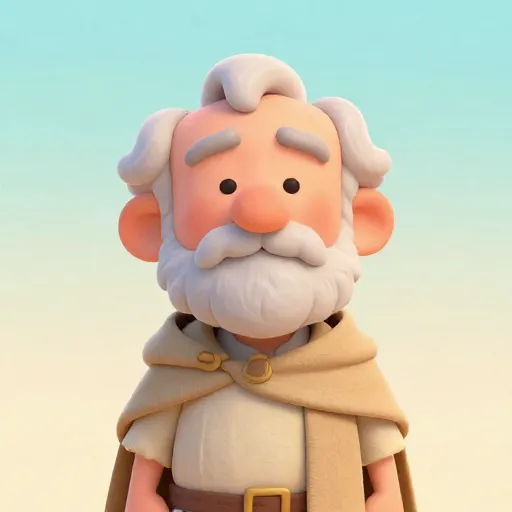
Waste no more time arguing about what a good man should be. Be one.
Marcus didn't think he was perfect. In fact, he was often frustrated with himself. But he never stopped trying to be a better version of himself. He believed that the goal of life wasn't to be famous, but to be a person who helps others and stays true to what they believe is right.
Even though he was the Emperor, Marcus Aurelius lived very simply. He often slept on the floor like a regular soldier to remind himself that he didn't need fancy things to be happy.
As you go through your day, you might not be leading an army or ruling a country. But you are ruling your own mind. You are the emperor of your own thoughts. Like Marcus, you can choose how you want to see the world.
Something to Think About
If you were the ruler of the whole world, what would you write in your secret diary to help you stay a good person?
There are no right or wrong answers here. You might write about being brave, being funny, or just remembering to listen to others. Your diary is your own 'Inner Citadel.'
Questions About Philosophy
Was Marcus Aurelius a good emperor?
Why is his book called 'Meditations'?
Is Stoicism about having no feelings?
The Emperor's Legacy
Marcus Aurelius shows us that power isn't about how many people you can boss around. Real power is being able to boss around your own bad moods and choosing to be kind even when it's hard. The next time you feel a storm of feelings coming on, remember the Emperor in his tent, and look for your own Inner Citadel.