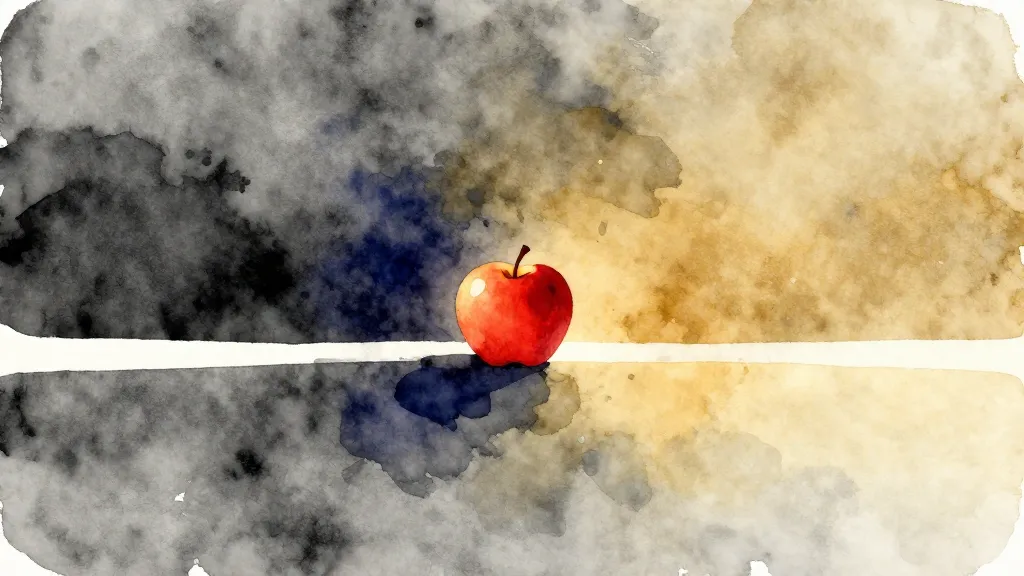
Imagine you spent your whole life in a room where everything was black, white, or gray.
You have never seen a blue sky or a green leaf, yet you are the world’s leading expert on color. This is the setup for one of the most famous thought experiments in history: Mary’s Room, a puzzle about the difference between data and experience.
Imagine a woman named Mary. Mary is a brilliant scientist who lives in a room that is entirely black and white.
Her walls are gray, her bed is white, and her computer screen only shows black text. Even her skin is painted a chalky gray to make sure she never sees a hint of pink or brown.
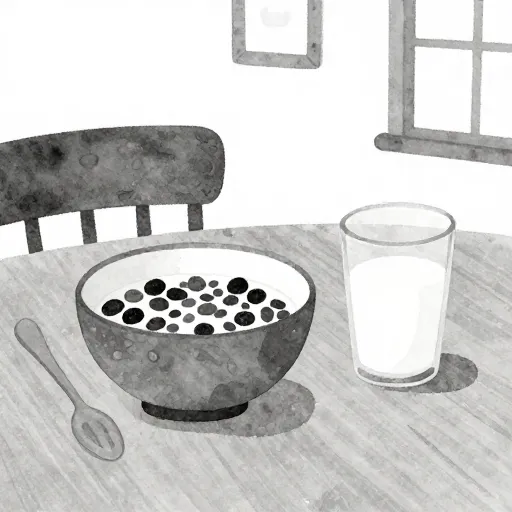
Imagine Mary's breakfast. A gray bowl filled with white milk and gray oat clusters. Beside it, a glass of water that looks like liquid silver. There is no orange juice, no colorful cereal boxes, and no blue napkins. In this world, the only thing that changes is the shade of the shadows.
Despite living in this colorless world, Mary knows everything there is to know about the science of color. She has read every book and watched every black-and-white lecture ever made on the subject.
She understands how light hits the eye and how neurons in the brain fire when someone looks at a tomato. She knows the exact wavelength of light that makes a poppy look red.

Finn says:
"If Mary knows every single fact about light, could she use her imagination to 'see' a color she's never actually touched or looked at?"
One day, the door to the room opens. Mary walks out into the garden for the very first time.
Lying on the grass is a bright, ripe strawberry. For the first time in her life, Mary sees the color red.

It seems just obvious that she will learn something about the world and our visual experience of it.
Now, here is the big question that philosophers have been arguing about for decades. When Mary sees that red strawberry, does she learn something new?
If you think the answer is "yes," you are agreeing with a philosopher named Frank Jackson. In 1982, he sat down at the Australian National University to write a paper that would shake the world of science and philosophy.

This thought experiment is officially called the 'Knowledge Argument.' It is one of the most debated ideas in the history of the philosophy of mind. Thousands of pages have been written by other professors trying to prove Frank Jackson right or wrong.
Jackson wanted to challenge a popular idea called physicalism. This is the belief that everything in the universe, including our thoughts and feelings, can be explained by physical facts.
If physicalism is true, then Mary already knew everything about red before she left the room. She knew the math, the physics, and the biology of it.
The Mystery of Qualia
But most people feel that Mary does learn something new. She learns what it is actually like to see red.
Philosophers have a special word for these personal, subjective experiences: qualia. Qualia are the "what-it-is-like" parts of our lives.

Mira says:
"It’s like the difference between reading a recipe and actually eating the cake. The ingredients are the facts, but the taste is the magic part."
Think about the taste of a lemon or the smell of rain on a hot sidewalk. You can describe the chemistry of a lemon to a friend who has never tasted one.
You can talk about citric acid and taste buds. But until they actually bite into that yellow fruit, do they really know what a lemon is?

Try to describe the color 'yellow' to someone without using any color words (like gold, bright, or lemon-colored). You can only use 'physical' words like wavelengths, heat, or energy. Do you think they would know what yellow looks like after your description?
This is why Mary’s Room is such a powerful idea. It suggests that there are some things in the world that cannot be captured in a textbook or a computer program.
It hints that our consciousness, the part of us that experiences the world, might be more than just a collection of brain cells and electricity.

The fact that an organism has conscious experience at all means, basically, that there is something it is like to be that organism.
Nagel was another philosopher who loved these kinds of puzzles. He pointed out that we can study a bat's sonar all we want, but we will never know what it feels like to be a bat flying through the dark.
There is a gap between the facts we can measure and the life we actually live. This is often called the Hard Problem of Consciousness.
The Two Sides of the Argument
Not every philosopher agrees that Mary learns a new fact. Some think she just gains a new skill, like learning how to ride a bike.
Mary learns a new fact about the world: that the experience of red exists. This means science doesn't know everything yet.
Mary just learns a new 'ability' or a new way to remember. It is like learning to recognize a song's melody after only reading the sheet music.
They argue that Mary didn't discover a new piece of information about the world. Instead, she just developed a new way for her brain to represent the information she already had.
It is like knowing how to read music versus actually playing the piano. You aren't learning a different song, you are just performing it.
Mira says:
"Maybe Mary's brain just needed a 'software update' to turn the black-and-white data into a colorful picture."
Other philosophers think the whole experiment is a trick. They say that if Mary truly knew everything physical about color, her brain would already know how to imagine red.
They believe our imaginations are limited because we don't have all the data. If we were as smart as Mary, maybe we wouldn't need to step outside the room at all.
Through the Ages: The Mystery of the Senses
Why Mary Matters Today
Today, the story of Mary is more important than ever because of Artificial Intelligence. Scientists are trying to build computers that can think and act like humans.
A robot can be programmed with all the data about a sunset. It can tell you the exact time the sun goes down and the chemical makeup of the atmosphere.
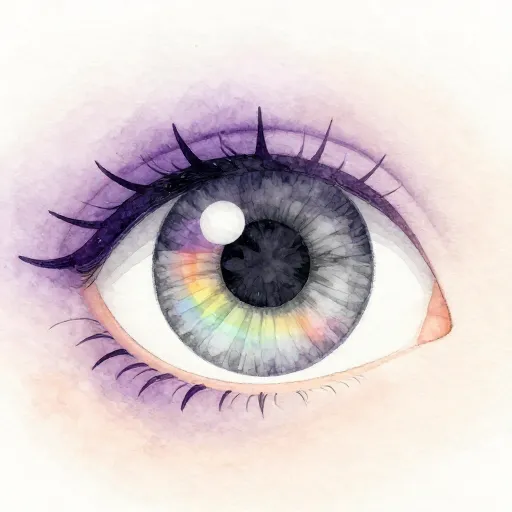
Some people are born with a condition called achromatopsia, which means they truly see the world in black and white. For them, Mary's Room isn't just a story, it's how they live every day. They use data and logic to understand colors they cannot see.
But does the robot "see" the sunset the way you do? Does it feel the warmth of the light or the beauty of the purple clouds?
If Mary’s Room proves that experience is different from data, then we might never be able to build a robot that truly "feels." It would be a Mary that stays in the room forever.

Most contemporary philosophers, when they are not on duty, find it hard to resist the view that there is something about the way things look that is over and above the physical.
Interestingly, Frank Jackson eventually changed his mind about his own experiment. He started to think that maybe everything is physical after all, and our brains just get confused by how vivid experiences feel.
This shows that even the most famous thinkers are always moving their ideas around. Philosophy is not about finding one final answer, but about finding better questions to ask.
Something to Think About
If you could download all the data about how it feels to be a bird into your brain, would you know what it’s like to fly, or would you still have to flap your wings to truly understand?
There isn't a right answer to this. Some people think the feeling is the only thing that matters, while others think the data is the key to everything.
Questions About Philosophy
Did Mary's Room actually happen?
What does 'Qualia' mean?
Why did Frank Jackson change his mind?
The World Outside the Door
Whether you agree with Frank Jackson or his critics, the story of Mary reminds us that the world is a wonderfully vivid place. There is a difference between knowing the world and living in it. Next time you see a bright blue sky or taste a cold strawberry, remember: you are doing something that even the most advanced computer in the world might never be able to do.