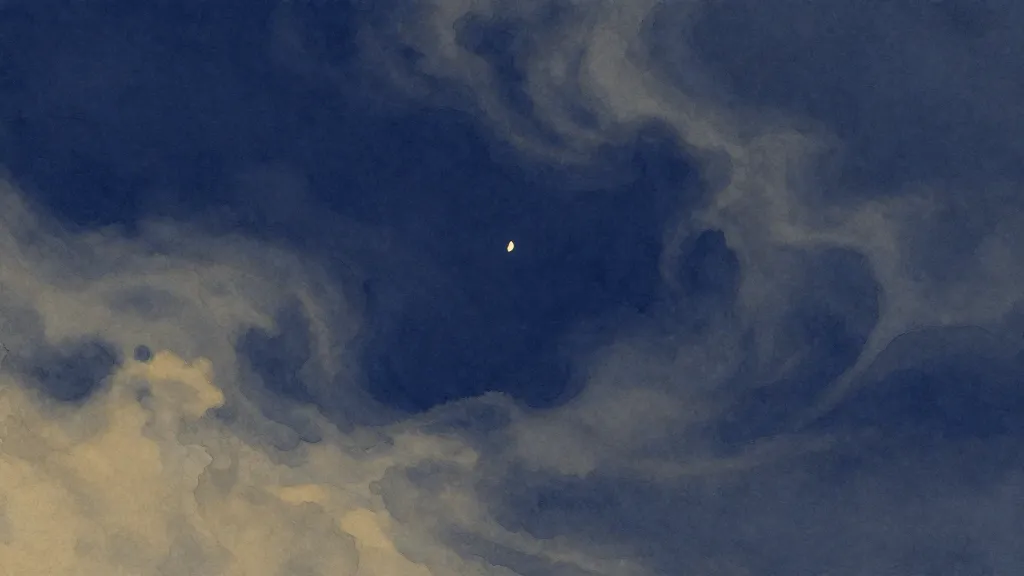
Have you ever looked at the stars, or even just at a spoon, and wondered why anything exists at all?
Humans have spent thousands of years trying to figure out the Meaning of Life, a big phrase for a simple itch: the feeling that our lives should 'count' for something. It is a question that connects a kid in a modern classroom to an ancient thinker in a tapestry-filled palace.
It usually starts with a 'Why.' You might ask why you have to go to school, or why the grass is green. Eventually, the questions get bigger: why am I me, and what am I supposed to be doing here? This is the start of philosophy, which is just a fancy way of saying 'thinking about thinking.'
For as long as humans have been around, we have looked for a story to explain our place in the world. In ancient times, people often found meaning through their community or their religion. They felt like they were part of a giant machine where every person was a necessary gear.
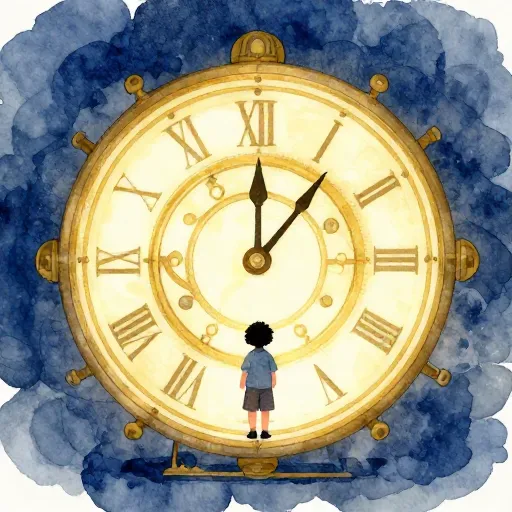
Imagine you are standing in the middle of a giant clock. You can see the gears turning and the hands moving. You realize that you are one of the tiny pins holding a gear in place. If you weren't there, the clock might stop. This is how many people in history felt about their place in the universe.
In Ancient Greece, about 2,300 years ago, a man named Epicurus set up a school in a garden. He did not think meaning came from being a hero in a war or having a lot of money. To him, the meaning of life was simply to be happy and to be surrounded by friends.
He believed that if you weren't in pain and you weren't worried, you were living well. This sounds simple, but it was a radical idea at the time. Most people thought life was about serving a king or winning glory. Epicurus suggested that meaning was something you could find in a simple meal and a good conversation.
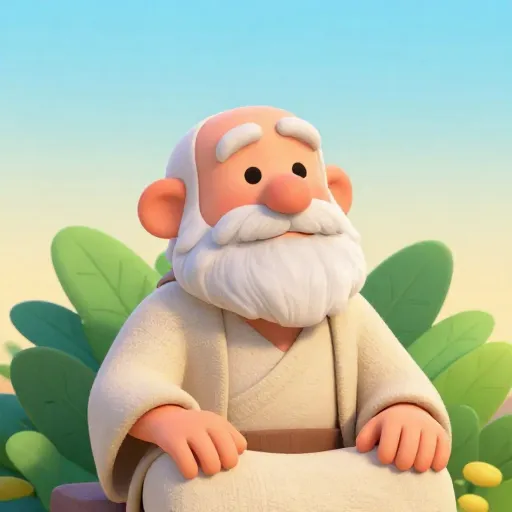
It is not so much our friends' help that helps us, as the confident knowledge that they will help us.

Finn says:
"If Epicurus just wanted to hang out in a garden with friends, does that mean my Saturday afternoon is actually a deep philosophical event?"
As time went on, the way people looked at the world changed. During the Middle Ages in Europe, most people believed their life's meaning was written before they were even born. They looked at life like a tapestry where God was the weaver, and they were just one thread in a beautiful, giant pattern.
In this view, you didn't have to 'find' meaning because it was already there. Your job was simply to do your part well, whether you were a farmer, a knight, or a queen. It was a comforting thought for many, because it meant no one was ever truly lost or unimportant.

The word 'Philosophy' comes from two Greek words: 'Philo' (meaning love) and 'Sophia' (meaning wisdom). So a philosopher is literally a 'lover of wisdom.' It’s not about having all the answers: it’s about loving the search for them.
Then came a time called the Enlightenment, starting around the 1600s. People started using science to explain the world. They realized the stars weren't just lights in a dome, but giant balls of gas millions of miles away. This was exciting, but it also made the world feel a bit more empty and quiet.
If science could explain how the heart pumps blood, did we still need a 'meaning' for why it was pumping? Some people started to worry that maybe life was just a series of accidents. This led to a group of thinkers called Existentialists who showed up much later, in the 20th century.

Mira says:
"I like the idea of the tapestry. Even if I can't see the whole pattern from my side, it's nice to think that my thread is supposed to be there."
One of these thinkers was Albert Camus. He lived in France during a very difficult time: World War II. He used an old Greek myth about a man named Sisyphus to explain how he felt. Sisyphus was cursed to roll a giant boulder up a hill, only for it to roll back down every time he reached the top.
Camus said that life can sometimes feel like rolling that boulder. We do the same things over and over: eat, sleep, work, repeat. But Camus had a surprise for us. He said that Sisyphus could be happy because he chose to keep rolling the rock.

The struggle itself toward the heights is enough to fill a man's heart. One must imagine Sisyphus happy.
Some people believe that every life has a specific purpose from the moment it begins, like a seed that is destined to become an oak tree.
Others believe that life is a blank canvas, and you are the artist. There is no 'right' thing to paint: the meaning is whatever you choose to put there.
This idea is called Existentialism. It means that existence comes first, and meaning comes second. You are born as a blank page, and you get to write the story yourself. If you decide that the meaning of your life is to be the best cat-sitter in the world, then that is the meaning of your life.
This can be a little bit scary. If there is no 'instruction manual' for life, how do we know if we are doing it right? But philosophers like Jean-Paul Sartre thought this was the ultimate freedom. It means you aren't a gear in a machine: you are the inventor of the machine.
Finn says:
"So if I'm the one writing my story, I don't have to worry about getting it 'wrong' because I'm the author. That's a huge relief."
Sometimes, people find meaning in the hardest places imaginable. Viktor Frankl was a doctor who was held in a concentration camp during the Holocaust. He noticed something incredible: the people who were most likely to survive were the ones who found a reason to keep going.
Some people stayed alive because they wanted to finish a book they were writing. Others did it because they wanted to see their children again. Frankl realized that humans have a 'will to meaning.' We don't just want to survive: we want our survival to matter.

Those who have a 'why' to live, can bear with almost any 'how.'
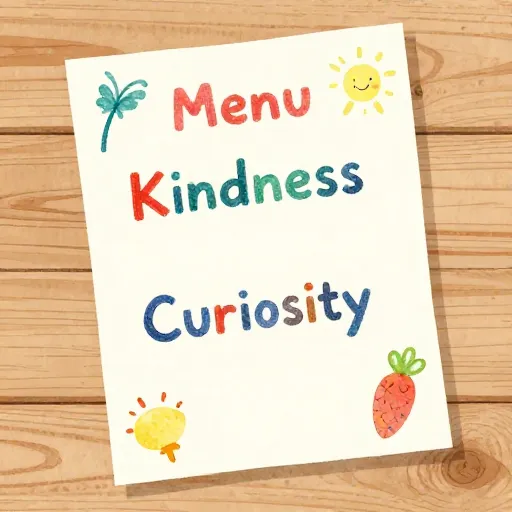
Make a 'Meaning Menu.' If you were the boss of your own meaning today, what would you put on the list? It could be: 1. Helping my dog feel happy. 2. Learning one new thing about space. 3. Making a really good piece of toast. Notice how these small things make the day feel 'fuller.'
In other parts of the world, meaning is seen as a balance. In Japan, there is a concept called Ikigai. It is often drawn as four circles that overlap. To find your Ikigai, or your 'reason for being,' you look for the spot where these four things meet:
- What you love
- What you are good at
- What the world needs
- What you can be paid for (or how you can support yourself)
Meaning Through the Ages
Finding meaning isn't a race to a finish line. It is more like a garden that you have to water every day. Some days, the meaning of your life might be as big as 'helping people.' Other days, it might be as small as 'finishing this drawing' or 'making my brother laugh.'
Psychologists like D.W. Winnicott thought that play was the most meaningful thing kids (and adults) could do. When you play, you are exploring what it feels like to be alive. You are creating a world that didn't exist before. In those moments, you aren't asking 'why' anymore, because the doing is enough.
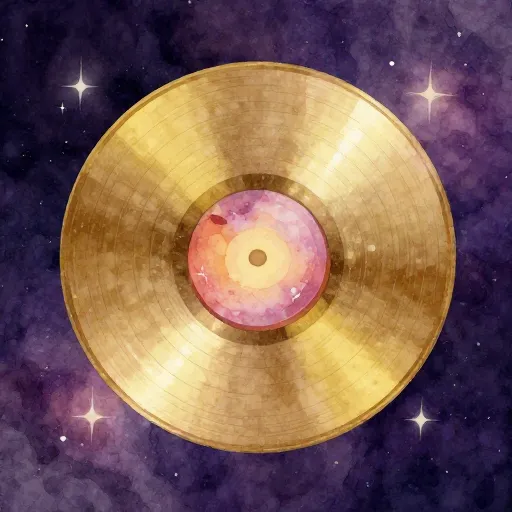
NASA actually sent a message about the 'meaning of life' into space! On the Voyager Golden Records, they included sounds of rain, heartbeats, and music from all over the world. They wanted to show any aliens out there that the meaning of being human is to feel, to create, and to explore.
So, if you feel a bit confused about the meaning of life, you are in good company. You are joining a conversation that has been going on for thousands of years. You don't need to have the answer today, or even next year. The fact that you are asking the question at all is a sign that you are truly awake to the world.
Maybe the meaning of life isn't a secret code to be cracked. Maybe it is just the name we give to the things that make us feel connected, useful, and curious. It is the 'yes' we say to the world every morning when we decide to get out of bed and see what happens next.
Something to Think About
If you could pick one thing that makes your life feel 'important' right now, what would it be?
Remember, there is no wrong answer here. It might be your cat, your favorite video game, a person you love, or just the way the sun feels on your face. That feeling is your own personal starting point for the meaning of life.
Questions About Philosophy
Does everyone have to have the same meaning of life?
Can my 'meaning' change when I get older?
What if I can't find a meaning for my life right now?
The Never-Ending Story
The search for meaning isn't a puzzle to be solved so you can stop thinking about it. It is more like a song that you keep singing. Every day, you get to add a new note or a new verse. You are the singer and the songwriter all at once.
