
Have you ever been absolutely sure about something, only to realize later that you were totally wrong?
Most people find being wrong embarrassing, but for Michel de Montaigne, it was the most exciting thing in the world. He lived during the French Renaissance, a time of massive change, and he decided to spend his life investigating the one topic he knew best: himself.
Imagine a tall stone tower in the middle of the French countryside. It is the year 1571, and outside the walls, the world is messy. People are fighting over religion, kings are arguing, and everyone seems to have a loud, angry opinion about everything.
Inside the tower, a man named Michel is doing something strange. He has retired from his job as a lawyer and politician to sit in a room filled with books. He is not there to write a law or a textbook. He is there to watch his own thoughts like a scientist watching a bug.
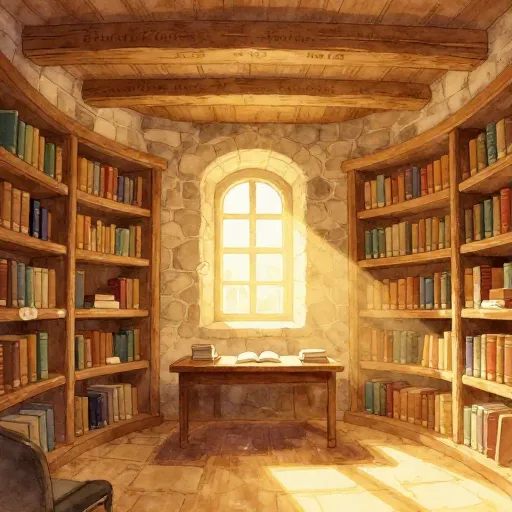
Imagine a room with no corners. Montaigne's library was round, so his eyes could travel across his thousands of books without getting stuck. On the wooden beams of the ceiling, he painted 57 different quotes from ancient Greek and Roman writers. Whenever he looked up to think, he saw a sky made of ideas.
Michel de Montaigne lived in a time of humanism, a movement where people started to focus on human life and experience rather than just rules from the past. He wanted to know why he liked certain foods, why he felt afraid, and why his mind changed so often.
He didn't want to be a perfect teacher. He wanted to be a real human being. He began writing down his thoughts in a brand new way that no one had ever tried before.

Finn says:
"Wait, so he just sat in a tower and wrote about whatever popped into his head? That sounds like the best job ever!"
The Invention of the Essay
When you hear the word essay today, you might think of a school assignment. But when Montaigne used the word, it meant something much more adventurous. In French, the word essai means an 'attempt' or a 'trial.'
For Montaigne, an essay was a way of testing an idea. He wasn't trying to prove he was right. He was just trying to see what he thought about a topic at that exact moment.

Try writing a 'Montaigne style' essay today. Pick something totally ordinary: the taste of a grape, the feeling of wearing new socks, or why you don't like the color yellow. Don't worry about an introduction or a conclusion. Just write down exactly what your brain says about it, even if you change your mind halfway through!
He wrote about big things like death and war, but he also wrote about small things. He wrote about smells, about his favorite horse, and even about how he hated it when people talked while he was trying to eat.
He believed that by looking closely at these small details, he could understand the big mystery of what it means to be alive. He was a pioneer of self-reflection, the act of looking inward to understand your own character.
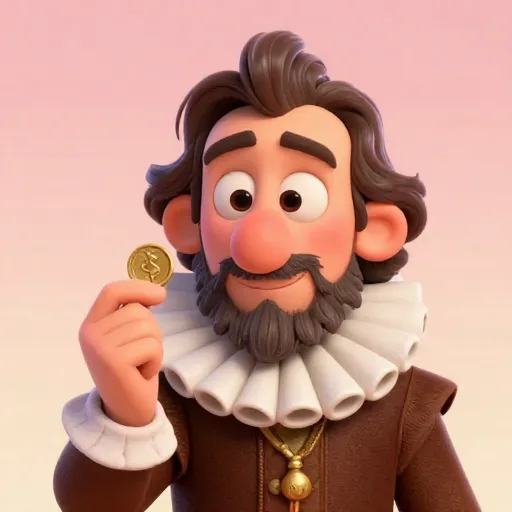
Que sais-je? (What do I know?)
The Question: What Do I Know?
Montaigne had a favorite motto that he even had carved into a wooden beam in his ceiling. The motto was: Que sais-je? This translates to 'What do I know?'
This is the heart of skepticism. Most philosophers before him tried to find the one 'Right Answer' to every question. Montaigne thought that was a bit silly. He realized that the world is too big and humans are too limited to know everything for sure.

Mira says:
"It's like looking at an optical illusion. If you tilt your head, the whole picture changes. I think Montaigne was always tilting his head."
He noticed that what people think is 'true' often depends on where they were born or what time they live in. He was one of the first thinkers to talk about perspective. He realized that if you had been born in a different country, you would have completely different 'certain' truths.
This didn't make him sad or grumpy. Instead, it made him more curious and more kind. If you know that you might be wrong, you are much more likely to listen to other people's ideas without getting angry.
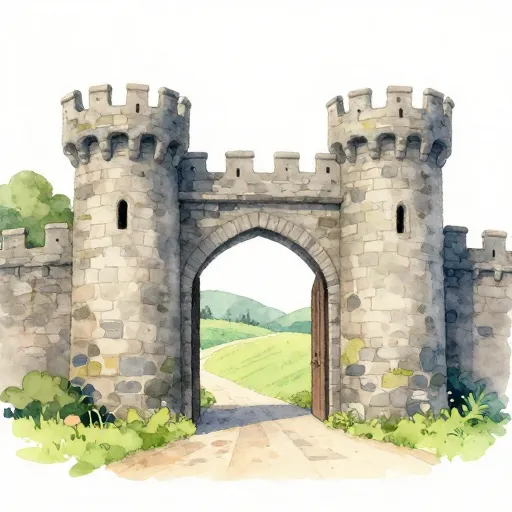
Montaigne wasn't just a writer: he was also a very brave peacemaker. During the wars in France, he kept his castle gates wide open. He refused to lock them or have guards, believing that if he showed he wasn't afraid and wasn't an enemy, people would respect his home. It worked: his house was never attacked.
The Wisdom of a Cat
One of Montaigne's most famous stories is about his cat. It sounds like a simple moment, but it changed how people thought about our place in the world.
Most people in the 1500s thought humans were the center of the universe. They thought animals were just like little machines that didn't have feelings or thoughts. Montaigne disagreed.

When I play with my cat, who knows if I am not a pastime to her more than she is to me?
This thought was a huge shift in judgment. It reminds us that we aren't the only ones with a point of view. Just because a cat can't speak French doesn't mean it isn't thinking, feeling, or even making fun of us in its own way.
Montaigne loved this kind of paradox. A paradox is something that seems to contradict itself but might actually be true. In this case: the more we realize we don't know, the more we actually understand about the world.
Finn says:
"I wonder if my dog thinks I'm the one who's weird because I spend so much time looking at a glowing rectangle!"
Being a Shifting Shape
Montaigne noticed something about himself that many people try to hide: he was inconsistent. One day he would feel brave, and the next day he would feel like a coward. One day he loved a certain book, and a week later he found it boring.
Instead of trying to fix this, he celebrated it. He said, 'I give my soul now one face, now another.' He believed that our identity is not a solid rock, but more like a river that is always flowing and changing.
It is better to pick a side and stick to it. Changing your mind makes you look weak or confused. Once you know the truth, you should defend it forever.
The world is always changing, and so am I. It is more honest to change my mind when I learn something new. Being 'sure' is just a way of stopping your brain from growing.
This is a very helpful way to think when you are growing up. You don't have to be just one thing. You can be a musician today and a scientist tomorrow. You can be shy at school but loud at home. Montaigne would say that you are simply exploring all the different parts of yourself.
He believed that the greatest thing in the world is to know how to belong to oneself. This means not letting other people's expectations decide who you are. It means being comfortable with your own weird, changing, messy mind.
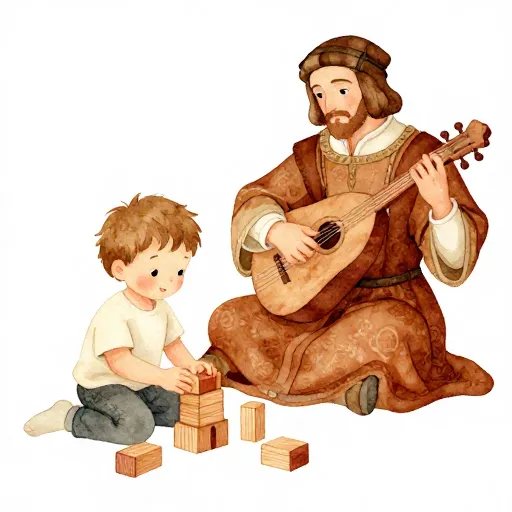
Montaigne had a very strange education. His father hired a tutor who spoke only Latin to him from the time he was a baby. For the first few years of his life, he didn't know a word of French! He even had musicians wake him up every morning with soft music so his brain wouldn't be 'shocked' into the day.
The Beauty of Friendship
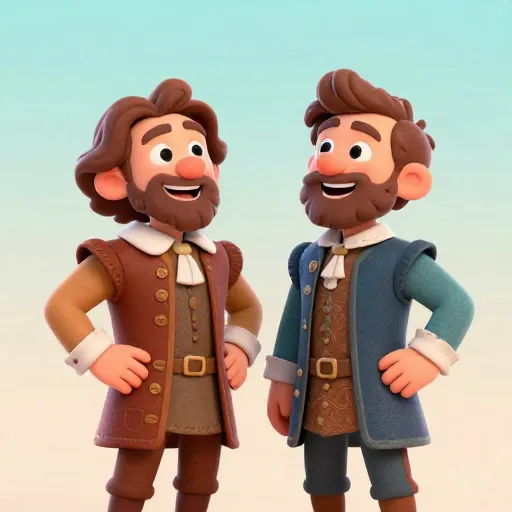
Montaigne also wrote one of the most famous essays ever written about friendship. He had a best friend named Etienne de La Boétie. They were so close that people said they seemed to have one soul in two bodies.
When people asked Montaigne why they were such good friends, he didn't give a long list of reasons. He didn't say it was because they liked the same sports or lived in the same town.
If you press me to say why I loved him, I can say no more than because it was he, because it was me.
He understood that some things in life are beyond logic. You can't always explain why you trust someone or why a certain person makes you feel at home. Montaigne valued these human connections more than almost anything else.
The Journey of the Essay
Why Montaigne Still Matters
Today, we are surrounded by people who are very sure they are right. You see it on the news, on social media, and in arguments on the street. Montaigne offers us a different path: the path of humility.
He teaches us that it is okay to say 'I don't know.' He teaches us that our own experience is a valuable teacher, but it isn't the only teacher. And most importantly, he teaches us that being a human is a grand, funny, confusing experiment.
Something to Think About
If you had to write a book about yourself, what is one thing you 'know' today that you might feel differently about when you are eighty years old?
There isn't a right answer here because your future self is a different person than you are now. Montaigne would tell you to enjoy the mystery of who that person might be.
Writing was Montaigne's way of talking to himself and to us across the centuries. He didn't want us to follow him; he wanted us to follow our own curiosity. He wanted us to look at our own lives and find the wonder in the middle of the everyday mess.
Questions About Philosophy
Was Montaigne a scientist?
Did he really live in a tower?
Why did he write so much about himself?
Keep Attempting
The next time you aren't sure of an answer in class, or you feel like you've changed your mind about your favorite hobby, remember Michel. He found freedom in not having to be perfect. He reminds us that life isn't a test you pass or fail: it's an essay you are constantly writing.