Have you ever wondered why a tree knows how to grow like a tree, or why the stars move in the same predictable circles every night?
About a thousand years ago, thinkers in China began asking these exact questions to create a system called Neo-Confucianism. They wanted to understand the connection between the laws of the universe and the way we should behave as human beings.
Imagine you are standing in a busy city in China during the Song Dynasty, around the year 1100. The air smells of ink and street food. You see scholars carrying scrolls and children playing with wooden toys. People here are asking big questions about the soul, the stars, and how to be a good person.
For a long time, the ideas of Confucius had helped people organize their families and their government. But now, people wanted more. They wanted to know why the world exists in the first place. They wanted to find the deep, hidden rhythm of life.
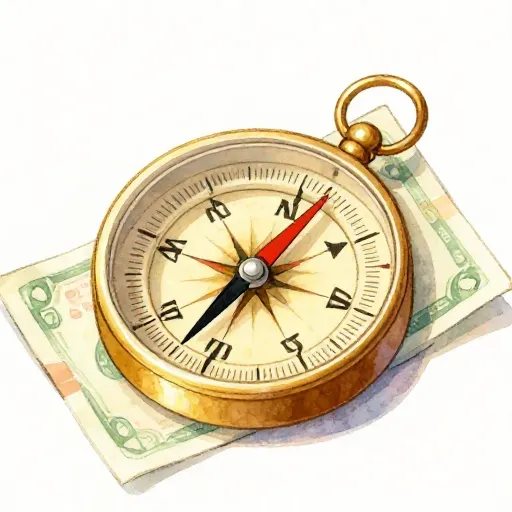
The Song Dynasty was a time of amazing inventions! While philosophers were thinking about the universe, Chinese inventors were busy creating the first paper money, gunpowder, and the magnetic compass.
The Recipe and the Ingredients
The thinkers of this time believed that everything in the world is made of two things. They called these Li and Qi. To understand these, you have to think like a builder or a chef.
Imagine you want to build a birdhouse. Before you touch a single piece of wood, you have a plan in your head. You know it needs a roof, a floor, and a little hole for the bird. That plan is the Li, or the principle. It is the invisible pattern that makes a birdhouse a birdhouse and not a spoon.
Finn says:
"So, if the Li is the plan for a birdhouse, does that mean there's a Li for a video game too? Or a Li for a pepperoni pizza?"
Now, think about the wood, the nails, and the paint you use to build it. That physical stuff is the Qi. It is the energy and matter that makes the plan real. Without the plan, the wood is just a pile of sticks. Without the wood, the plan is just a ghost in your mind.
Neo-Confucians believed that every single thing has its own Li. There is a Li for a mountain, a Li for a goldfish, and even a Li for a thunderstorm. When these patterns meet the energy of Qi, the world comes to life.
The many are ultimately one, and the one is actually many.
The Supreme Ultimate
If everything has its own pattern, you might wonder where all those patterns come from. The philosophers had an answer for that too. They called it the Great Ultimate, or sometimes the Supreme Ultimate.
Think of it like a giant, invisible sun that shines its light on everything. Even though the light hits a billion different leaves and stones, it all comes from the same source. This means that, at the deepest level, you and the stars are connected by the same cosmic logic.
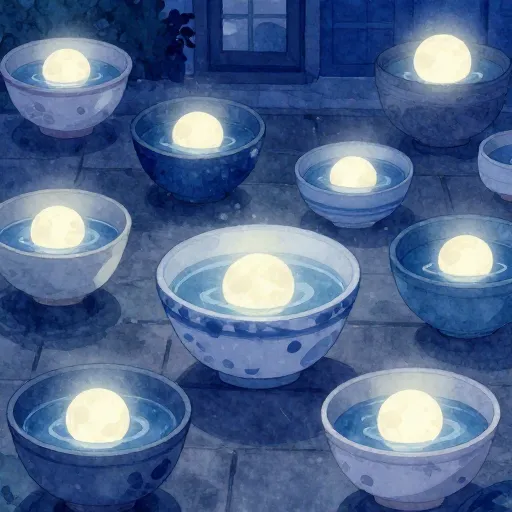
Imagine you have a thousand different bowls of water sitting outside at night. When the moon rises, you see a tiny reflection of the moon in every single bowl. Is there a thousand moons? No, there is only one moon, but its image is everywhere. That is how the Neo-Confucians thought about the Great Ultimate.
This idea changed how people looked at nature. They didn't just see a forest as a place to get wood. They saw it as a place where the Great Ultimate was expressing itself. Every rustling leaf was a tiny piece of a giant, beautiful puzzle.
Because we are part of this system, the Neo-Confucians believed we have a job to do. Our job is to keep our own Qi clear and bright so that we can see the Li inside ourselves. When we are angry or selfish, our Qi gets cloudy, like a muddy pond. When we are kind, the pond clears up.

Mira says:
"I like the idea of the muddy pond. It means that even when I'm having a bad day and being grumpy, the clear water is still down there somewhere."
Polishing the Mirror
One of the most famous thinkers of this movement was a man named Zhu Xi. He lived about 800 years ago and was a very busy person. He didn't just sit around thinking: he wrote hundreds of books and helped run schools.
Zhu Xi believed that we are all born with a perfect pattern inside us called Ren, which means humaneness or kindness. However, because our Qi can be a bit messy, we have to work hard to let that kindness show. He called this process Self-Cultivation.
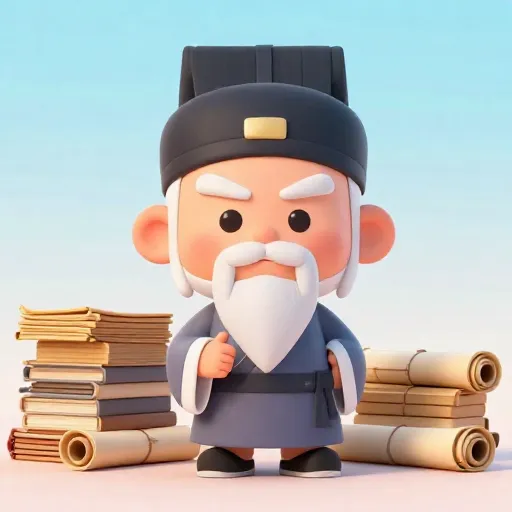
If one knows that his nature is good, then his original mind will naturally be active.
He often used the image of a dusty mirror. If you find an old mirror in an attic, you can't see your reflection because of the grime. But the mirror isn't broken: it's just covered. If you polish it every day, eventually the light will shine through perfectly.
How do you polish your internal mirror? Zhu Xi said you do it through the Investigation of Things. This didn't mean just reading books. It meant looking closely at the world around you to find the Li in everything.
The Li is perfect, eternal, and never changes. It is the 'should' of the universe, like how a circle should be perfectly round.
The Qi is physical, changing, and sometimes messy. It is the actual material that can be thick, thin, clear, or dirty.
How to Investigate Things
To a Neo-Confucian, studying was a holy act. When you study how a plant grows or how a river flows, you are learning about the Great Ultimate. You aren't just memorizing facts for a test: you are getting closer to the heart of the universe.
This led to a huge explosion in science and learning. People became experts in medicine, math, and even how to grow better rice. They believed that by understanding the small things, they would eventually understand the biggest thing of all.
Finn says:
"What if you investigate something and find out the pattern is really complicated? Is it okay if it takes a long time to understand?"
But they also believed that the most important thing to investigate was your own heart. They practiced a type of "quiet sitting." It wasn't exactly like the meditation you might see today, but it was a time to be still and let the dust of the day settle.
In that stillness, they hoped to feel the connection between their own Li and the Li of the whole world. It was a way of saying, "I am a small part of a very big, very organized story."
Try a version of 'quiet sitting' today. Find a comfortable spot and sit still for just two minutes. Don't try to clear your mind: just imagine that you are a mirror and the world around you is the light. See if you can feel the 'pattern' of your own breathing.
Living in Harmony
Neo-Confucianism wasn't just about thinking, though. It was about how you treated your parents, your friends, and your neighbors. Because we all share the same source, treating someone else badly is like hurting a part of yourself.
They believed in harmony. If everyone follows the pattern of kindness, the family is happy. If every family is happy, the village is peaceful. If every village is peaceful, the whole country works like a beautiful, well-tuned instrument.
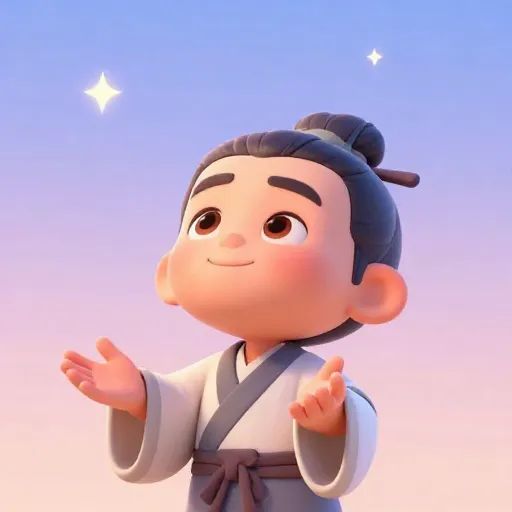
Heaven is my father and Earth is my mother, and even such a small creature as I finds an intimate place in their midst.
This made the movement very powerful. For hundreds of years, if you wanted to work for the government in China, Korea, or Japan, you had to pass big exams based on these ideas. It became the backbone of how millions of people lived their daily lives.
Even today, you can see the fingerprints of Neo-Confucianism in the way people respect their elders and value education. The idea that we should always be trying to improve ourselves is something that many people still hold dear.
The Journey of the Pattern
The Pattern in You
Sometimes, the world can feel very chaotic and messy. It can feel like things happen for no reason at all. But the Neo-Confucians would tell you to look closer. They would tell you that beneath the mess, there is always a pattern waiting to be discovered.
Whether you are solving a math problem, helping a friend, or just watching the rain, you are part of the Great Ultimate. You have a Li inside you that is perfect and bright. Your only job is to keep polishing that mirror so you can see it.
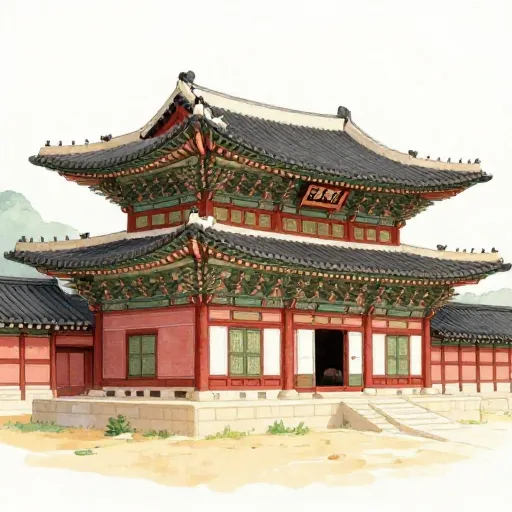
Neo-Confucianism became so important that it spread far beyond China. In Korea, it was the official philosophy for over 500 years during the Joseon Dynasty, influencing everything from architecture to how people wrote their names.
Something to Think About
If you were to investigate one thing in nature today to find its hidden pattern, what would it be?
There are no right or wrong answers. A Neo-Confucian might investigate a leaf, a dog, a math equation, or even their own feelings of anger or joy.
Questions About Philosophy
Is Neo-Confucianism a religion?
What is the difference between Confucianism and Neo-Confucianism?
Was it only for boys?
A World of Patterns
The next time you look at the veins in a leaf or the way the clouds move before a storm, remember the scholars of the Song Dynasty. They believed that everything you see is part of a deep, logical, and kind pattern. You aren't just an observer of the world: you are a part of the pattern itself.
