What if the rules of the world weren't written in stone, but were actually more like a giant box of LEGO bricks waiting for you to build something new?
Friedrich Nietzsche was a 19th-century thinker who believed that the most important job any human has is to create their own Philosophy. Born in Prussia, he spent his life asking why we follow the rules we do and how we can find the courage to become our truest selves.
Imagine a man with a mustache so large it looks like a small animal resting on his lip. He is walking through the Swiss Alps, 6,000 feet above the sea, where the air is so cold and clear it feels like drinking ice water.
This man is Friedrich Nietzsche. He doesn't have a permanent home, a fancy office, or many friends. Instead, he spends ten hours a day walking, thinking, and writing in small notebooks.
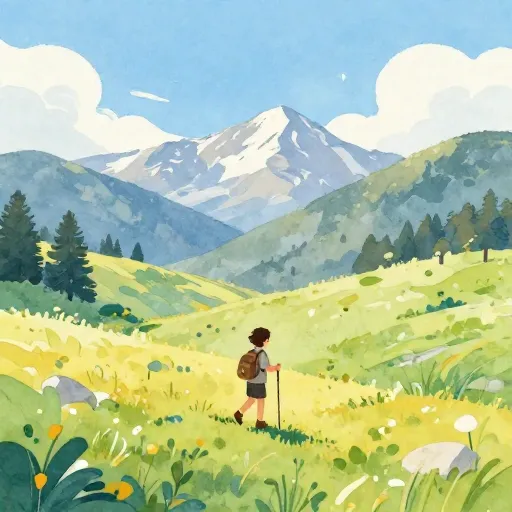
Imagine you are walking down a narrow mountain path. The only sound is the 'crunch' of your boots on the snow and the whistle of the wind. You haven't spoken to anyone in days, but you don't feel lonely. You feel like you finally have the space to hear your own thoughts clearly for the first time.
The Young Professor and the Quiet Rebel
Nietzsche started his life as a very serious boy in Prussia, a place where rules and tradition were everything. He was so smart that he became a university professor at just 24 years old, the youngest ever!
But Nietzsche wasn't interested in just repeating what old books said. He began to feel that the Values people around him followed were like old, dusty coats that didn't fit anymore.
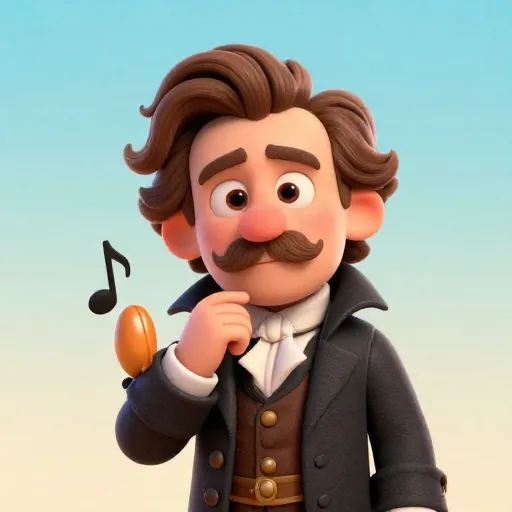
Without music, life would be a mistake.
He noticed that many people did things just because "that's how they've always been done." To Nietzsche, this was like being a sleepwalker. He wanted people to wake up and realize they were the artists of their own lives.

Finn says:
"Wait, so if I'm the one making the rules, can I decide that Tuesday is actually 'Ice Cream for Breakfast Day'?"
The Three Metamorphoses: Your Spirit's Journey
One of Nietzsche's most famous stories is about Metamorphosis, or how our spirits change and grow. He believed we go through three stages to become truly free.
- The Camel: This is the stage of learning. Like a camel in the desert, we take on heavy burdens of knowledge, rules, and skills to see how much we can carry.
- The Lion: This is the stage of Independence. The lion says "No!" to the old rules and fights for the right to make its own choices.
- The Child: This is the final and most powerful stage. The child doesn't fight; the child creates, plays, and says a "Sacred Yes" to life.
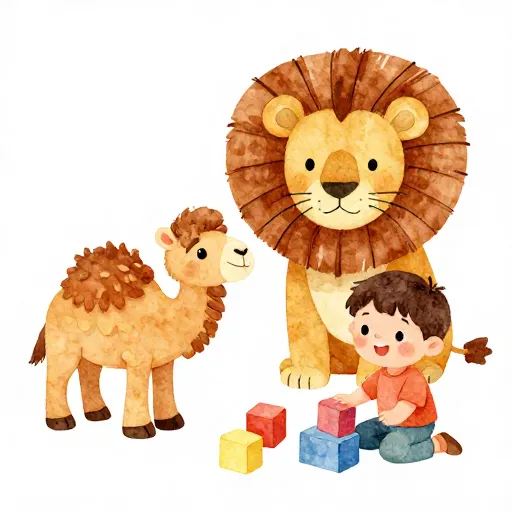
Which stage are you in right now? Think about school. When you are learning your math tables, you are being a Camel (carrying knowledge). When you ask 'Why do I have to do this?', you are being a Lion. When you take what you've learned and build a cool project just for fun, you are being a Child!
The Will to Power: The Tree in the Sidewalk
Have you ever seen a tiny weed pushing its way through a crack in a concrete sidewalk? That is what Nietzsche called the Will to Power.
Many people think "power" means being a bossy king or a bully, but Nietzsche meant something different. To him, power is the inner energy that wants to grow, overcome obstacles, and become more than it was yesterday.

Mira says:
"It's like a butterfly. It has to be a caterpillar first, but it doesn't stay that way. It keeps changing until it can finally fly."
It is the feeling you get when you finally master a difficult song on the piano or learn to ride a bike. You aren't winning against someone else: you are winning against your own limits.
Nietzsche believed that if we listen to this inner drive, we can become an Overman (or Übermensch). This isn't a person with literal superpowers, but someone who has the courage to create their own meaning in a world that can sometimes feel empty.
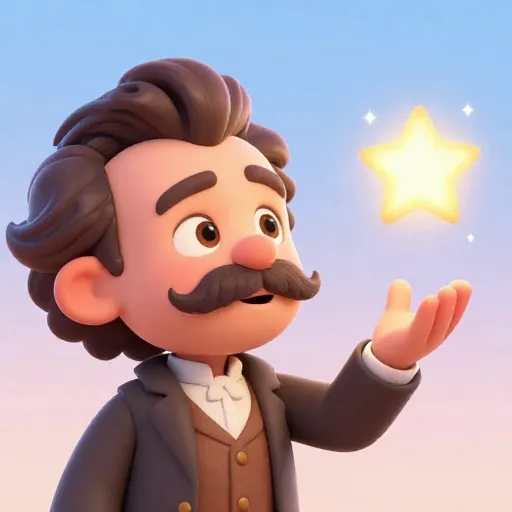
One must still have chaos in oneself to be able to give birth to a dancing star.
The Again Game: The Eternal Recurrence
Nietzsche once had a thought that was both scary and wonderful. He called it the Eternal Recurrence.
He imagined a tiny demon whispering in your ear: "Every single thing that happens in your life will happen again and again, exactly the same way, forever."
It's safe and easy. You don't have to worry about making mistakes because you're doing what everyone else is doing. But you might never find out who you really are.
It can be lonely and difficult. You will definitely make mistakes! But you get to build a life that feels exactly right for you.
Would you be upset? Or would you be happy because your life is so beautiful and exciting that you'd love to live every second of it a billion times?
This was his ultimate test. He wanted us to live in a way that makes us say "Yes!" to the whole thing, even the boring parts and the hard parts.

Nietzsche was a total 'walking machine.' He believed that his best ideas only came to him when he was moving. He once said, 'Do not believe any idea that was not born in the open air!' If he got stuck, he would just keep walking until the answer appeared.
Loving Your Fate (Even the Rainy Days)
Nietzsche used a Latin phrase for this: Amor Fati, which means "Love of Fate." It is the idea that we shouldn't just "put up" with our lives, but we should love everything that happens to us.
Think of a great story. If the hero never got lost or never faced a dragon, the story would be boring. The hard parts are what make the victory feel real.
Finn says:
"So even when I lose a game or it rains on my birthday, Nietzsche says I should find a way to love that part of the story too? That's hard!"
Nietzsche believed there is no such thing as a single "Truth" that everyone must follow. He called this Perspectivism.
Just like five people looking at a mountain from different sides will see different shapes, we all have our own perspectives. Your job isn't to find the "one right way," but to find your way.

Become who you are.
Through the Ages: The Idea's Travel Log
Nietzsche’s ideas were so different that they took a long time to be understood. At first, almost no one read his books.
Later, some people misunderstood his words. His sister even edited his notebooks after he died to make it seem like he supported mean and bossy ideas, which wasn't true at all.
Nietzsche's Ideas Through the Ages
Today, we see Nietzsche's influence everywhere. When people talk about "finding themselves" or being a "free spirit," they are using his ideas.
He helped start a way of thinking called Existentialism, which says that since the universe doesn't come with a manual, we are the ones who get to write it.
Try the 'Again Game.' Pick one thing you did today - like eating a snack or playing a game. Imagine you have to do it exactly the same way every day for a thousand years. Does that make you want to change how you're doing it right now? How can you make this moment worth repeating forever?
Fighting the Nothingness
Sometimes, when people realize there are no fixed rules, they feel a sense of Nihilism. This is the scary feeling that nothing matters.
Nietzsche’s whole life was a fight against this feeling. He believed that even if the universe doesn't give us meaning, we can create it through art, music, and being brave.
He showed us that being human is like walking on a tightrope over a deep canyon. It’s a bit dangerous, but the view from the rope is the most exciting thing you will ever see.
Something to Think About
If you could write one 'rule' for your own life that isn't a rule for anyone else, what would it be?
Remember, Nietzsche believed there is no 'wrong' answer here. Your rule only has to make sense to you.
Questions About Philosophy
Was Nietzsche a 'bad guy'?
Did he really hate rules?
What is an Übermensch?
The Adventure of You
Nietzsche reminds us that life isn't a test where you try to get the right answers. It's a blank canvas where you are the artist. Whether you are currently a Camel learning the basics or a Lion finding your voice, remember that the goal is to eventually reach the stage of the Child: the person who can play, create, and say 'Yes' to the world with a happy heart.
