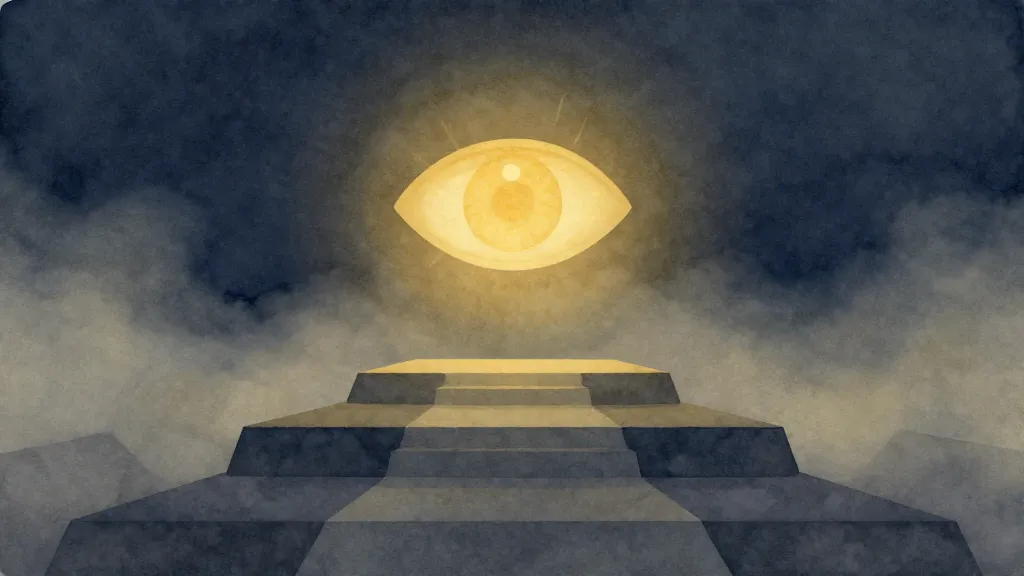
Have you ever been absolutely sure you saw a ghost in the corner of your room, only to realize it was just a pile of laundry?
This little trick of the mind is exactly what the philosophers of Nyaya began studying over two thousand years ago in India. They wanted to know how we can be certain about what is real, creating a toolkit for logic that people still use today.
Imagine you are walking through a bustling city in ancient India, about two thousand years ago. The air smells of cardamom and rain-dampened earth. In a quiet courtyard, a group of students sits in a circle, debating a single question: How do we know the sun will rise tomorrow?
This wasn't just a science class. These thinkers belonged to a school called Nyaya, which translates to 'rules' or 'method.' They believed that clear thinking was the most important skill a human could have.
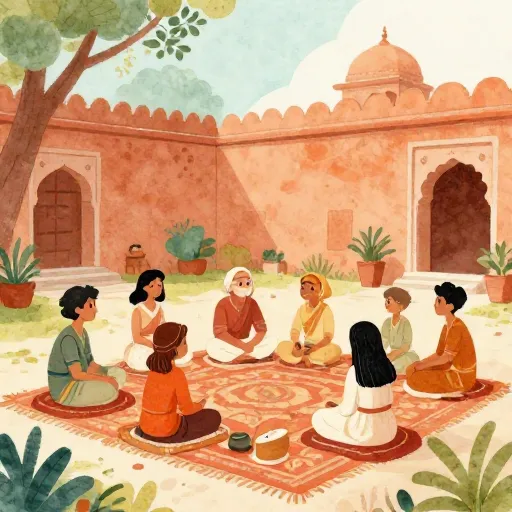
Imagine you are at a grand debate in the city of Mithila. Hundreds of people have gathered to hear two famous thinkers argue about the nature of the soul. There are no raised voices, only calm, steady points and counter-points. The loser doesn't get angry: they simply thank the winner for helping them see the truth.
At the center of this movement was a man named Akshapada Gautama. Legend says he was so deep in thought that he once fell into a well because he wasn't looking where he was going.
After that, it is said that God gave him a second pair of eyes on his feet so he could keep thinking while he walked. This is why he is often called the 'eye-footed' sage, a name that reminds us that logic must always stay grounded in the real world.
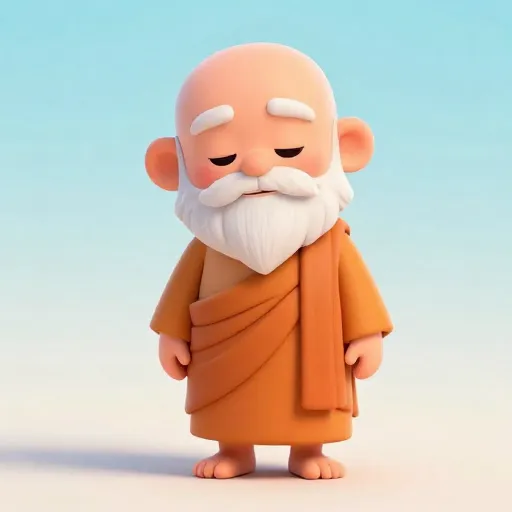
Doubt is the necessary first step toward the attainment of truth.
Gautama wrote down his ideas in short, punchy sentences called Sutras. These were meant to be memorized and unpacked, like a zip file for your brain.
He believed that the world is real, not a dream, and that we can understand it if we use the right tools. He identified four main ways that humans gain knowledge, which the Nyaya school calls Pramana.

Finn says:
"If I can only trust what I see, what happens when I'm looking at a magic trick? My eyes tell me the bird disappeared, but my brain knows it's still there somewhere!"
The first and most basic tool is Pratyaksha, or perception. This is what you learn through your five senses: sight, sound, smell, taste, and touch.
If you hold an orange, you know it is round because you can feel it and orange because you can see it. Nyaya philosophers were obsessed with how our senses can sometimes lie to us, like when a straight stick looks bent in a glass of water.
The senses are our only window to the world. If we can't see, touch, or hear it, we can't be sure it exists.
The senses are easily fooled by shadows, distance, and even our own moods. True knowledge comes from the mind, not the eyes.
But we can't see everything with our eyes. This leads to the second tool: Anumana, or inference. This is the art of using what you can see to figure out what you can't see.
Think of a detective solving a mystery. If you see wet footprints in the hallway, you can infer that someone just came inside from the rain, even if you didn't see them walk through the door.
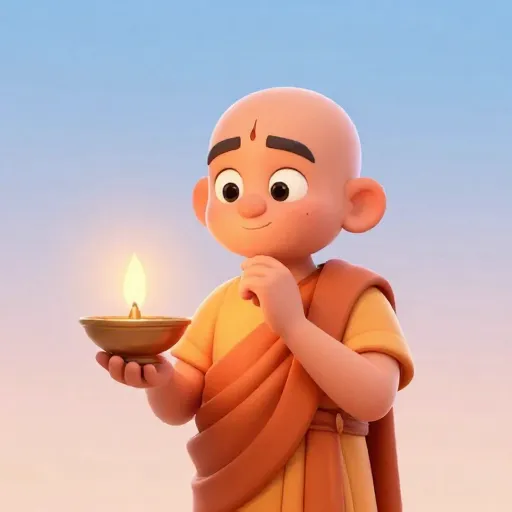
Knowledge is the lamp that illuminates the objects of the world.
To make sure their inferences were correct, Nyaya thinkers developed a famous five-step argument. They often used the example of a mountain and a fire to explain it to their students.
- The Statement: There is fire on that mountain.
- The Reason: Because there is smoke coming from it.
- The Example: Wherever there is smoke, there is fire, just like in a kitchen stove.
- The Application: This mountain has smoke that is just like the smoke from a stove.
- The Conclusion: Therefore, there is fire on that mountain.
Play the 'Inference Game' with a friend. Put five secret objects in a box (like a bell, an orange, a fuzzy sock, a bunch of keys, and a leaf). Have your friend reach in without looking and describe one 'clue' they perceive. Can you infer what the object is using the 5-step Nyaya method?
The third tool in the Nyaya toolkit is Upamana, which means comparison or analogy. This is how we learn about something new by comparing it to something we already know.
Imagine a friend tells you about a fruit called a 'mangosteen.' You've never seen one, but they tell you it tastes like a mix of a peach and a strawberry. Now, when you see a mangosteen, you recognize it because of that comparison.

Mira says:
"I like the idea of Upamana. It's like when I explain a new video game to my grandma by comparing it to a board game she played when she was little. We're building a bridge between our brains!"
The final tool is Shabda, or testimony. This is the knowledge we get from words, books, or people we trust.
Nyaya thinkers were very careful about this one. They believed you shouldn't trust just anyone: you should only trust 'Apta,' or reliable people who know what they are talking about and have no reason to lie to you.
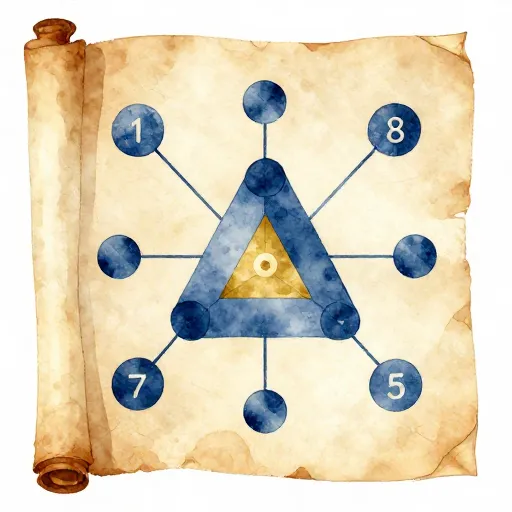
The Nyaya school was so influential that its rules for debate were used by doctors, mathematicians, and even kings across India for over two thousand years. It was the 'operating system' for the Indian intellectual world.
Why did these ancient philosophers care so much about smoke on mountains and reliable witnesses? They believed that wrong knowledge leads to suffering, while right knowledge leads to Moksha, or freedom.
If you think a rope is a snake, you will feel fear. Once you use your 'pramanas' to realize it is just a rope, the fear disappears. Logic, for them, was a way to stop being afraid of things that aren't actually there.
The purpose of reasoning is to remove the obstacles that prevent us from seeing things as they truly are.
The Long Journey of Logic
Over the centuries, Nyaya didn't stay the same. Around the 13th century, a new branch called Navya-Nyaya (New Logic) appeared in a place called Mithila.
These later thinkers, like a philosopher named Gangesha, created an incredibly complex language for logic. They wanted to define things so clearly that there was no room for any misunderstanding at all, almost like the code used by computers today.
Think of the 'Golden Swan' analogy often used in Indian philosophy. If someone tells you there is a golden swan in the lake, you use comparison (Upamana) to imagine a swan-shape but with the color of your mother's wedding ring. You haven't seen it yet, but you now have a mental map to look for it.
In Nyaya schools, students didn't just listen to a teacher talk. They practiced Tarka, the art of debate. They would sit for hours, challenging each other's ideas to see which ones could stand up to the pressure.
They believed that a good argument was like a gold coin: you have to rub it, heat it, and cut it to make sure it is real gold. If an idea survived a debate, it was worth keeping.
Finn says:
"So, if a reliable person tells me something, but my own eyes see something different... who wins? I guess I'd have to use a lot of 'Tarka' to figure that one out."
Today, we use Nyaya every time we check a news story to see if it's true, or every time we ask a friend, "How do you know that?" It teaches us that being curious isn't just about asking questions, it's about asking the right questions.
It reminds us that even if we feel lost in a fog of uncertainty, we have tools to find our way back to the truth. We just have to remember to look at the world with our eyes, our minds, and maybe even the 'eyes in our feet.'
Something to Think About
If you could add a fifth 'Pramana' (a fifth way of knowing things) to the toolkit, what would it be?
Think about things like intuition, dreams, or even 'gut feelings.' There is no right or wrong answer here, just like in a Nyaya debate, the goal is to explore the idea as far as it can go.
Questions About Philosophy
Is Nyaya a religion?
How is Nyaya different from the logic we learn in school?
Can I use Nyaya to win an argument with my parents?
Keep Your Eyes on Your Feet
The next time you aren't sure about something, remember the eye-footed sage. Stop, look at your 'sources of knowledge,' and see if your thoughts are grounded in reality. The world is a big, complicated place, but you have the tools to understand it, one step at a time.