
Have you ever asked a question that didn't have a single right answer?
Humans have been using Philosophy for thousands of years to explore the mysteries of Existence, fairness, and the mind. When we ask a big question, we are joining a long conversation that started in the dusty streets of ancient cities and continues in our heads today.
Imagine you are standing in a crowded marketplace in the city of Athens, about 2,400 years ago. The air smells of olives, roasting meat, and salty sea air. People are shouting prices for wool and pottery, but in one corner, a small crowd has gathered around a man with a messy beard and no shoes.
This man is not selling anything. Instead, he is asking people questions they think they already know the answer to. He asks, "What is courage?" or "What is beauty?" and every time someone answers, he asks another "Why?" This man was Socrates, and he was one of the first famous philosophers.
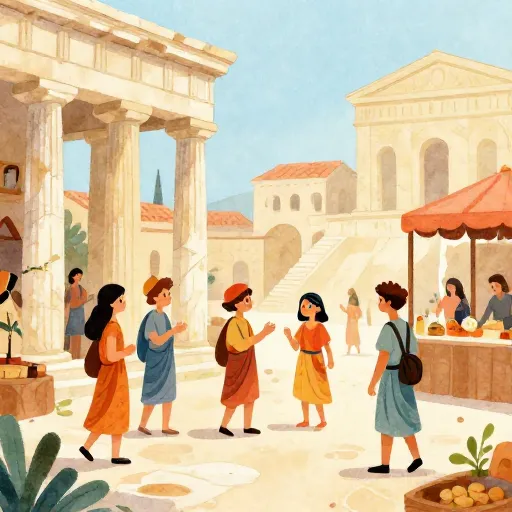
Imagine the Agora in Athens. It is not a quiet library. It is a loud, messy place where people argue about politics, buy fish, and gossip. This is where philosophy was born: right in the middle of real life.
Socrates believed that the most important thing a person could do was to think clearly about their own life. He didn't want to tell people what to think, he wanted to show them how to think. This is where the journey of Philosophy begins: with a person who is brave enough to say, "I don't know, let's find out."
At its heart, philosophy is the study of big ideas that don't have a simple "yes" or "no" answer. It is a way of looking at the world with a sense of Curiosity that never quite goes away, even when you grow up.
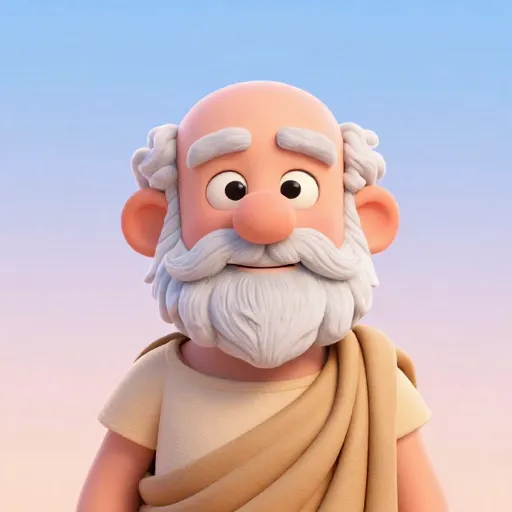
The unexamined life is not worth living.
The Difference Between a Fact and a Big Question
There are some questions that we can answer by looking at a map or using a ruler. If you ask, "How tall is that tree?" you can measure it. If you ask, "What is the capital of France?" you can look it up in a book. These are factual questions.
Philosophical questions are different because they are about the meaning behind the facts. Instead of asking how tall the tree is, a philosopher might ask, "Does the tree feel the wind?" or "Is a tree still a tree if it loses all its leaves?"
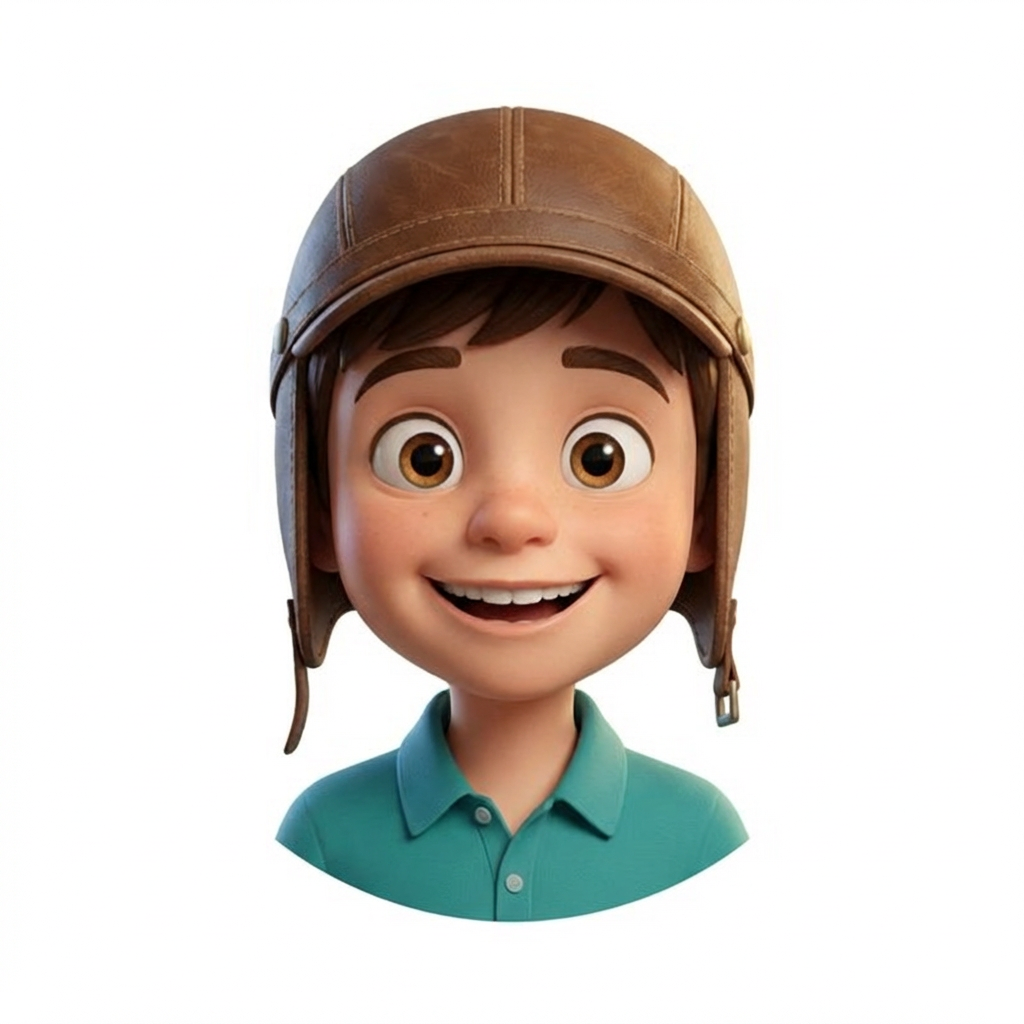
Finn says:
"What if my 'red' is actually your 'blue,' but we both just call it 'red' because that's what we were taught?"
To be a philosopher, you have to be comfortable with the feeling of being a little bit lost. It is like being an explorer in a land where there are no maps. You have to use your own Logic and imagination to find your way through the forest of ideas.
- Factual question: What time is it?
- Philosophical question: Does time exist if no one is watching the clock?
- Factual question: Who is my best friend?
- Philosophical question: What makes a person a friend?
Play the 'Why' game with a friend. Start with a simple fact, like 'The sky is blue.' Have your friend ask 'Why?' to every answer you give. See how many steps it takes before you reach a philosophical question that you can't answer with a simple fact.
Questions About the World (Metaphysics)
One of the biggest branches of philosophy is called Metaphysics. This sounds like a complicated word, but it really just means the study of what is real. Metaphysicians ask questions about the universe that science might not be able to answer yet.
Think about your favorite toy. If you took it apart piece by piece and replaced every part with a brand new one, would it still be the same toy? This is a very old puzzle called the Ship of Theseus. It makes us wonder what makes something "itself."

Mira says:
"That makes me think about how a river is always the same river, even though the water inside it is always moving and changing."
These kinds of questions help us understand Identity. We change every day: our hair grows, we learn new things, and the cells in our bodies are constantly being replaced. If everything about you changes over time, what is the part of you that stays the same?
Some philosophers think it is your memories. Others think it is your "soul" or your personality. There isn't a final answer, but thinking about it helps us see how amazing it is to be a person who grows and changes.
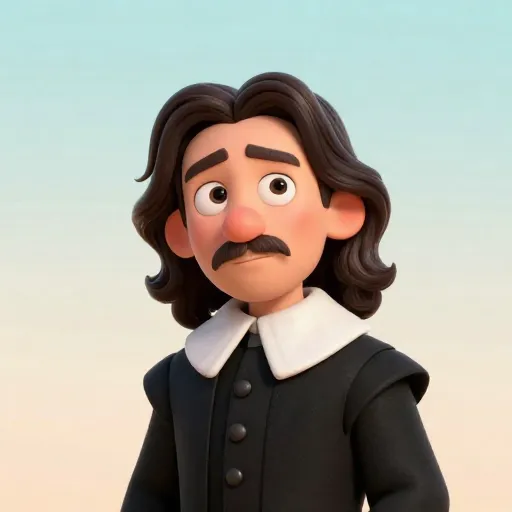
I think, therefore I am.
Questions About Right and Wrong (Ethics)
Another big part of philosophy is called Ethics. This is the study of how we should live and how we should treat other people. You probably think about ethics every day without even realizing it when you decide whether to share a snack or tell the truth.
Ethical questions are often about Fairness. Is it ever okay to break a rule? If you had to choose between helping one person you love or five people you don't know, what would you do? These are not easy choices, and philosophers have been debating them for centuries.
The right thing to do is whatever makes the greatest number of people happy, even if you have to break a small rule.
Some rules (like 'don't lie') are always important, no matter what the outcome is. You should follow the rule because it is your duty.
Sometimes, ethics feels like a balancing act. On one side, we have our own needs and wants. On the other side, we have the needs of the community. Finding the right balance is what philosophers call seeking Justice.
- Is it better to be famous or to be kind?
- If you do something good just to get a reward, is it still a good deed?
- Should we treat animals the same way we treat humans?
Finn says:
"What if I found a wallet on the ground? Would it be more 'fair' to give it to a poor person or back to the rich person who lost it?"
How We Know What We Know (Epistemology)
Have you ever had a dream that felt so real you were surprised when you woke up? This leads to a branch of philosophy called Epistemology. This is the study of knowledge and how we can be sure of anything at all.
Imagine there is a clever robot that looks and acts exactly like a human. If the robot says it feels happy, does it actually feel happy, or is it just programmed to say those words? How do you know that you aren't a robot, or that the whole world isn't just a very detailed simulation?

The word 'Philosophy' comes from two Greek words: 'Philo' (meaning love) and 'Sophia' (meaning wisdom). So a philosopher is literally a 'lover of wisdom.'
Philosophers like René Descartes spent a lot of time worrying about this. He realized that even if he couldn't trust his eyes or his ears, he could trust that he was thinking. Because he was thinking, he knew he must exist. This gave him a solid place to start building his ideas.
Today, we use epistemology to think about things like the internet. When you see a video online, how do you decide if it is true? Being a philosopher means being a bit like a detective, looking for the best reasons to believe something rather than just believing it because it sounds good.

Plumbing is a useful metaphor for philosophy: it is usually invisible until something goes wrong.
Through the Ages
Ideas don't just stay in one place. They travel across oceans and through centuries, changing as different people add their own thoughts to the mix.
Through the Ages
Why Bother Asking?
You might wonder if there is any point in asking questions that don't have answers. Why spend time thinking about whether a tree hears the wind? The reason is that the more we ask, the bigger our world becomes.
Asking philosophical questions stretches your mind like a muscle. It helps you understand that other people might see the world very differently than you do. This is called Perspective, and it is one of the most powerful tools a person can have.
Think about a piece of art you love. Is it beautiful because of the colors, or is it beautiful because of how it makes you feel? If everyone else in the world hated it, would it still be beautiful? Philosophers call this the study of Aesthetics.
When we practice philosophy, we become more patient. We learn that it is okay to be uncertain and that "I don't know" is often the beginning of a great adventure. We learn to listen to others and to look at the world with a sense of Wonder that makes even the most ordinary things seem extraordinary.
Philosophy isn't just for people in old books or professors in universities. It is for anyone who has ever looked at the stars and felt small, or looked at a ladybug and felt amazed. It is for you, right now, as you wonder what you will think about next.
Something to Think About
If you could ask the universe one question and get a completely honest answer, what would it be?
There is no right or wrong answer to this. Some people ask about the stars, others ask about their pets, and some ask about the beginning of time. Your question shows what you value most.
Questions About Philosophy
Is philosophy too hard for kids?
What is the most famous philosophical question?
How can I start practicing philosophy at home?
Keep Wandering
The world is much larger than the things we can touch and see. By asking big questions, you are keeping your mind open to all the possibilities of the universe. Remember: the goal isn't always to find the answer, but to enjoy the journey of looking for it. Happy thinking!
