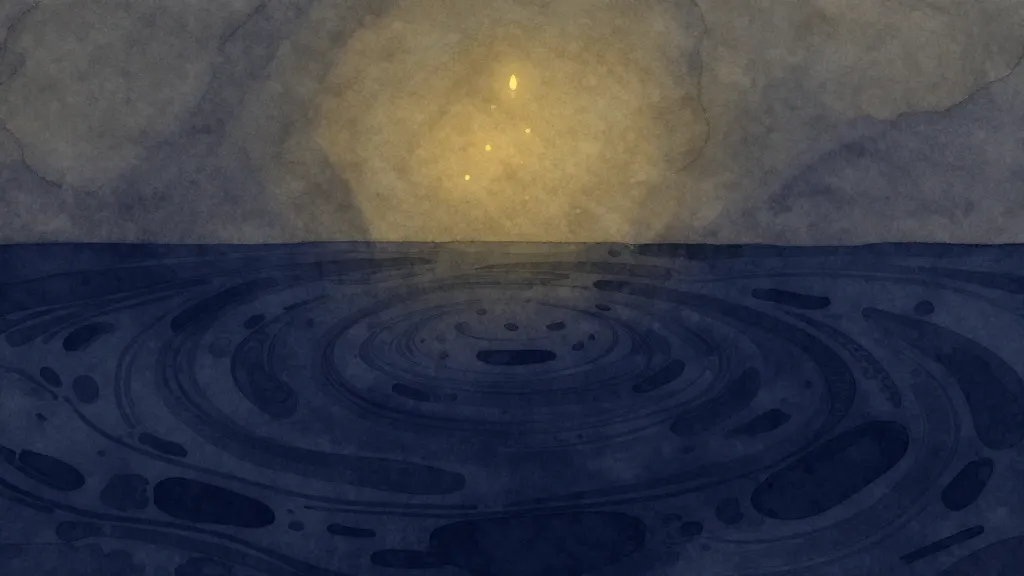
Have you ever been so caught up in a movie that you forgot you were sitting in a theater?
Thousands of years ago, thinkers in India developed Samkhya, a system of philosophy that asks us to look at the world like a giant stage play. They believed that most of our sadness comes from forgetting that we are the audience and mistakenly thinking we are the actors on the screen.
Imagine walking through a dense forest in ancient India over 2,500 years ago. You might find a group of students sitting in a circle under a banyan tree, listening to a teacher explain why the world exists.
This was the birthplace of Samkhya, one of the oldest and most influential schools of thought in Indian history. It did not start in a laboratory or a modern university, but in the quiet moments of observation and deep thinking.
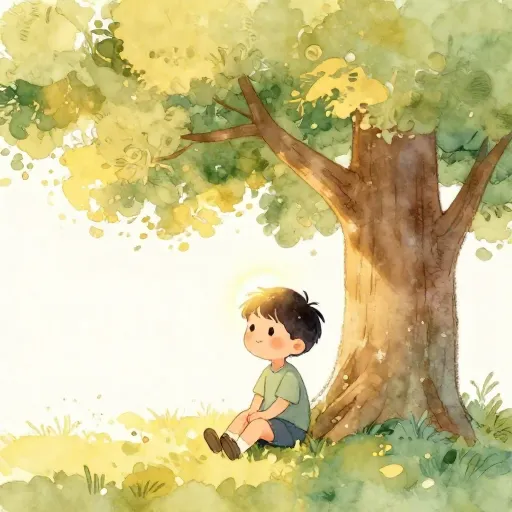
The legendary founder of Samkhya was a sage named Kapila. Legend says he was born with full knowledge of the universe and didn't need to go to school because he already understood how everything worked!
The word Samkhya actually means "number" or "enumeration." This is because the early philosophers who created it wanted to list every single thing that makes up our reality, from the dirt under our fingernails to the way we feel when we are happy.
They were like cosmic accountants, trying to balance the books of the universe. They wanted to know exactly how many "parts" there were to a human being and how those parts fit together.

Finn says:
"If these philosophers were counting everything, did they ever finish? Is there a number for the feeling of a cold ice cube on your tongue?"
The Great Divide: Two Parts of Everything
At the heart of Samkhya is a big idea called Dualism. This is the belief that everything in the entire universe can be divided into two completely different categories that never truly mix, even though they seem to.
The first category is called Purusha. Think of Purusha as pure awareness or the "Watcher." It does not do anything, it does not change, and it cannot be hurt or broken. It is the part of you that is just "there," witnessing everything that happens.
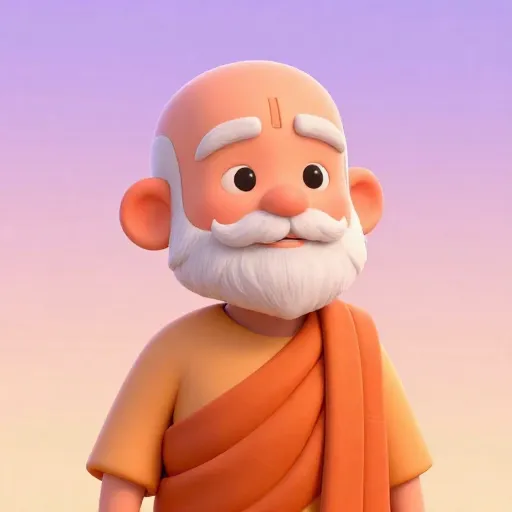
The spirit is the witness, separate, a spectator, idle and non-agent.
The second category is called Prakriti. This is everything else. It includes the trees, the stars, your physical body, and even your thoughts and feelings. Prakriti is like a master artist who is constantly painting, changing, and moving.
While Purusha just watches, Prakriti does all the work. If you are running a race, your lungs breathing and your legs moving are all part of Prakriti. The silent "you" that knows you are running is Purusha.
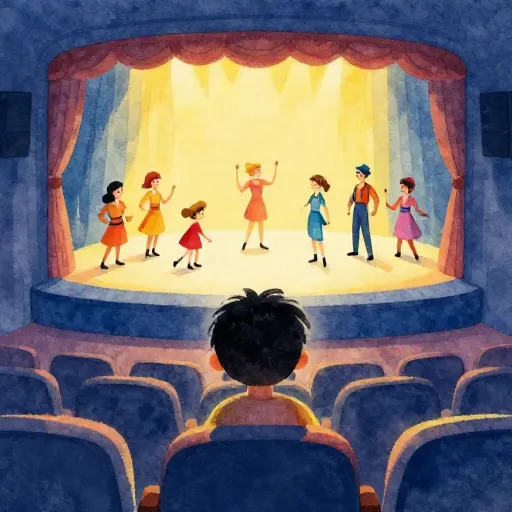
Imagine you are at a play. The curtains open, the actors shout, and the music swells. You might feel scared or happy for the characters. But the whole time, you are sitting in a velvet chair, perfectly safe. Samkhya says your life is the play, and you are the person in the chair.
The Three Gunas: The Flavors of Nature
If Prakriti is the artist, she has three main colors on her palette that she uses to create everything we see. These colors are called the Gunas. Every single thing in the world is made of a mix of these three qualities.
First, there is Sattva. This is the quality of light, clarity, and kindness. When you feel calm, curious, and like everything makes sense, that is Sattva working in your mind.

Mira says:
"Sattva sounds like that feeling when you finally finish a puzzle and everything just clicks into place. It’s the ‘aha!’ moment."
Next is Rajas. This is the quality of energy, movement, and passion. It is what makes a volcano erupt, what makes a bird fly, and what makes you feel excited (or even a little bit angry) when you are playing a game.
Finally, there is Tamas. This is the quality of heaviness, darkness, and stillness. It is the reason we sleep, the reason stones stay put, and sometimes the reason we feel lazy or confused.
Look around your room and find three things: one that is very still (Tamas), one that is moving or bright (Rajas), and one that makes you feel peaceful (Sattva). Everything is a mix of these three!
The Problem of the Mirror
If Purusha is just a watcher and Prakriti is just a doer, why do we get so stressed out? Samkhya says it is because we get them confused. This confusion is the root of all human problems.
Imagine a beautiful clear diamond sitting next to a bright red flower. The diamond is actually clear, but because it is so close to the flower, it looks red. If the diamond could talk, it might say, "Oh no, I am turning red!"

Nature is like a dancer who, having shown herself to the spectator, desists from the dance.
In this story, you are the diamond (Purusha). Your feelings, like sadness or anger, are the red flower (Prakriti). You are not actually sad, but you are so close to the feeling of sadness that you think you are the sadness.
Samkhya teaches that the goal of life is Discernment. This means learning to tell the difference between the watcher and the movie. When you realize you are just the witness, the "red" of the world stops bothering you so much.
Mira says:
"It’s like being in a video game. My character might fall into a pit, but I'm still sitting on my couch holding the controller. I'm safe, even if the game is hard."
How the World Began (According to Samkhya)
Unlike some other philosophies, Samkhya does not focus on a creator god who built the world out of clay. Instead, it describes a process of Evolution. They believed the world "unfolded" like a flower opening up.
It started when the three Gunas lost their balance. When they started spinning and mixing together, they created the Intellect, then the sense of "me" (the ego), and finally the five senses and the physical world we touch.
The brain creates the mind. When the body stops working, the 'you' inside stops existing too.
The mind and body are just clothes that the Watcher (Purusha) wears. The Watcher is eternal and never dies.
Because of this, Samkhya philosophers were some of the first people to think about how the mind works. They realized that our eyes and ears are just tools, and there is something deeper inside that uses those tools to understand the world.
They didn't see the world as a mistake or a bad place. They saw it as a grand performance put on by Prakriti to help Purusha realize who it really is. It is like a parent putting on a puppet show to teach a child a lesson.
Through the Ages
The Journey Through Time
Samkhya is so old that its ideas are woven into almost every other Indian philosophy. If you have ever heard of Yoga, you are actually looking at Samkhya in action.
While Samkhya provides the map (the ideas), Yoga provides the boots for the hike (the practice). Yoga uses the rules of Samkhya to help people quiet their minds so they can finally see the Watcher clearly.

There is no knowledge equal to Samkhya, and no power equal to Yoga.
In the modern world, some scientists and thinkers are looking back at Samkhya with fresh eyes. They are interested in how these ancient philosophers talked about Consciousness as something separate from the physical brain.
Even though we have spaceships and computers now, the core question of Samkhya remains. When you look in the mirror, are you looking at a body that has a mind, or are you a mind that happens to have a body?
Samkhya is an 'Atheistic' school, which means it doesn't require a belief in a God to work. It focuses entirely on the laws of nature and the reality of the self.
Samkhya does not want you to just believe what it says. It wants you to test it. It asks you to sit quietly and watch your thoughts go by like clouds. If you can see the thoughts moving, then you cannot be the thoughts, right?
This realization brings a strange kind of peace. It means that no matter how loud or messy the world gets, the part of you that is truly "you" is always safe, always quiet, and always just watching the dance.
Something to Think About
If you are the watcher and not the things you do, does that change how you feel when you make a mistake?
There isn't a right or wrong answer here. Just notice how it feels to think of yourself as the 'audience' for your own life for a moment.
Questions About Philosophy
Is Samkhya a religion?
What is the difference between Samkhya and Yoga?
Does Samkhya believe in reincarnation?
The Infinite Spectator
Samkhya invites us to a very special kind of freedom. It tells us that while the world around us will always be changing, moving, and sometimes confusing, there is a part of us that is as still as a mountain and as clear as a mirror. You are not just the dance; you are the one who sees the beauty in it.