If you were handed a book that told you exactly what would happen every day of your life, would you want to read it?
In the middle of the 20th century, a man named Jean-Paul Sartre argued that such a book doesn't exist. He became the face of existentialism, a way of thinking that says we are born without a pre-set purpose, giving us the radical free will to create ourselves from scratch.
Imagine sitting in a busy café in Paris about eighty years ago. The air is thick with the smell of roasted coffee and the sound of people arguing about big ideas. At a small round table sits a man with thick glasses, scribbling quickly in a notebook.
This is Jean-Paul Sartre. He lived through a time when the world felt very messy and uncertain, especially during World War II. Because things were so chaotic, he began to ask a very deep question: Are we born to be something specific, or do we decide who we are as we go along?
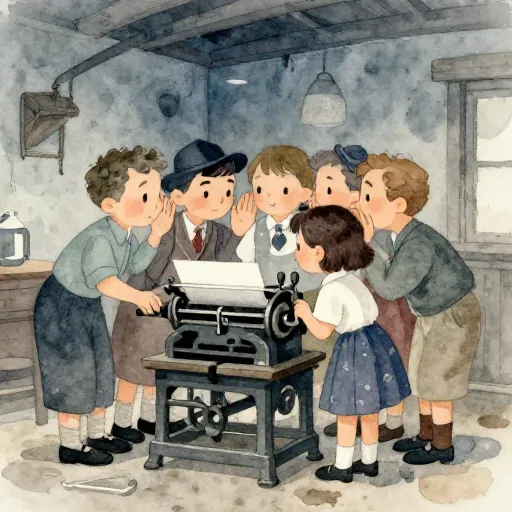
During World War II, Sartre was a prisoner of war for nine months. He later joined the French Resistance, using his writing to fight for freedom against the Nazi occupation. This experience made him realize that even in a prison cell, a person still has the freedom to choose their attitude.
Most people back then thought humans were like tools. If you make a hammer, you know exactly what it is for before you even start building it. Its purpose is to hit nails. Sartre, however, thought humans were completely different.
He came up with a phrase that sounds complicated but is actually quite simple: existence precedes essence. This means that you show up in the world first (existence), and only after you are here do you define what kind of person you are (essence).

Existence precedes essence.
You are not a hammer, and you are not a pre-written story. You are more like a blank piece of paper. You get to choose what gets written on it, and that can be both exciting and a little bit scary.

Finn says:
"So, if I'm not a hammer with a specific job, does that mean I can be anything? Like, could I decide to be a person who only speaks in rhymes, or is that taking it too far?"
Sartre believed that because there is no grand plan already written for us, we have total freedom. He didn't just mean the freedom to choose between chocolate or vanilla ice cream. He meant the freedom to decide what is right, what is wrong, and what your life should mean.
But here is the catch: if you are totally free, you are also totally responsible. Sartre said that we are "condemned to be free." He used the word "condemned" because freedom feels like a heavy weight.
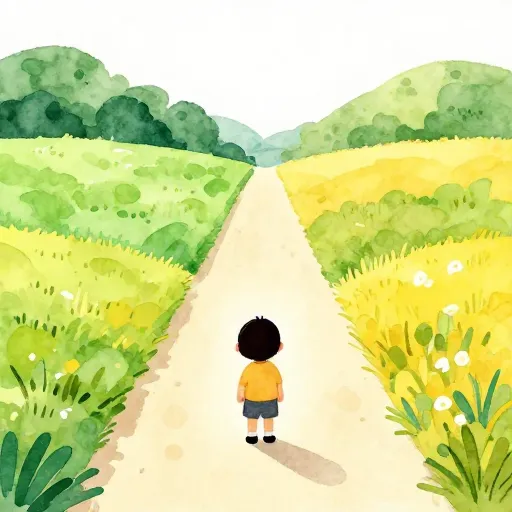
The next time you have to make a choice, stop and notice how you feel. Do you feel a little 'butterfly' sensation in your stomach? Sartre would say that is your freedom talking. Instead of asking someone else what to do right away, try sitting with that feeling for one minute and acknowledge that the power is yours.
Think about a time you had to make a big decision without any help from a grown-up. Maybe you had to choose which friend to sit with, or whether to tell the truth about a broken window. That dizzy, nervous feeling in your stomach? Sartre called that anguish.
He didn't think anguish was a bad thing. To him, that nervous feeling is just the realization that you are the pilot of your own life. It is the moment you realize that what happens next is entirely up to you.

Man is condemned to be free; because once thrown into the world, he is responsible for everything he does.
Sometimes, the weight of all that choosing feels like too much. We might wish someone would just tell us what to do. When we pretend we don't have a choice, or when we say "I had to do it" just because everyone else was, Sartre called this bad faith.
Imagine a waiter in a café who moves a little too perfectly. He balances his tray exactly like a "waiter should," speaks exactly like a "waiter should," and acts like he is a machine made for serving coffee.
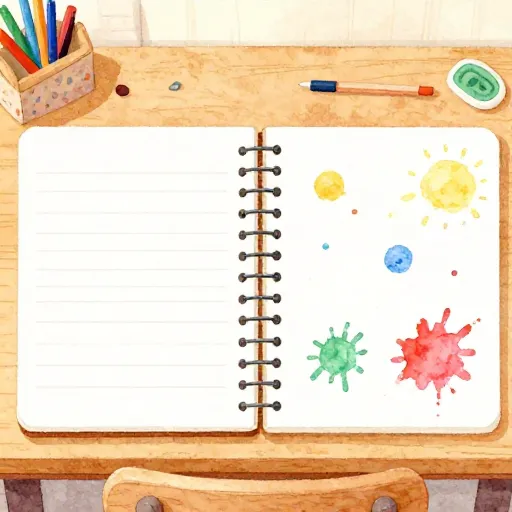
Imagine you are a 'perfect' student. You sit perfectly still, you never doodle, and you only speak when you have the right answer. Sartre would ask: are you being a person, or are you just playing the role of a student? What would happen if you let yourself be a little messy and unpredictable?
Sartre said this waiter is in bad faith. He is pretending he is just a waiter, as if that is his whole identity. But he isn't just a waiter: he is a human being who is choosing to act like one. He could walk out the door and become a poet or a sailor at any moment, but he's pretending he has no choice.

Mira says:
"I think I've been in 'bad faith' before. Like when I say 'I have to do my homework' as if a robot is making me do it. Really, I'm choosing to do it because I don't want to get in trouble!"
Being yourself is a full-time job. Sartre called the opposite of bad faith authenticity. To be authentic is to own your choices. It means saying, "I am doing this because I chose to, not because I'm supposed to."
This brings us to one of Sartre's most famous and misunderstood ideas. He once wrote that "hell is other people." That sounds very mean, doesn't it? But he didn't mean that other people are annoying or bad.
Total freedom is the greatest gift because it means we can always change and grow. We aren't stuck being who we were yesterday.
Total freedom is a heavy burden because it means we have no excuses. If things go wrong, we can't blame fate or luck: we have to face our choices.
What he meant was that other people look at us and turn us into "things." Imagine you are playing a silly game where you are pretending to be a frog. You are having a great time, feeling totally free. Then, suddenly, you realize someone is watching you.
In that moment, you stop feeling like a free person and start feeling like an "object" being judged. Sartre called this the Look. We often see ourselves through the eyes of others, and it can make us feel trapped in the version of us that they see.
Mira says:
"The 'Look' makes so much sense. I act totally different when I'm alone in my room versus when I'm at school. It's like I'm trying to fit into the 'box' other people have made for me."
Sartre's ideas changed the way people thought about their lives. If there is no fixed human nature, then anyone can change. A person who has been mean can choose to be kind. A person who has been afraid can choose to be brave.

Commitment is an act, not a word.
He spent his life writing books, plays, and even refusing the most famous award in the world: the Nobel Prize. He refused it because he didn't want to be "turned into an object" or defined by a prize. He wanted to remain free to be whoever he chose to be that day.
Through the Ages: Who Writes Your Story?
Today, we still struggle with the things Sartre talked about. We live in a world with billions of choices: what to wear, what to watch, and who to be online. Sartre would tell us that while all those choices are heavy, they are also what make us human.

Sartre's lifelong partner was another famous philosopher named Simone de Beauvoir. They never got married and never lived in the same house. They chose to live this way because they believed a relationship should be a choice you make every single day, not a contract you are forced to follow.
You are the artist, the paint, and the canvas all at once. It is a big responsibility, but it means that your story is never finished until the very last page. You are always a work in progress.
Something to Think About
If you woke up tomorrow and realized you could change one major thing about who you are, what would it be?
Sartre would say you don't actually have to wait until tomorrow: you can start that change right now. There is no right or wrong way to answer this: it is your story to write.
Questions About Philosophy
Does existentialism mean nothing matters?
Why did Sartre say 'Hell is other people'?
What is the difference between a person and a paper knife?
The Author of Your Days
Jean-Paul Sartre didn't want to give his readers a set of rules to follow. Instead, he wanted to give them their freedom back. He reminds us that even when life feels hard or people expect us to be a certain way, we always have the power to say 'No' or 'Yes' or 'I’ll try something else.' It is a big job to be the author of your own life, but it is the only way to be truly you.