Have you ever noticed that the moment you get the toy you really wanted, you almost immediately start thinking about the next one?
This strange, never-ending 'wanting' is exactly what Arthur Schopenhauer spent his life studying. He was a 19th-century thinker who believed that behind the physical world we see, there is a hidden, restless energy called the Will that keeps everything in motion.
Imagine walking through the foggy streets of Frankfurt, Germany, in the middle of the 1800s. You might see a short man with wild, tufted white hair and a very serious face walking a white poodle.
This man was Arthur Schopenhauer. He wasn't like other professors: he didn't care if people liked him, and he often preferred the company of his dogs to humans.
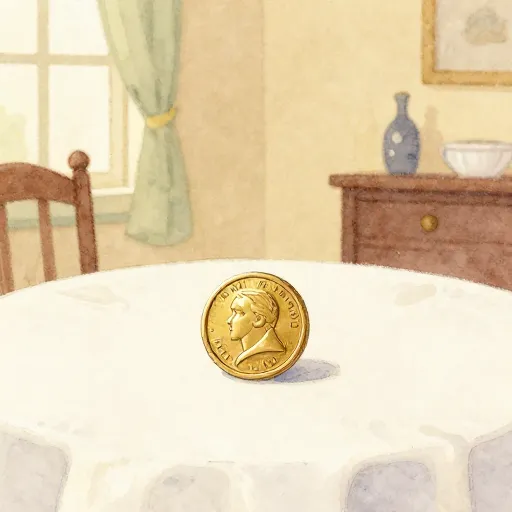
Schopenhauer was so consistent that he ate at the exact same hotel, at the exact same table, every single day for years. He would place a gold coin on the table before his meal and put it back in his pocket after. He said he would donate the coin to charity if he ever heard the English officers nearby talk about anything other than horses or dogs!
Schopenhauer lived during a time when scientists were discovering new things about electricity and steam engines. But he wanted to know about the engine inside of us.
He looked at the world and saw something most people missed. He saw that everything, from a growing blade of grass to a person writing a book, was being pushed by the same invisible force.

Finn says:
"Wait, so if the Will is like an engine, does that mean the universe is just one big machine that never sleeps?"
The World as a Movie Screen
Schopenhauer had a big idea called Representation. He believed that everything we see, hear, and touch isn't the "real" world, but a version of it created by our own brains.
Think of it like wearing a pair of VR goggles. You see the trees, the sky, and your friends, but you are seeing them through the lenses of your own mind.
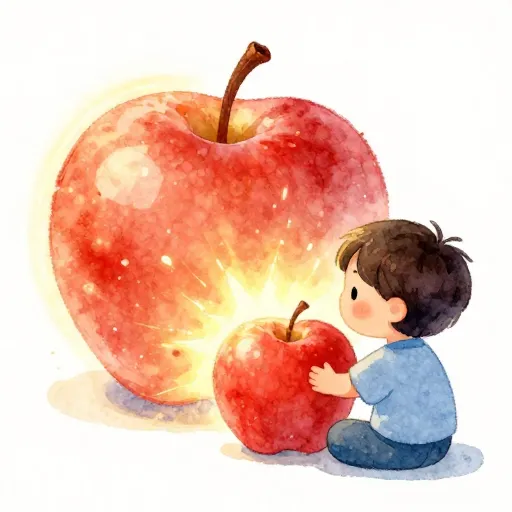
Imagine you are looking at a beautiful red apple. You see the color, the round shape, and the shiny skin. Schopenhauer says that's just the 'Representation.' The 'Real' apple is something else entirely: a collection of energy and 'Will' that exists even if you weren't there to see it. It's like seeing the reflection of a mountain in a lake instead of the mountain itself.
Because we only see the world through these "lenses," we can never truly know what things are like when we aren't looking. He called the world we see the Phenomena.
But he didn't stop there. He thought he had found a secret trapdoor that let him see what was behind the goggles.
The Secret Engine: The Will
That secret door was his own body. When you feel hungry, your brain doesn't just "represent" hunger: you feel the urge to eat from the inside.
Schopenhauer called this inner urge the Will. To him, the Will wasn't just a human thing: it was the energy that makes planets spin and magnets pull.

The Will is a strong blind man who carries on his shoulders a lame man who can see.
He described the Will as a blind, restless power that never stops wanting. It is like a giant, invisible river that carries everything along, whether we like it or not.
This is why we sometimes feel like we can't stop wanting things. The Will inside us is always looking for the next thing to do, the next thing to eat, or the next thing to win.
The 'Will' is what gives us the energy to build cities, create art, and survive. Without it, we would just sit still and do nothing.
The 'Will' is a bully that keeps us hungry and dissatisfied. It's better to try to quiet the Will so we can find true peace.
The Pendulum of Life
Because the Will is always wanting, Schopenhauer noticed something a bit tough. He saw that most people spend their lives swinging back and forth like a pendulum.
On one side of the swing is Suffering, which happens when we want something but don't have it. It feels like a literal ache in our chest or a hunger in our minds.

Mira says:
"That pendulum idea makes so much sense. I remember wanting that new game so badly, but once I beat it, I felt kind of empty. Is that the 'Boredom' side?"
On the other side of the swing is Boredom. This happens when we finally get what we wanted and realize it didn't make us as happy as we thought it would.
Schopenhauer was famous for being a Pessimist, which means he looked at the difficult parts of life very honestly. He didn't think life was a fairy tale, but he did think there were ways to find peace.
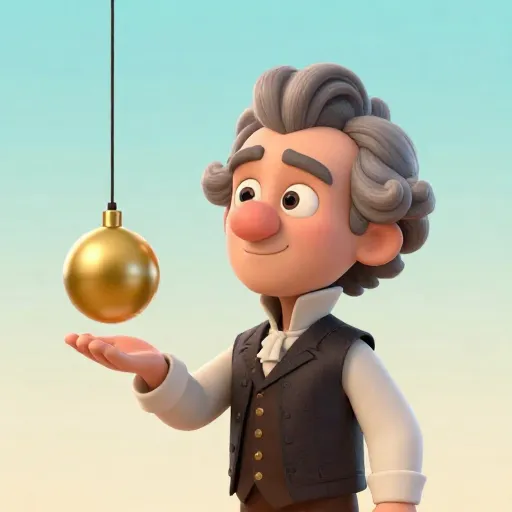
Life swings like a pendulum, backward and forward, between pain and boredom.
The Magic of Art and Music
If the Will is a loud, chaotic radio station that never turns off, Schopenhauer believed that Art was the volume knob. When we look at a beautiful painting or a sunset, we forget about our own "wanting" for a moment.
But he saved his highest praise for Music. He believed music was different from every other art form because it didn't just "show" us the Will: it was the Will made into sound.
Next time you listen to a song without lyrics, close your eyes. Don't try to think of a story or a picture. Just feel the way the notes go up and down. Can you feel a 'pushing' or 'pulling' sensation in the music? Schopenhauer says that's you feeling the Will of the universe directly!
When you listen to a piece of music that makes you feel sad, or excited, or powerful, Schopenhauer would say you are feeling the pulse of the universe itself.
In those moments, the pendulum stops swinging. You aren't suffering because you want something, and you aren't bored: you are just being.
Finn says:
"I like the idea that music is the universe talking. It explains why a song can make you feel something even if there aren't any words."
Kindness and the Poodle
Schopenhauer’s most beautiful idea was about Compassion. He believed that because the same Will lives in everyone, we are all actually connected.
He thought that when you see someone else hurting, you feel it because, in a deep way, you are them. The barrier between "you" and "me" is just another trick of our VR goggles.

Compassion for animals is intimately associated with goodness of character.
This is why he was so kind to animals. He named all his poodles Atman, a word from Indian philosophy that means the "inner self" or soul.
He believed that a dog feels the same "Will to live" that a human does. Therefore, hurting an animal was just as bad as hurting a person, because you are hurting the same universal life force.

Schopenhauer’s favorite dog, Atman, was a white poodle. In some parts of India, 'Atman' is a word for the soul or the true self. When Atman passed away, Schopenhauer simply got another white poodle and named it Atman again. He believed the 'spirit' of the poodle was the same in every dog.
A Bridge to the East
Schopenhauer was one of the first European thinkers to read ancient books from India, like the Upanishads. He was amazed to find that people thousands of miles away had reached the same conclusions as him.
He loved the idea of Mindfulness before it was a common word in the West. He realized that by being still and quiet, we could quiet the restless Will inside us.
Through the Ages
The Legacy of the Grumpy Genius
Even though he could be a bit of a grouch, Schopenhauer changed the way we think about the mind. He paved the way for modern Psychology, helping us understand that our brains have "hidden" parts we aren't always aware of.
He taught us that it is okay to acknowledge that life can be hard. By facing the "wanting" head-on, we can learn to appreciate the moments of stillness even more.
Something to Think About
If you could turn off your 'wanting' for just one hour, what do you think you would notice about the world that you usually miss?
There is no right or wrong answer here. Some people think they would see more beauty, while others think they might just feel very sleepy!
Questions About Philosophy
Was Schopenhauer always sad?
Why did he like poodles so much?
What is 'The Will' in simple terms?
The World Behind the Curtain
Arthur Schopenhauer reminds us that the world is a much deeper, stranger place than it looks on the surface. Whether you're listening to a favorite song or petting a dog, you're connecting to the same energy that moves the stars. The next time you feel that restless 'wanting,' remember the grumpy philosopher and his poodle, and maybe try to find a moment of stillness instead.
