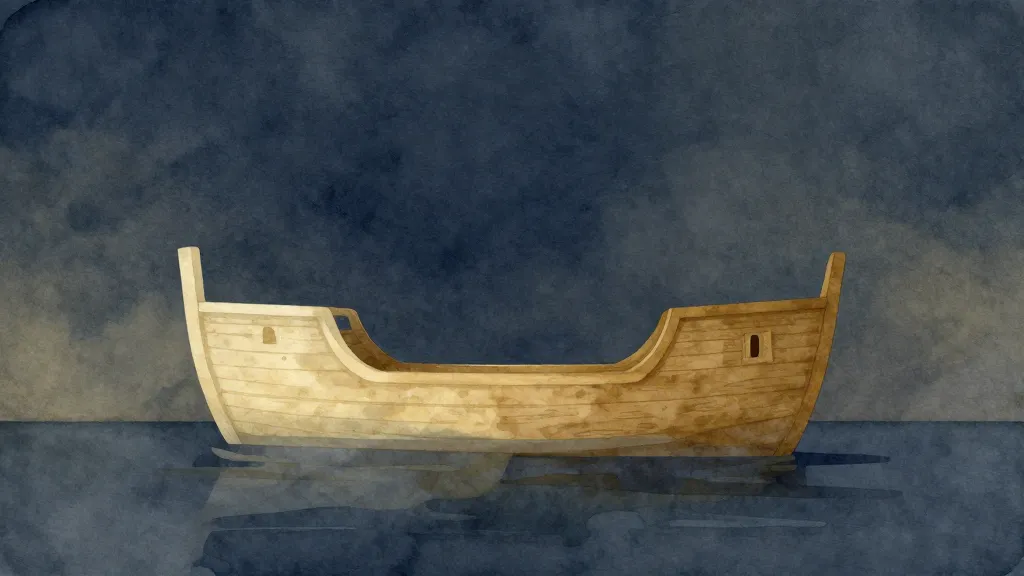
Imagine you have a favorite pair of socks with a tiny hole. Your mom sews it up with a new piece of thread. Are they still the same socks?
This simple question leads us to the Ship of Theseus, a famous thought experiment from Ancient Greece. It explores the mystery of identity and how things stay the same even when they are constantly changing.
Imagine standing on the sun-drenched docks of Ancient Athens over two thousand years ago. The air smells of salt, roasting olives, and fresh cedar wood. In the harbor sits a magnificent galley with thirty oars, the very ship that belonged to the hero Theseus.
Theseus was the legendary king who sailed to Crete and defeated the terrifying Minotaur. To the people of Athens, this boat was not just wood and rope: it was a monument to their greatest victory. They wanted it to last forever.
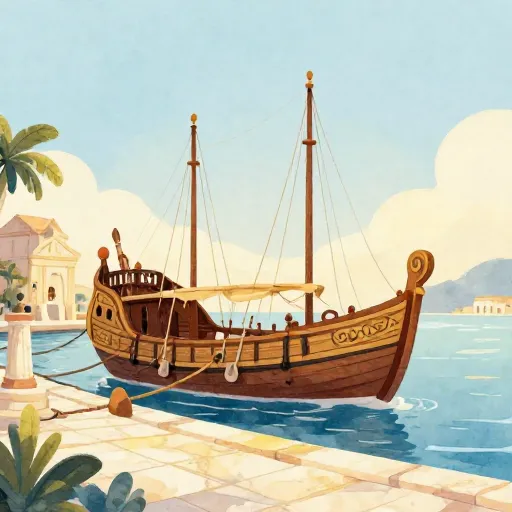
Imagine the harbor of Athens. Dozens of ships with large sails and rows of oars are bobbing in the water. The Ship of Theseus is the one everyone points to with pride. It has been there so long that the oldest people in the city remember their great-grandparents talking about it.
But wood does not live forever. As the decades passed, the Athenian sun baked the deck until it cracked. The salt water rotted the hull. The heavy ropes became frayed and weak.
Whenever a piece of the ship grew old or broken, the shipbuilders replaced it. They would pull out a rotten plank and slide in a fresh, strong one made of new oak. They would swap out a tattered sail for a crisp, white one.
The Growing Puzzle
For hundreds of years, this process continued. Plank by plank, the old wood was discarded, and new wood took its place. Eventually, a strange thing happened: not a single splinter of the original ship remained.
Every nail, every oar, and every beam was new. This created a massive puzzle for the philosophers of the city. If the entire material of the boat has been replaced, is it still the same Ship of Theseus?
Finn says:
"If I lose a tooth and a new one grows in, am I still the same Finn? I feel the same, but I definitely have one less 'original' part!"
This puzzle is what we call a paradox. A paradox is a statement that seems to lead to two different, logical conclusions that contradict each other. It makes your brain itchy because both "yes" and "no" feel like they could be right.
On one hand, it looks like the same ship. It has the same shape, it stays in the same spot, and people still call it by the same name. On the other hand, if you took every piece of your bicycle and swapped them for new parts, would you still have the same bike?
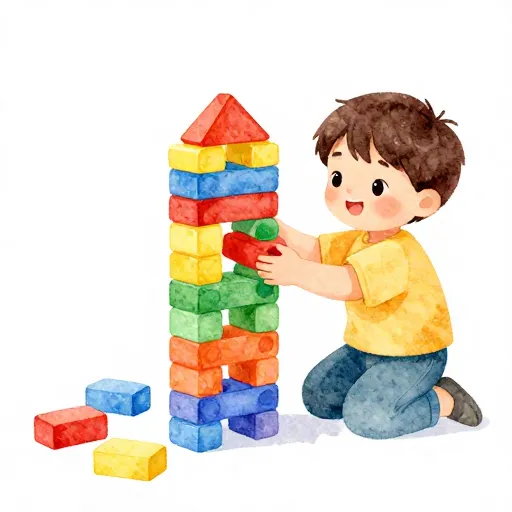
Grab a handful of LEGO bricks and build a small tower. Now, one by one, replace every brick with a different color until the tower is completely different. Ask a friend: 'Is this the same tower I started with?' Listen to their reason why!
Meet the Chronicler
The first person to write down this story in detail was a man named Plutarch. He was a historian and a philosopher who lived in the Roman Empire. He loved collecting stories about famous leaders and the big ideas they left behind.
Plutarch noticed that the ship had become a living example of a logical problem. He saw that the shipbuilders were doing more than just fixing a boat: they were accidentally challenging how we define what a "thing" actually is.
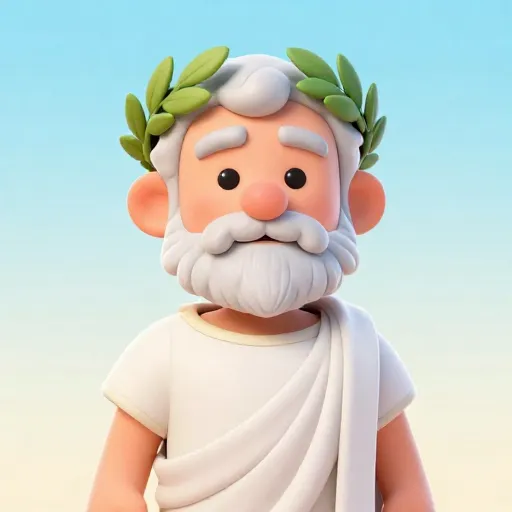
The ship wherein Theseus and the youth of Athens returned had thirty oars, and was preserved by the Athenians down even to the time of Demetrius Phalereus, for they took away the old planks as they decayed, putting in new and stronger timber in their places.
Plutarch did not just want to talk about boats. He wanted people to think about how things persist through time. He noticed that the philosophers of Athens would argue about this ship for hours, using it as a way to practice their thinking skills.
Some argued that the ship was defined by its form. As long as it looked like the ship and functioned like the ship, it was the ship. Others argued that the essence of the ship was tied to the actual wood Theseus touched.
The Body in Motion
This idea might seem like it is only about old boats, but it is actually about you. Your body is a biological version of the Ship of Theseus. You are constantly growing, changing, and replacing your own "planks."
Did you know that your skin cells are replaced about every month? Or that your skeleton is almost entirely replaced every ten years? Even the atoms that make up your brain are different today than they were when you were a baby.

Mira says:
"It's like my favorite sweater. My grandma has patched the elbows so many times with different yarn that it's like a rainbow now. It's more 'mine' because of the changes, not less."
If we looked at a photo of you from five years ago, you would look different. You would be smaller, and your hair might be a different length. Yet, you still feel like the same person. You have the same name, the same memories, and the same "you-ness."
Philosophers call this continuity. It is the idea that even if the parts change, the story of the object stays connected. But if every single cell in your body changes, what is the part of you that stays the same?
A thing is its parts. If you change the wood, you have a new boat. Period.
A thing is its shape and its story. As long as it functions as Theseus' ship, it is Theseus' ship.
A Second Ship Appears
In the 1600s, a philosopher named Thomas Hobbes decided to make the puzzle even harder. He added a sneaky twist to the story that made everyone’s head spin. He asked: what if we saved all the old, rotten pieces?
Imagine that as the shipbuilders threw away the old planks, a secret collector picked them up. This collector dried the wood, cleaned off the rot, and put the old pieces back together in the exact shape of the original ship. Now, we have two ships.
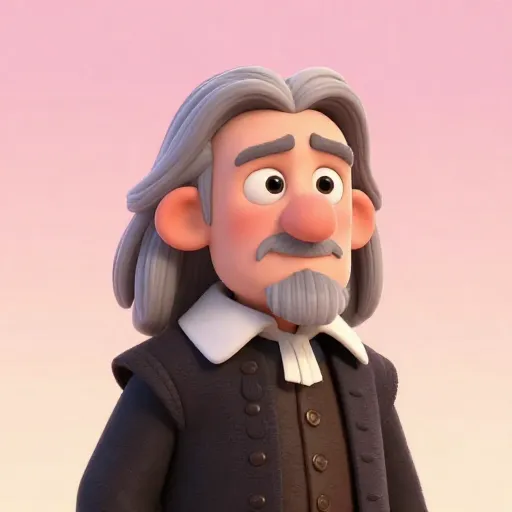
If that ship of Theseus... had been all renewed by putting in new planks as the old ones were taken out... and if those old planks had been put together in their first order, and the same ship again made of them, which of those two were the same ship?
Hobbes’ puzzle is brilliant because it forces us to choose. One ship has all the original wood but was built recently from scraps. The other ship has been in the harbor the whole time but is made of entirely new wood. Which one is the real Ship of Theseus?
- The ship in the harbor has the history and the name.
- The ship in the collector's yard has the original material.
- If both exist at once, can they both be the "same" ship?
Finn says:
"Wait, Hobbes' idea is a total brain-melter. If there are two ships, does that mean Theseus has two boats now? Or is one of them a ghost ship?"
Through the Ages
This question has traveled across history like a message in a bottle. Every era has its own version of the Ship of Theseus. It shows up in different cultures and different centuries, always asking us to define the "self."
Through the Ages
In modern times, we see this in technology. If you download a software update for an app, is it the same app? If you replace every part of a computer, is it the same machine? We are still asking the same questions the Athenians asked on the docks.

Your body is a master of the Ship of Theseus trick. Most of your red blood cells only live for about 120 days. Your body is constantly 'planking' itself with new cells to keep you running smoothly!
The River of Change
Another thinker who would have loved this puzzle was Heraclitus. He lived even before the ship became famous, but his ideas fit it perfectly. He believed that the world was not made of "things," but of constant change and flow.
He famously said that you can never step into the same river twice. Why? Because the second you step in again, new water has flowed down, and you have changed, too. For Heraclitus, the ship is always becoming something new.
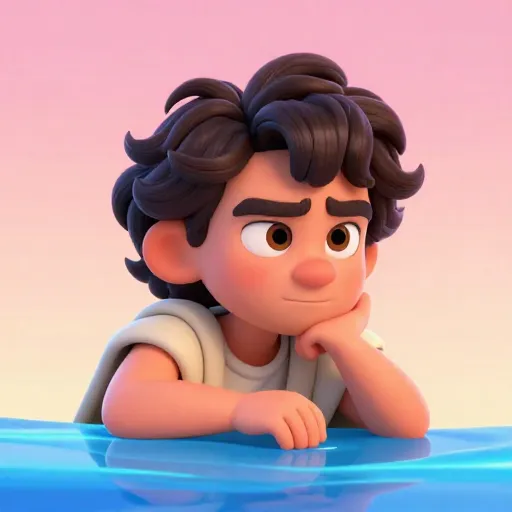
No man ever steps in the same river twice, for it's not the same river and he's not the same man.
If Heraclitus is right, then the Ship of Theseus is never the same from one second to the next. The wood is aging, the wind is blowing, and the atoms are moving. Maybe "staying the same" is just an illusion our brains create to make sense of a world that never stops moving.
But this does not have to be scary. It can be wonderful. It means that we are allowed to change. We can learn new things, change our minds, and grow into new versions of ourselves while still keeping the thread of our story alive.
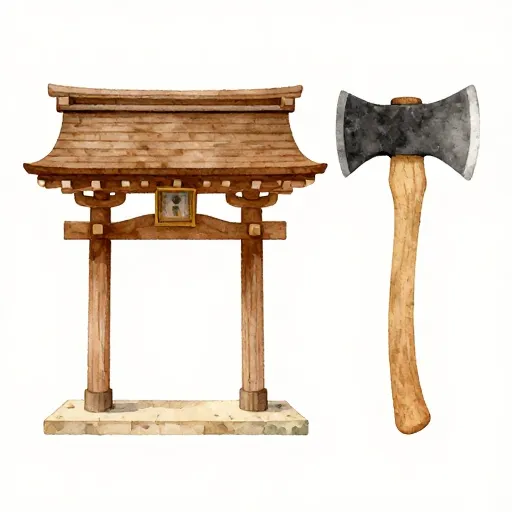
This paradox has many names! In Japan, people talk about the Ise Grand Shrine, which is rebuilt every 20 years. In the US, people joke about 'George Washington's Axe' that has had three new heads and four new handles, but is still 'the original.'
The Mystery Remains
There is no "correct" answer to the Ship of Theseus. Some philosophers believe the ship is the wood. Some believe it is the shape. Some believe it is the memory we have of it. Each answer tells us something different about how we see the world.
When you look in the mirror tomorrow, you will be a slightly different version of yourself than you are today. You are a ship that is always being repaired, always sailing, and always discovering what it means to be you.
Something to Think About
If you could replace any part of your life: your house, your school, or even your favorite toy: which part would make it feel like a 'different' life, and which part would stay the same?
There is no right or wrong answer here. Your sense of identity is unique to you, and how you define 'the same' is part of your own personal philosophy.
Questions About Philosophy
Does the Ship of Theseus have a real answer?
Is the human body really like the ship?
Why did Theseus have a ship?
The Voyage Continues
The next time you fix a broken toy or notice you've outgrown your favorite shoes, remember the Ship of Theseus. You are part of a ancient tradition of wondering what makes things real. Whether you are Team Material or Team Form, the most important thing is that you keep asking 'why.' Keep sailing, young philosopher!
