
Have you ever felt like you were playing a role in a play you didn't write?
Simone de Beauvoir was a French thinker who spent her life asking why some people are given more freedom than others. She became a leader of Existentialism, a way of thinking that says we aren't born with a pre-set purpose, but instead create ourselves through our choices.
Imagine walking into a room where everyone is wearing a costume. One person is dressed as a doctor, another as a soldier, and another as a 'polite little girl.'
Now, imagine that these people aren't just wearing costumes for a party. They believe the costumes are who they actually are. Simone de Beauvoir looked at the world and saw exactly this: a world of people following scripts they didn't write.
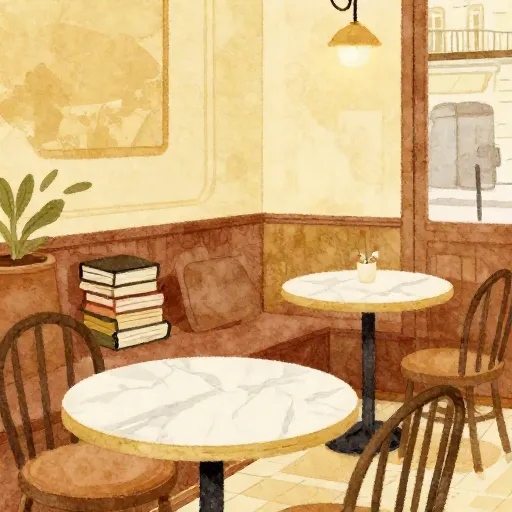
Imagine a crowded cafe in Paris in the 1940s. The air is full of the smell of roasted coffee and the sound of jazz music drifting from a nearby radio. Two friends sit at a small marble table covered in notebooks and ink pens, talking so intensely they forget to drink their coffee. This was Simone's 'office.'
She grew up in Paris during a time of great change. When she was born in 1908, the world had very specific ideas about what a young woman could do.
Her family expected her to be a 'dutiful daughter,' which meant being quiet, getting married, and not asking too many difficult questions. But Simone had other plans: she wanted to understand everything.
The Girl Who Wanted to Know
Simone was a brilliant student who loved books more than almost anything else. She spent hours in libraries, reading about history and science, often feeling like she lived in two different worlds.
There was the world her parents wanted for her: a world of tea parties and proper manners. Then there was the world of ideas: a world where she could be anyone and think anything.
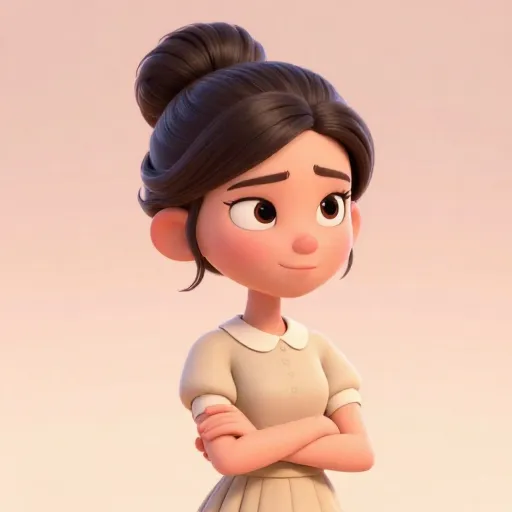
I am too intelligent, too demanding, and too resourceful for anyone to be able to take charge of me entirely.
By the time she reached university, she was one of the youngest people ever to pass the difficult philosophy exams in France. It was there that she met other thinkers, including a man named Jean-Paul Sartre.
Together, they would spend the rest of their lives sitting in Parisian cafes, drinking coffee, and talking about what it means to be truly free. They believed that humans are unique because, unlike a rock or a tree, we get to decide what we are for.

Finn says:
"If I don't have a pre-set purpose, does that mean I can choose to be anything? Like, can I choose to be a person who never gets bored, or is that just how my brain works?"
What is Existentialism?
To understand Simone, you have to understand a big word: Existentialism. Most people used to think that humans were like tools.
If you make a pair of scissors, you know exactly what they are for before you even finish making them. They have an 'essence' or a purpose: to cut. But Simone and her friends argued that humans are different.
Everything has a specific 'nature' given to it by a creator or by biology. You are born with a personality and a destiny that you cannot change.
You are a blank canvas. There is no 'plan' for your life until you start painting it with your own choices and actions.
They said that for humans, 'existence precedes essence.' This is a fancy way of saying: first you exist, then you decide who you are.
You aren't born a 'hero' or a 'coward' or a 'painter.' You just are. Every day, you wake up and make choices, and those choices slowly build the person you become.
The Script and the Costume
Simone noticed something unfair, though. While the boys she knew were told they could be explorers or inventors, the girls were often told they only had one choice: to be 'feminine.'
She realized that society treats men as the 'default' human being, while women are treated as 'the other.' It was as if men were the lead actors in the play, and women were just the supporting characters designed to help them.

Simone was nicknamed 'Castor' (which is French for Beaver) by her friends. They called her this because she was such a hard worker, and because her last name 'Beauvoir' sounded a bit like the English word 'Beaver!'
She wrote a very famous book called The Second Sex to explain this. In it, she wrote one of the most famous sentences in history: 'One is not born, but rather becomes, a woman.'
This didn't mean that people aren't born with different bodies. It meant that all the 'rules' about how a girl should act: being soft, being quiet, or liking certain colors: are things we learn from the world around us, not things we are born with.

Mira says:
"I noticed that when I play sports, people sometimes say I'm 'good for a girl.' Simone would probably say they're looking at my 'costume' instead of just looking at how I play the game."
The Ethics of Ambiguity
If we are all free to choose who we are, does that mean we can just do whatever we want? Simone didn't think so. She believed that being free is actually a very big responsibility.
She called this the Ethics of Ambiguity. Life is 'ambiguous' because it doesn't come with a manual. There is no 'right' answer hidden in the back of the book.
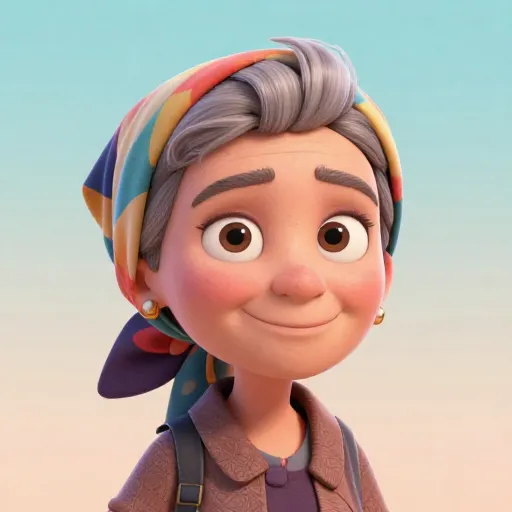
To will oneself free is also to will others free.
Because there is no manual, we have to create our own values. But Simone argued that you can't be truly free if you are busy taking away the freedom of others.
Imagine a playground where one kid decides they are the King and everyone else must be their servant. The 'King' might feel free, but they are actually trapped in a lie. They are treating other people like objects instead of living, breathing humans with their own choices.
Living Authentically
Simone wanted people to live with Authenticity. This means being honest about your freedom.
A person who is 'inauthentic' (or what she called 'bad faith') pretends they have no choice. They might say, 'I have to be mean to that kid because all my friends are doing it.'
Make a list of the 'roles' you play: student, sibling, friend, player. Now, think about one thing you do in those roles just because it's expected. What would happen if you chose to do it differently today? How would that change the 'character' you are playing?
But Simone would say: 'No, you are choosing to follow your friends.' It might be a hard choice to say no, but the choice still belongs to you.
Acknowledging that we are always choosing can be scary. It means we can't blame our 'nature' or our 'destiny' for our mistakes. But it's also exciting, because it means we are never truly stuck.
The Cafe Life
For much of her life, Simone didn't live in a traditional house. She lived in hotels and worked in cafes like the Café de Flore in Paris.

Simone and her lifelong partner, Sartre, never got married or even lived in the same house. They wanted to make sure they stayed together because they chose to every day, not because a contract forced them to.
She didn't want the 'dutiful daughter' life of cleaning a house or managing a family. She wanted a life of the mind.
She and her friends would sit for hours, writing books and arguing about politics. They lived through World War II, a time when freedom was being taken away from millions of people. This made their ideas about choice and responsibility feel more important than ever.
Finn says:
"It's kind of heavy to think that every choice is my responsibility. But I guess it also means I'm the boss of my own story, which is pretty cool."
Through the Ages
Simone de Beauvoir's ideas didn't stay in the cafes of Paris. They traveled across the world and changed how we look at each other.
The Journey of Becoming
Her work helped start the modern women's movement. Because of her, people started asking: 'Why do we expect girls to act one way and boys to act another?'
She also influenced how we think about aging. Later in her life, she wrote about how society treats older people as if they are no longer important. She argued that every stage of life is a chance to keep choosing and keep growing.
The Open Door
Today, we still use Simone's ideas when we talk about identity. Whether it's the clothes we wear, the jobs we want, or the way we treat our friends, we are always 'becoming.'
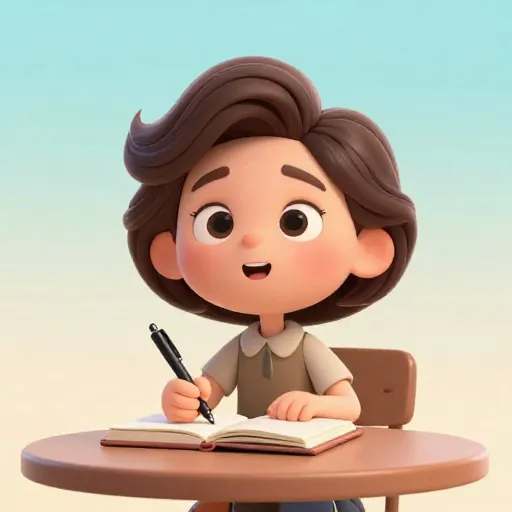
One's life has value so long as one attributes value to the life of others.
Simone didn't want to give us a set of rules to follow. She wanted to give us the tools to build our own lives.
She reminds us that the 'costumes' we wear are just that: costumes. Underneath, there is a person who is constantly deciding who to be next.
Something to Think About
If you woke up tomorrow and didn't have to follow any of the 'scripts' society has given you, what is the first thing you would choose to do?
There are no right or wrong answers here. Simone would say that just thinking about the question is the first step toward being free.
Questions About Philosophy
Did Simone de Beauvoir hate men?
Is Existentialism just about doing whatever you want?
Why is she so famous for one sentence about being 'born a woman'?
Your Project Starts Now
Simone de Beauvoir didn't want you to agree with everything she said. She wanted you to look at your life and realize that it belongs to you. You aren't a finished book; you are the author, and you are currently writing the next page. What will you choose to write?
