Imagine a man who spent his whole life walking around a busy city, barefoot and wearing the same old cloak, just to ask people questions that made them grumpy.
This man was Socrates, and he lived in the ancient city of Athens over 2,400 years ago. He didn't build temples or lead armies, yet he is considered one of the most important people in history because he invented a new way of using Philosophy to understand the world.
To understand Socrates, you have to imagine the Agora. This was the heart of Athens, a massive open square filled with the smell of roasted meat, the sound of merchants shouting, and the bright sun reflecting off marble statues.
Most people in the Agora were busy buying grain or arguing about politics. Socrates was busy doing something much stranger: he was looking for people who thought they were experts, just so he could show them they weren't.
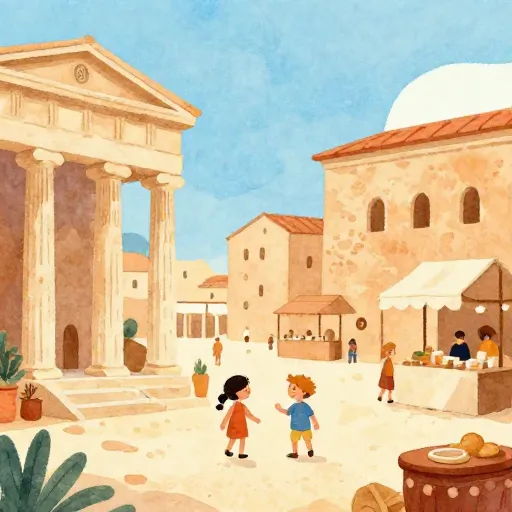
Imagine the Agora: a dusty, sun-drenched marketplace. You see a man with a snub nose and a bulging belly, surrounded by a group of fascinated teenagers and annoyed merchants. He isn't selling anything: he is just talking. He looks like a regular worker, but when he speaks, the whole world seems to shift.
He didn't do this to be mean. Socrates believed that the biggest obstacle to learning the truth was the belief that you already knew it. He called this state of mind 'double Ignorance', which is when you don't know something, but you don't even realize you don't know it.
Socrates wanted to help people reach a state of 'productive wonder.' He wanted them to feel the tingle of a question that doesn't have an easy answer.
The only true wisdom is in knowing you know nothing.
The Art of the Question
Socrates never wrote a single book. He didn't have a classroom or a chalkboard. Instead, he had a technique we now call the Socratic Method, which is a form of cooperative Inquiry.
If you met Socrates and told him, 'I know exactly what courage is,' he wouldn't argue with you. He would simply ask a follow-up question, like 'Is it always courageous for a soldier to stand their ground, or is it sometimes more courageous to retreat?'

Finn says:
"If Socrates was always asking questions but never gave the answers, did he actually teach anything? Or was the questioning itself the lesson?"
As the person answered, Socrates would ask another question, and then another. Slowly, the person would realize that their first definition of courage didn't cover every situation. They would start to feel a bit confused, like they were waking up from a dream.
This confusion was exactly what Socrates wanted. He believed that when we admit we are confused, our minds finally become open enough to start searching for real Logic and truth.
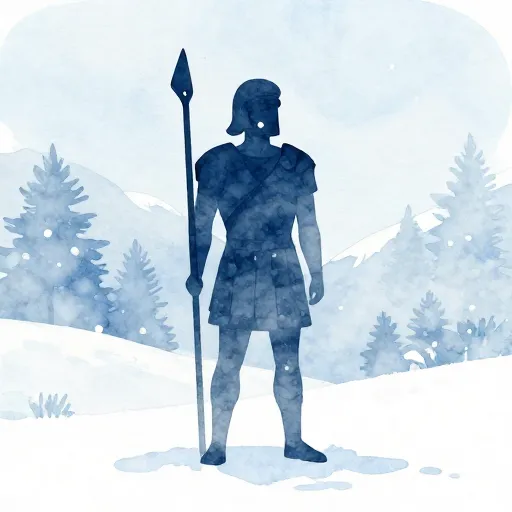
Socrates wasn't always a 'thinker.' Before he became a philosopher, he was a brave soldier who fought in the Peloponnesian War. He was famous for his incredible endurance: he could walk through ice and snow without shoes and stay awake for days while guarding his fellow soldiers.
The Gadfly of Athens
Socrates compared himself to a Gadfly, which is a large, buzzing horsefly. He said the city of Athens was like a big, noble horse that had grown a bit lazy and sleepy.
His job, as the gadfly, was to sting the horse to keep it awake and moving. By asking difficult questions about Virtue and justice, he made sure the people of Athens didn't just follow traditions without thinking about them.
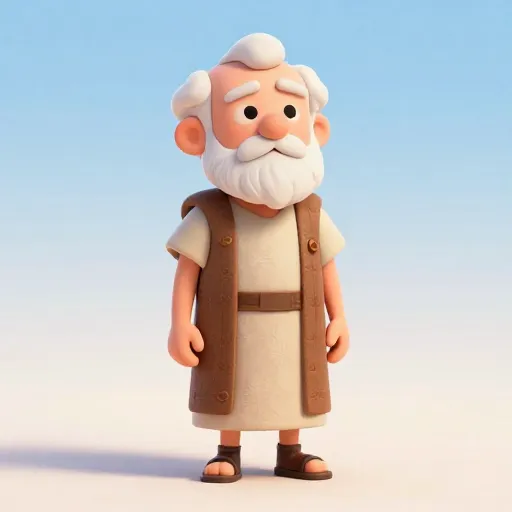
The unexamined life is not worth living.
But here is the thing about gadflies: nobody actually likes being stung. Many powerful people in Athens found Socrates incredibly annoying. They didn't like being made to look foolish in front of their friends by a man who didn't even wear shoes.
Despite this, Socrates never stopped. He believed that being a good Citizen meant more than just following the rules: it meant thinking for yourself and making sure the rules were actually fair.
Socrates was a hero because he taught people to think for themselves. He helped them see through lies and find real truth, even when it was dangerous.
Socrates was a troublemaker who made the city feel unsafe. By making people doubt their traditions during a time of war, he made Athens weaker and more divided.
The Mystery of the Oracle
One of the most famous stories about Socrates involves a trip to the Oracle at Delphi. The Oracle was a priestess who was believed to speak for the gods, and one day, she made a shocking announcement: 'No one is wiser than Socrates.'
When Socrates heard this, he was confused. He didn't feel wise at all. In fact, he felt like he knew almost nothing about the big mysteries of life.

Mira says:
"It reminds me of looking at the stars. The more you learn about space, the more you realize how much more there is that we haven't even seen yet."
He set out to prove the Oracle wrong by finding someone who was truly wise. He talked to poets, politicians, and craftsmen. But he found that while they were very good at their specific jobs, they all thought they were experts on everything else, too.
Eventually, Socrates realized the Oracle was right. He was the wisest because he was the only one who recognized his own limitations. He knew that human wisdom is very small compared to the vastness of the universe.
Try playing the 'Why Game' with a friend. Pick a simple statement, like 'I like pizza.' Ask 'Why?' When they answer, ask 'Why?' to that answer, too. See how many 'Whys' it takes before you reach a question that is actually really hard to answer. That is where philosophy begins!
The Trial and the Hemlock
As Socrates got older, his enemies grew more numerous. Eventually, they brought him to a Trial before a jury of 501 fellow citizens. They accused him of 'corrupting the youth' and not believing in the city's gods.
What they really meant was that he was making young people think for themselves, which made them harder to control. Even at his trial, Socrates refused to apologize or stop his questioning.
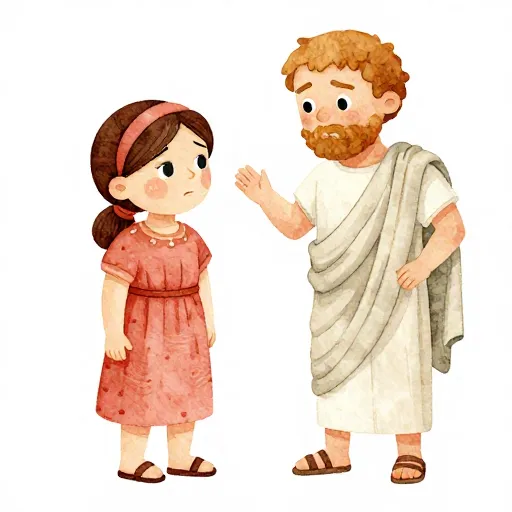
Socrates' wife was named Xanthippe. Later stories described her as having a very hot temper and often being angry at Socrates for spending all day talking instead of earning money. However, many historians think she was actually very supportive of him, even if his lifestyle was difficult for the family.
He was found guilty and sentenced to death by drinking a poison made from a plant called Hemlock. His friends offered to help him escape from prison, but Socrates refused. He believed that as a citizen, he had to respect the laws of his city, even if the verdict was wrong.
He died surrounded by his friends, still talking about the soul and the nature of goodness until the very end. He showed that some ideas are more important than life itself.
False words are not only evil in themselves, but they infect the soul with evil.
Why Socrates Still Matters
If Socrates didn't write anything down, how do we know so much about him? Most of what we know comes from his student, Plato, who wrote down famous conversations, or Dialogue, featuring Socrates as the main character.
Plato's writings ensured that Socrates' voice would travel across thousands of years. Today, doctors, lawyers, and scientists still use the Socratic Method to find errors in their thinking and to discover new truths.
Finn says:
"I wonder if Socrates would be on social media today, or if he'd just be standing in the middle of a shopping mall asking people why they're buying so many shoes!"
Socrates Through the Ages
Socrates taught us that thinking is not a destination where you arrive and stop. It is a journey that never ends. Every time you ask 'Why?' or 'How do I know that is true?', you are following in the footsteps of the barefoot philosopher from Athens.
Something to Think About
If you knew for sure that you were the smartest person in the room, would you keep asking questions or start giving answers?
There isn't a right or wrong answer here. Think about what changes in your mind when you are the one asking vs. the one telling.
Questions About Philosophy
Why didn't Socrates write any books?
What is the Socratic Method?
Was Socrates a real person?
Keep the Gadfly Buzzing
Socrates didn't want followers: he wanted fellow thinkers. The next time you feel like you've figured everything out, remember the barefoot man in the Agora. A little bit of 'I don't know' is often the start of a much bigger adventure.
