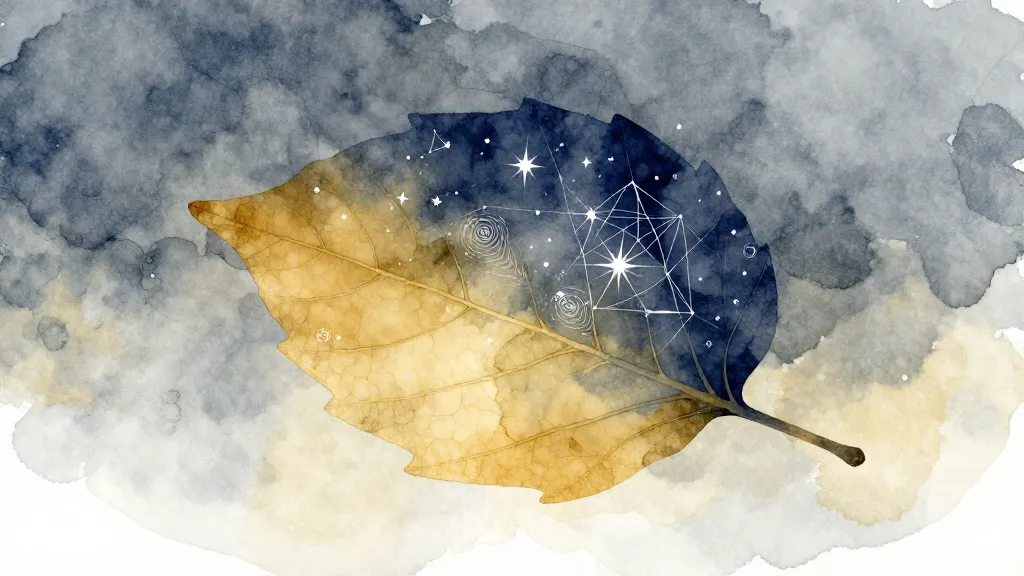
What if the entire universe, including the trees, the stars, and even you, was actually just one single, giant thing?
In the busy streets of 17th-century Amsterdam, a man named Baruch Spinoza was asking questions that made the world nervous. He didn't see God as a person sitting on a cloud, but as Nature itself, a perfect system governed by logic and Reason.
Imagine a city made of water and wood. In the year 1632, Amsterdam was the busiest place on Earth. Great wooden ships arrived daily, carrying spices from far-off islands and silk from the East.
Inside this bustling city lived a boy named Baruch. He was part of a community of Jewish people who had fled from Spain and Portugal to find safety. Baruch was a brilliant student, but he had a habit that made some adults uncomfortable: he liked to ask "why" until there were no answers left.
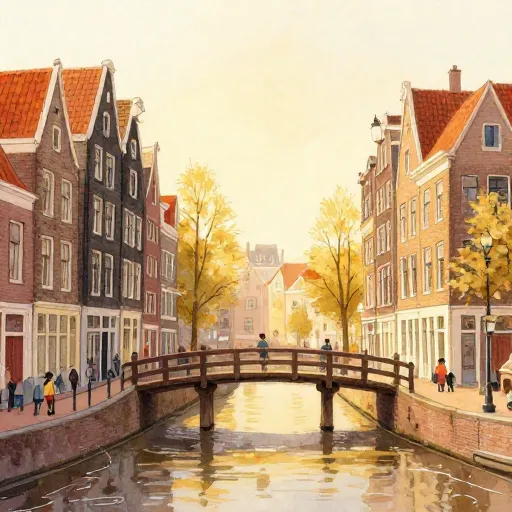
Imagine the smell of salty canal water and the sound of hundreds of people speaking different languages in the market. In the 1600s, Amsterdam was the world's 'idea factory.' Because so many people were trading there, they had to learn to live with different religions, even if they didn't always agree.
As Baruch grew up, his questions became bigger. He began to wonder about the nature of the world and the rules that govern it. He spent his days studying old books, but his mind was looking at the future.
He noticed that many people were afraid of God, or thought of God as a king who gave rewards and punishments. Baruch started to think something very different. He suspected that God wasn't a separate person at all, but was actually the very fabric of everything that exists.

Finn says:
"Wait, so if God is Nature, does that mean the spider in my bathroom is... divine? Even the dusty parts under my bed?"
This idea was incredibly dangerous in the 1600s. In those days, if you disagreed with the religious leaders, you could lose everything. In 1656, when Baruch was only 23 years old, the leaders of his community issued a Herem, which is a severe form of Excommunication.
This meant he was officially kicked out. No one from his community was allowed to speak to him, write to him, or even walk within a few feet of him. Baruch Spinoza was suddenly alone in the world, with nothing but his ideas.

When Spinoza was excommunicated, his own family was told they couldn't speak to him. It was so serious that one person even tried to attack him with a knife! He kept his coat with the knife-hole in it for years to remind himself to stay brave.
Instead of being angry or sad, Spinoza did something surprising. He changed his name to Benedictus, which means "blessed," and he found a quiet job that required extreme focus. He became a lens grinder.
He spent his days polishing pieces of glass into perfect curves for telescopes and microscopes. This work was delicate and dusty, but it allowed him to think. While his hands worked on glass, his mind worked on the universe.

God and Nature are one and the same.
Spinoza believed that if we could see clearly, like looking through a perfect lens, we would see that there is only one Substance in the universe. He called this substance "God or Nature." To him, they were exactly the same thing.
Think about a giant ocean. Every wave, every drop of spray, and every bit of foam is different, but they are all made of the same water. For Spinoza, you are a wave, the tree outside is a wave, and the stars are waves. We are all different shapes of the same one thing.
The world was made by a creator who exists outside of it, like a carpenter making a chair.
The world and the creator are the same thing. There is no 'outside' because the universe is infinite.
Because everything is part of one system, Spinoza believed that everything follows strict rules. He called this Determinism. He thought that everything happens because something else caused it, like a giant row of dominoes that has been falling since the beginning of time.
This is where things get tricky for our brains. If everything is a domino falling, do we have Free Will? Spinoza said that we often feel like we are choosing things, but that is only because we don't understand the reasons why we do them.

Mira says:
"It's like the universe is a giant computer program. If we could see all the code, we'd understand exactly why everything happens. Nothing is a mistake."
Spinoza didn't think this was a bad thing. In fact, he thought it was the key to being happy. He wrote a famous book called the Ethics, but he wrote it in a very strange way. He wrote it like a Geometry textbook.
He used definitions and proofs to show how our feelings work. He believed that if we use our minds to understand why we feel sad or angry, those feelings lose their power over us. He called the drive to keep living and growing the Conatus.

The more we understand particular things, the more we understand God.
Every living thing has a conatus. A flower wants to bloom, a bird wants to fly, and you want to learn and be happy. When we do things that make us stronger and smarter, our conatus feels "Joy." When we do things that make us weaker or more confused, we feel "Sadness."
Spinoza thought that the best way to live was to seek Joy through understanding. If you understand why a storm is happening, you aren't as afraid of the lightning. If you understand why a friend is being mean, you can feel sorry for them instead of just feeling hurt.

Next time you feel really angry or sad, try to be a 'Spinoza Scientist.' Instead of just feeling the feeling, ask: 'Where did this come from? Did I sleep enough? Am I hungry? Did someone say something that reminded me of a different bad time?' Does naming the cause make the feeling feel a little smaller?
Through the Ages
Spinoza's ideas traveled slowly at first because they were banned in many places. People had to hide his books under their coats or print them with fake covers. But as the years went by, his way of seeing the world began to change everything.
Scientists loved his idea that the universe follows logical laws. Poets loved his idea that every tree and river was a part of something divine. Even famous thinkers like Albert Einstein said they believed in "Spinoza's God," a world of perfect harmony and logic.
Mira says:
"I like how Spinoza connects science and feelings. He makes it seem like being smart is a way of being kind to yourself."
Spinoza lived a very simple life. He lived in small rented rooms and ate plain food like gruel with a bit of butter. He turned down a job as a famous professor because he didn't want anyone to tell him what he could or couldn't say.
He died young, at age 44, likely because he had spent too many years breathing in the tiny bits of glass dust from his lens grinding. But he died peacefully, believing that he was simply returning to the great ocean of Nature he had spent his life describing.

Peace is not an absence of war, it is a virtue, a state of mind.
Today, we still use Spinoza's ideas to think about how we treat our planet. If everything is part of one single body, then hurting a forest or a river is like hurting ourselves. We aren't separate from nature; we are nature looking at itself.

Spinoza was so respected for his character that even kings sent people to talk to him. He was famous for being one of the kindest and most helpful people in his town, even though his ideas were considered 'scandalous' at the time.
Spinoza invites us to look at the world with a sense of Intuition. This is a special kind of knowing where you see how everything fits together all at once. It's like the moment you finally finish a jigsaw puzzle and see the whole picture instead of just the pieces.
It is a quiet, steady kind of Wonder. It doesn't require magic or miracles. For Spinoza, the fact that the universe exists at all and follows such beautiful, logical rules is the greatest miracle of all.
Something to Think About
If you are a part of the universe, and the universe is one giant thing, what does that mean for how you should treat a stranger or a tree?
There isn't a right or wrong answer here. Spinoza spent his whole life thinking about this, and you can start your own journey just by looking around you.
Questions About Philosophy
Did Spinoza believe in a God with a face or a body?
Why did he spend his time grinding glass lenses?
Was Spinoza an atheist?
The Infinite Whole
Spinoza's world is a place where nothing is a mistake and everything belongs. It is a world where being curious is the same thing as being good. Whether you are looking at the stars through a telescope or just watching a ladybug on your sleeve, remember Spinoza's big idea: you are looking at a piece of yourself, and a piece of everything else, all at the same time.