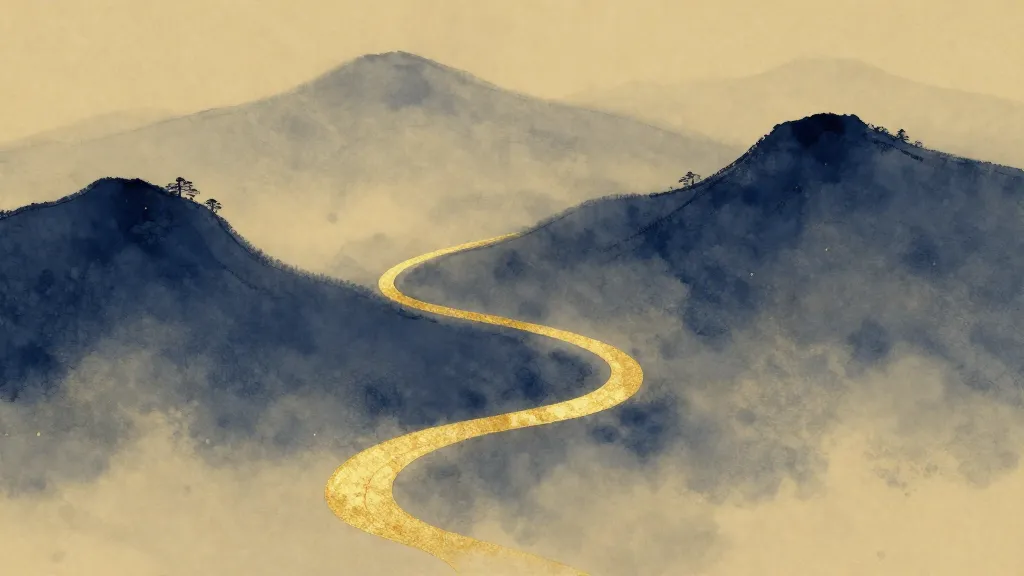
Have you ever noticed that the harder you try to catch a bubble, the faster it pops?
About 2,500 years ago in China, a group of thinkers suggested that life works better when we stop pushing so hard. They called this path the Tao, and their ideas created a philosophy that teaches us how to live in harmony with the natural world.
Imagine a time of great noise and messy battles. Over two thousand years ago, China was divided into many small kingdoms that were constantly fighting for power. Historians call this the Warring States Period because life felt like a never-ending argument.
In the middle of all this chaos, some people decided to walk away from the noise. They headed into the quiet forests and misty mountains to watch how nature handled things. They noticed that trees don't struggle to grow and seasons don't argue about whose turn it is.
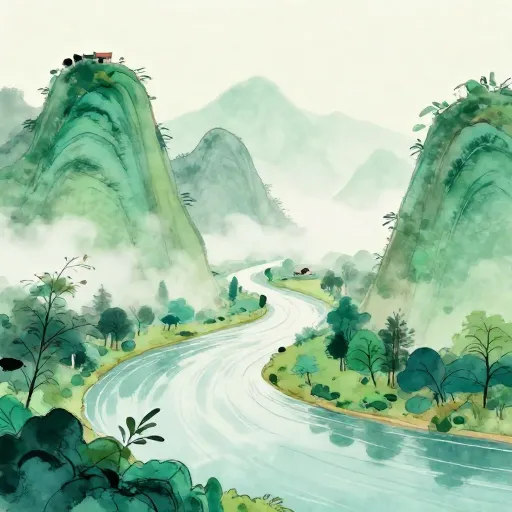
Imagine you are standing on a wooden bridge in ancient China. Below you, a river winds through jagged green mountains that look like they are floating in the mist. There is no sound except for the water hitting the rocks. This quiet, natural world is where the first Taoist ideas were born.
These quiet observers became known as Taoists. They weren't interested in making strict rules or winning wars. Instead, they wanted to understand the Tao, a word that translates simply to "The Way."
But here is the tricky part: the Taoists believed that the moment you try to explain exactly what the Tao is, you’ve lost it. It is the invisible force that keeps the stars moving and the grass growing. It is everywhere, but you cannot hold it in your hand.

Finn says:
"If you can't describe the Tao, does that mean it's like a secret? Or is it just something you have to feel, like the wind on your face?"
The most famous of these thinkers was a man named Lao Tzu. Legend says he was a weary librarian who decided to leave society forever on the back of a water ox. Before he left, a gatekeeper begged him to write down his wisdom.
Lao Tzu sat down and wrote a short, mysterious book called the Tao Te Ching. It is full of poems that sound like riddles. He wrote about how being soft is stronger than being hard, and how emptiness is often more useful than being full.
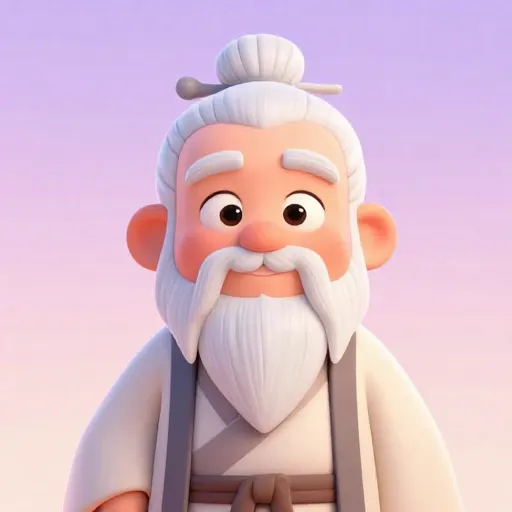
Nature does not hurry, yet everything is accomplished.
One of the most important ideas in the Tao Te Ching is Wu Wei. This is often translated as "non-action," but that does not mean just sitting on the sofa all day. It means "effortless action" or doing things without forcing them.
Think about a professional surfer or a great musician. When they are at their best, they aren't thinking about every single muscle movement. They are in a "flow state" where they and the wave, or they and the music, become the same thing.
Next time you are in a swimming pool, try to float perfectly still on your back. If you splash and kick and fight the water, you'll sink. But if you relax your body and let the water hold you, you stay up. That is the feeling of Wu Wei: letting the world support you instead of fighting it.
When we practice Wu Wei, we stop fighting against the current of our lives. If you are having a bad day and you get angry about being angry, you are fighting the current. If you sit quietly and let the anger float past like a leaf on a stream, you are practicing the Tao.
This doesn't mean we don't do anything at all. It means we wait for the right moment to act. A Taoist might say that if you want to clear muddy water, you don't stir it with a stick: you simply leave it alone until the mud settles by itself.

Mira says:
"I think I've felt Wu Wei before! It's like when I'm drawing and I forget what time it is, and my hand just knows where the pencil should go next."
Another big idea in Taoism is the concept of Yin and Yang. You have probably seen the famous symbol: a circle split into a black swirl and a white swirl, each with a dot of the other color inside. This represents the balance of opposites.
Taoists believe the world is made of these pairs. You cannot have light without shadows, or heat without cold, or noise without silence. They aren't enemies fighting each other: they are partners who need each other to exist.
Represents the sun, heat, action, the mountain, and moving forward. It is the bright and active part of life.
Represents the moon, cold, rest, the valley, and staying still. It is the dark and quiet part of life.
In our modern world, we often think that one side is "good" and the other is "bad." We want it to be sunny all the time, or we want to be happy every second. But Taoism suggests that the "down" times are just as important as the "up" times.
Just like the moon has to fade before it can become full again, we need rest so we can have energy later. The dot of white inside the black swirl reminds us that even in the middle of a difficult time, there is always a seed of something better growing.
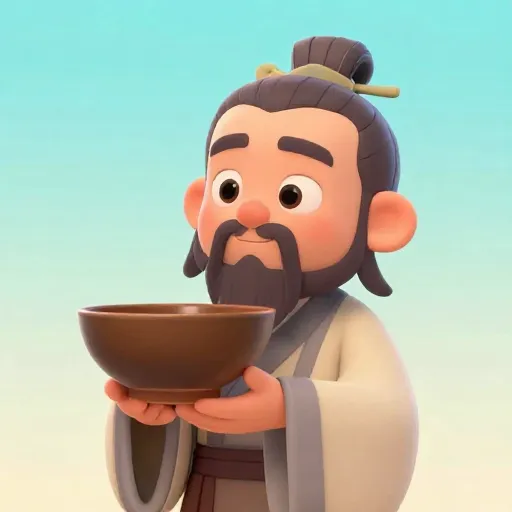
The usefulness of a pot comes from its emptiness.
While Lao Tzu wrote deep poems, another thinker named Zhuangzi used funny stories to explain the Tao. He lived about 200 years after Lao Tzu and loved to point out how silly humans can be when they think they know everything.
One of his most famous stories is about a very old, twisted tree. A carpenter looks at the tree and says it is useless because its wood is too gnarled to make into furniture. But Zhuangzi points out that because the tree is "useless," no one ever cuts it down.
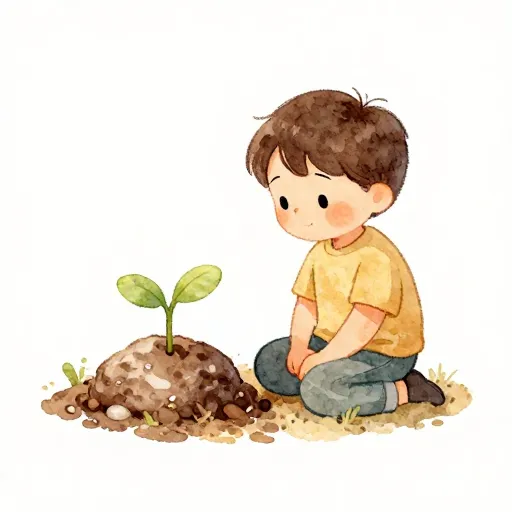
The Taoists were some of the world's first environmentalists! Because they believed humans were just one part of nature, they taught that we should respect every plant, animal, and rock. They believed that hurting nature was the same as hurting ourselves.
By being "useless" to the carpenter, the tree gets to live for hundreds of years and provide shade for everyone. Zhuangzi wanted us to see that what the world calls a "weakness" might actually be a hidden strength. He wanted us to stop judging things so quickly.
Zhuangzi also had a famous dream where he was a butterfly, fluttering happily from flower to flower. When he woke up, he wasn't sure if he was a man who had dreamed he was a butterfly, or a butterfly who was now dreaming he was a man.
Mira says:
"That story about the butterfly makes me think: maybe the things we imagine are just as 'real' as the things we touch."
Taoism teaches us to look at nature not as something to be used, but as our greatest teacher. Many Taoists practiced meditation to quiet their minds so they could hear what nature was saying. They believed that if we are too busy talking, we miss the most important lessons.
They also spoke about Qi, which is the life energy that flows through everything. By eating well, moving gently, and breathing deeply, Taoists believe we can keep our Qi flowing smoothly. This is why you might see people practicing Tai Chi in parks today: they are moving with the Tao.
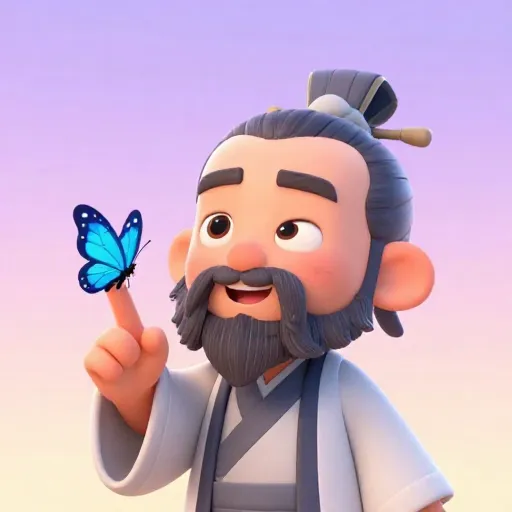
To the mind that is still, the whole universe surrenders.
Over the centuries, Taoism changed from a quiet philosophy into a major religion with temples, festivals, and gods. But at its heart, the core idea stayed the same: find your way back to your natural self. It traveled along the Silk Road and eventually influenced how people think all over the world.
Today, you can find the Tao in many places. It is in the way an artist paints, the way a scientist observes a forest, or the way you feel when you finally stop worrying and just enjoy the moment. It is a philosophy for people who realize that we are part of the universe, not the bosses of it.
The Journey of the Tao
Living the Tao doesn't require a special uniform or a secret password. It just requires a bit of curiosity and a lot of patience. It asks us to be like water: flexible enough to go around an obstacle, but persistent enough to eventually wear away the hardest rock.
In a world that is always telling you to go faster, do more, and be better, Taoism offers a different choice. It invites you to slow down, breathe, and trust that you are already exactly where you need to be. Sometimes, the best way to get where you're going is to simply enjoy the walk.
Something to Think About
If you stopped trying to be 'the best' or 'the fastest' for just one hour today, what would you notice about yourself?
There isn't a right way to feel about this. Some people find it scary to stop trying, while others find it a huge relief. Just notice what happens in your own mind.
Questions About Philosophy
Is Taoism a religion or a philosophy?
Do Taoists believe in a God?
How do you 'practice' Taoism?
The Way is Right Under Your Feet
The next time you see a river flowing around a rock, or a cat finding the perfect patch of sun to nap in, you are seeing the Tao in action. You don't have to go to a mountain in China to find it. It is in your breath, your rest, and the quiet spaces between your thoughts.