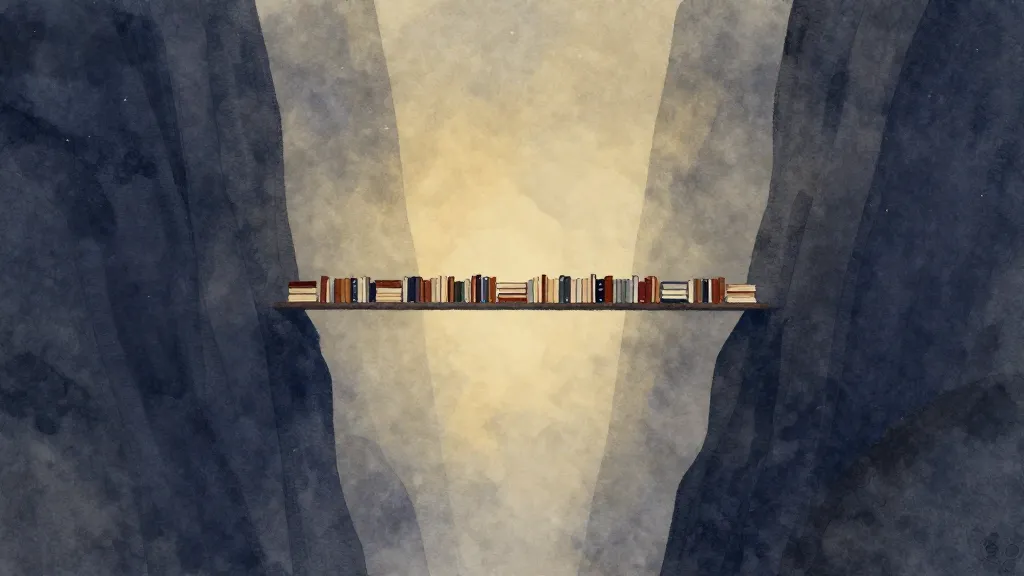
Have you ever looked at a tree and wondered if it sees the world the same way you do?
This type of wondering is the start of philosophy, a way of using reasoning to explore the biggest mysteries of life. It is not about having all the answers, but about learning how to live comfortably with the questions.
Imagine you are standing in a crowded marketplace in Greece, over 2,400 years ago. The air smells of baked bread and salt from the nearby sea. People are shouting, trading olives for silver coins, and arguing about the weather.
In the middle of this noise, a man with a messy beard is asking a stranger a very strange question. He does not want to buy anything. He simply asks: "What is justice?"

The word 'philosophy' comes from the Ancient Greek words 'philo' (love) and 'sophia' (wisdom). So, a philosopher is literally a 'lover of wisdom.' It’s not about being the smartest person in the room, it's about loving the search for truth.
This man was Socrates, and he believed that the most important thing a person could do was think. He did not write books or give long speeches. Instead, he asked questions until people realized they did not know as much as they thought they did.
This was the beginning of a tradition that spread across the world. It is a way of looking at the world that we call philosophy, which comes from two Greek words meaning the love of wisdom.

Finn says:
"If philosophy is about wisdom, does that mean my cat is a philosopher? She seems to know exactly when I'm about to open a tin of tuna, even before I do!"
What is Wisdom, Anyway?
Being wise is different from being smart. You can be smart and know that a tomato is a fruit. Wisdom is knowing that you probably should not put a tomato in a fruit salad.
In philosophy, wisdom means looking beneath the surface of things. It means asking why we believe the things we do and whether those beliefs actually make sense.
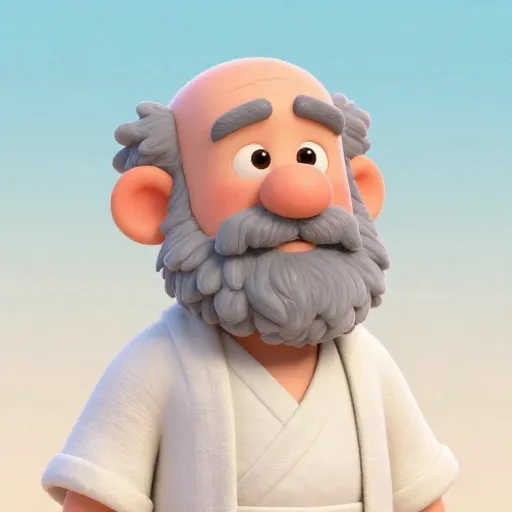
The unexamined life is not worth living.
When we practice philosophy, we are like detectives of the mind. We look for clues in our own thoughts and in the world around us. We try to find out what is true, what is fair, and what it means to live a good life.
This can feel a little bit wobbly at first. If you start questioning everything, you might feel like you are standing on a boat in a storm. But philosophers believe that this wobbliness is actually a good thing.
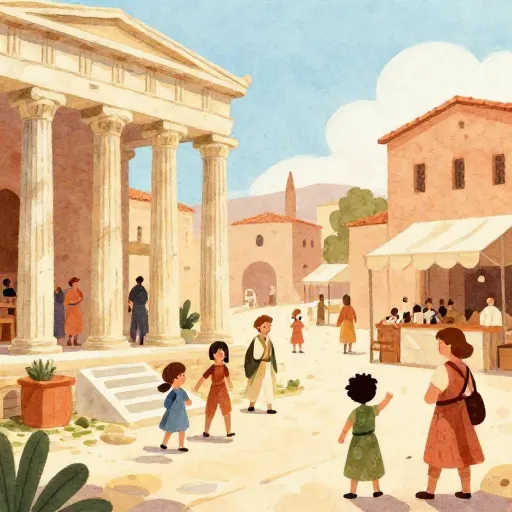
Imagine the ancient Agora in Athens. It is a giant open square filled with statues and sun-drenched porches. You see groups of people standing around, not to buy food, but to trade ideas. There are no classrooms or desks: just the open air and the sound of voices debating what it means to be a good citizen.
The Tools of the Thinker
To be a philosopher, you do not need a laboratory or a telescope. You only need your mind and a few specific tools. The first and most important tool is logic.
Logic is a set of rules for thinking clearly. It helps us see if one idea naturally follows another. If all humans are mortal, and Socrates is a human, then logic tells us that Socrates must be mortal.
We should only make decisions based on facts and clear reasoning. If something doesn't make logical sense, we shouldn't do it.
Facts are important, but our feelings and our hearts tell us things that logic cannot. Sometimes we just 'know' something is right because of how it feels.
Another tool is the Socratic Method, named after our friend in the Greek marketplace. This is the art of asking follow up questions to test an idea. If someone says, "It is always wrong to lie," a philosopher might ask, "What if a lie could save someone's life?"
By testing our ideas this way, we make them stronger. We find the holes in our thinking and try to patch them up. This process helps us reach a state of existence where we are more aware of our choices.

Mira says:
"I like the idea that our minds have tools. It's like we are building a house out of thoughts, and logic is the level that makes sure the floor isn't slanted."
The Three Big Branches
Philosophy is a massive subject, but it is usually divided into three main branches. Each branch asks a different kind of "big" question. You have probably asked these questions yourself without even realizing it.
- Ethics: This is the study of right and wrong. It asks: How should we treat other people? What does it mean to be a good person?
- Metaphysics: This is the study of reality. It asks: What is the world made of? Do we have souls? Is time real?
- Epistemology: This is the study of knowledge. It asks: How do we know what we know? Can we trust our eyes and ears?
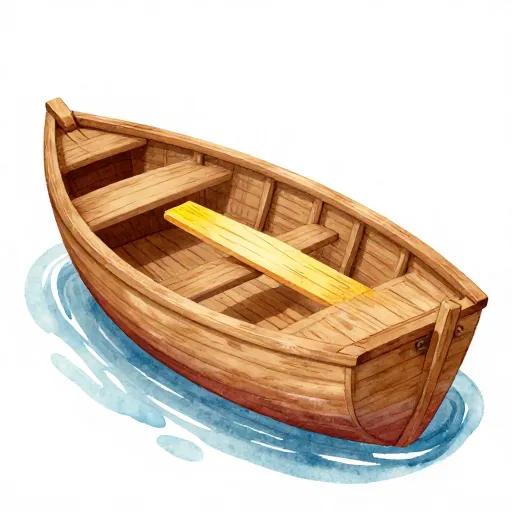
Try the 'Ship of Theseus' experiment! Imagine you have a wooden boat. Every time a board gets old, you replace it with a new one. Eventually, every single piece of the boat has been replaced. Is it still the same boat? If not, at what exact moment did it become a different boat?
Imagine you are playing a game with your friends. If someone cheats, you might feel a spark of anger. That anger is your brain doing ethics. You are feeling that something is "unfair," and you are trying to figure out why.
Or think about a dream you had last night. It felt very real while you were in it. An epistemology expert would ask: How can you be 100 percent sure that you are not dreaming right this very second?

Once, I dreamed I was a butterfly, fluttering hither and thither... suddenly I awaked, and there I was, myself again. Now I do not know whether I was then a man dreaming I was a butterfly, or whether I am now a butterfly, dreaming I am a man.
Thinking Through Time
Philosophy did not just happen in Greece. All over the world, people were looking at the stars and wondering the same things. In India, thinkers were exploring the nature of the self and the universe in texts called the Upanishads.
In China, a teacher named Confucius was thinking about how families and governments should work together. He believed that virtue, or being a person of good character, was the secret to a happy society.
While history books often focus on men, there have always been brilliant women philosophers! Hypatia of Alexandria was a world-famous teacher of math and philosophy in Egypt over 1,600 years ago. People traveled from far away just to hear her speak.
As time went on, these ideas traveled. They were translated into different languages and debated in great libraries. Thinkers in the Islamic Golden Age saved the works of the Greeks and added their own brilliant ideas about math and science.
During a time called the Enlightenment, philosophers began to focus on reasoning and individual freedom. They argued that every person has the right to think for themselves and make their own choices.
Through the Ages
The Power of Not Knowing
One of the most important parts of philosophy is being okay with the words "I don't know." In school, we are often taught that there is one right answer to every question. In philosophy, the journey to the answer is often more important than the answer itself.
When we admit we do not know something, our minds open up. We become more curious. We start to see that other people might have a piece of the truth that we are missing.
Mira says:
"Sometimes 'I don't know' feels like a big empty room. But maybe it's actually a room with a window that lets in more light."
This is why philosophy is so important for how we live together. If we think we know everything, we stop listening. But if we are all searching for wisdom together, we can be more patient and kind with one another.
Philosophers also study aesthetics, which is the study of beauty. They ask: Why do we find a sunset beautiful? Is beauty something that exists in the flower, or is it only in the eye of the person looking at it?

The mind must be strong, and then it will be free.
Why Philosophy is for You
Some people think philosophy is only for old men in dusty libraries. But philosophy is actually for anyone who is curious. Children are often the best philosophers because they have not yet decided that the world is a boring or finished place.
When you ask "Why?" you are participating in a conversation that has been going on for thousands of years. You are joined by kings, scientists, rebels, and dreamers who all wanted to understand this strange experience called life.
Something to Think About
If you could ask a tree, a mountain, or the ocean one 'why' question, what would it be?
There are no wrong answers here. Philosophy is about the curiosity that makes you want to ask the question in the first place.
Next time you are walking to school or lying in bed at night, try to catch a thought. Look at it closely. Ask it where it came from and if it is really true. You might just find that the more you look, the more wonderful the world becomes.
Questions About Philosophy
Is philosophy the same as religion?
Why do philosophers argue so much?
Can children be philosophers?
Keep Wondering
Philosophy isn't a subject you finish: it's a habit you keep. Every time you stop to think about a choice you're making or wonder about the nature of a dream, you are keeping the ancient flame of wisdom alive. Stay curious, stay wobbly, and never stop asking why.