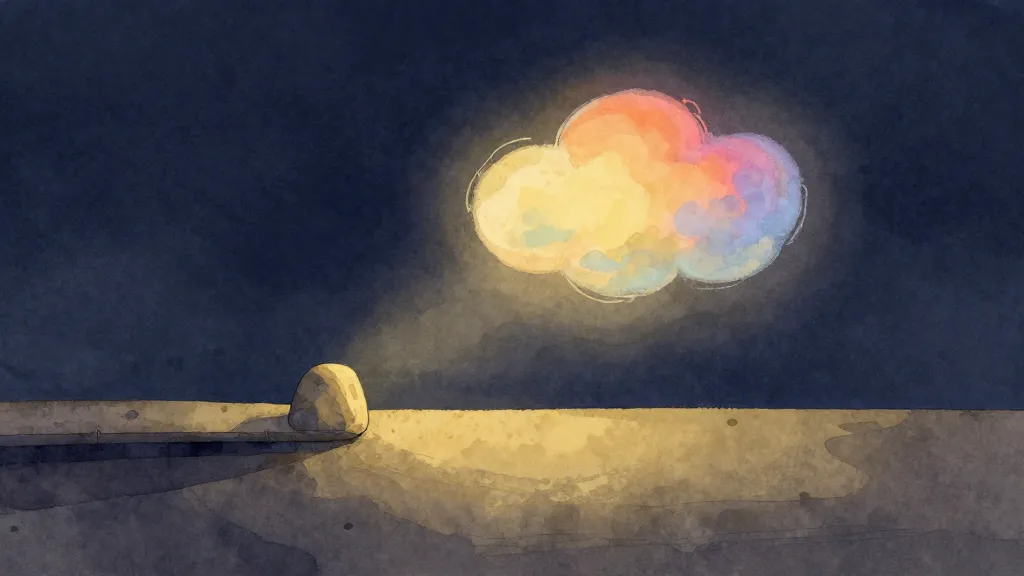
If you found a beautiful, smooth stone on the beach and put it on a pedestal in a museum, would it suddenly become art?
Art is one of the oldest things humans do, yet we still can't quite agree on what it is. In this exploration, we look at the aesthetics, the history, and the intentionality behind why we create things that don't always have a 'job' to do.
Imagine you are standing in a dark, damp cave in France, roughly 30,000 years ago. The only light comes from a flickering torch made of animal fat. On the limestone walls, giant lions and galloping horses seem to move in the dancing shadows. These are the Chauvet Cave paintings, some of the oldest art ever discovered.
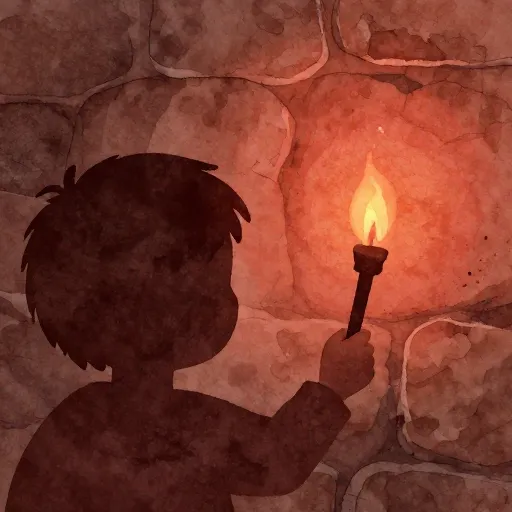
Imagine the cave is silent except for the drip-drip of water. You are using a hollow bone to blow red dust over your hand pressed against the wall. When you pull your hand away, a perfect outline remains: a 'negative' handprint that says 'I was here' across thirty thousand years.
Those early humans didn't have museums or price tags. They didn't have Instagram or art teachers. Yet, they spent hours grinding charcoal and ochre to leave these marks behind. They felt a need to take something from their minds and put it onto a wall.
The Mirror: Art as Copying
For a very long time, people thought the answer to "What is art?" was simple. Art was a mirror. The goal was to copy the world as perfectly as possible. The Ancient Greeks called this mimesis, which is where we get the word 'mimic.'

Mira says:
"If art is just copying, then a photocopy machine is the greatest artist in the world! But I think there's more to it than just being a mirror."
Philosophers like Plato were actually a bit suspicious of this. He thought that if a tree is a real thing, then a painting of a tree is just a 'copy of a copy.' He worried art might trick us into caring more about shadows than reality.
The aim of art is to represent not the outward appearance of things, but their inward significance.
Aristotle, who was Plato's student, saw it differently. He thought humans were natural mimics. To him, seeing a well-made copy of a lion helped us understand what a lion really was, without the danger of being eaten by one. Art was a way to study the world safely.
Art is a distraction. It's a fake version of reality that moves us away from truth and logic.
Art is a teacher. It helps us process big emotions and learn about life by watching stories unfold.
The Bridge: Art as Feeling
Eventually, artists realized they could do more than just copy what they saw. They could show what they felt. Think about the last time you were really angry: did the world look bright and sunny, or did it feel sharp and jagged? Art began to shift from being a mirror to being an expression.
Finn says:
"What if I draw a dog but it looks like a cloud? Is it still a dog because I thought it was, or a cloud because you see it that way?"
In the 1800s, a writer named Leo Tolstoy argued that art wasn't about beauty at all. He believed art was a way of 'infecting' other people with your feelings. If you feel sad and you paint a blue square, and someone else looks at it and feels that same sadness, Tolstoy would say that is art.
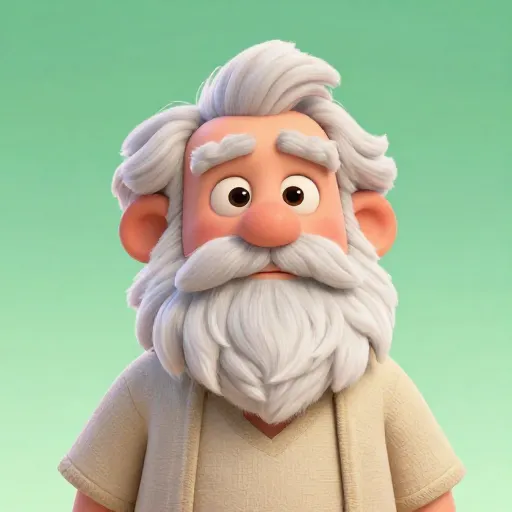
Art is a human activity consisting in this, that one person consciously... hands on to others feelings he has lived through.
This idea changed everything. It meant that art didn't have to look like a photograph to be 'good.' It just had to be honest. It allowed for messy lines, strange colors, and shapes that don't exist in nature. This is often called abstract art.
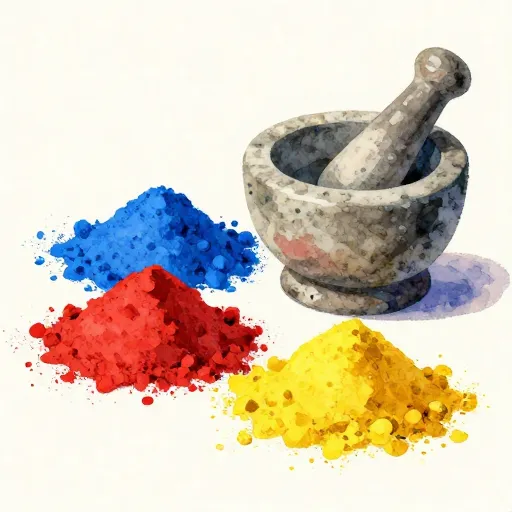
Before paint came in tubes, artists had to make their own! Some of the most beautiful reds came from crushing up tiny bugs called cochineals. A very expensive blue, called ultramarine, was made by grinding up a semi-precious blue stone called Lapis Lazuli from Afghanistan.
The Choice: Art as an Idea
In 1917, a man named Marcel Duchamp did something that made people very angry. He bought a standard porcelain urinal from a plumbing store, signed a fake name on it, and sent it to an art exhibition. He didn't build it, paint it, or change it. He just chose it.
Mira says:
"It's like a secret code. The artist sends a message, and we have to use our own brains to finish the story."
This introduced the world to conceptual art. Duchamp was saying that the 'art' wasn't the object itself, but the idea behind it. He argued that the artist's most important tool isn't a brush or a chisel, but their perspective. If an artist says something is art, is that enough?
The 'Not-a-Box' Challenge: Find an everyday object, like a spoon, a shoe, or a cardboard box. Try to look at it as if you've never seen it before. If you put it on a dinner plate and called it 'The Lonely Mountain,' does it feel different to look at? You just performed an act of conceptual art!
This brings up a tricky word: curation. Curation is the act of choosing what is important. When you pick your three favorite rocks and line them up on your windowsill, you are acting like a curator. You are telling the world: "Look at these, they matter."
Art Through the Ages
Why Do We Do It?
So, if art can be a copy, a feeling, or just an idea, why do we keep doing it? Some psychologists, like D.W. Winnicott, believe art is a form of 'serious play.' It is a middle ground between our inner dreams and the outside world. It helps us feel less alone in our own heads.
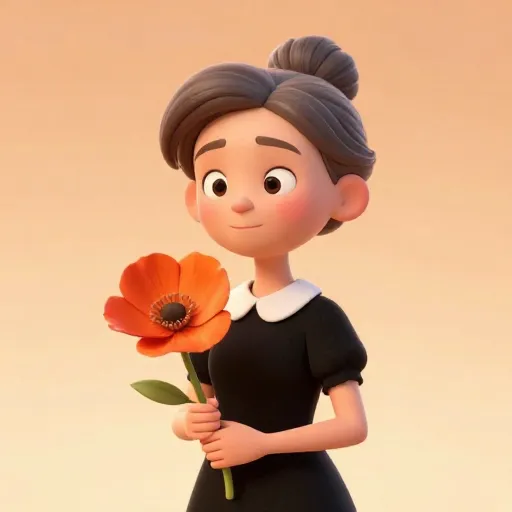
I found I could say things with color and shapes that I couldn't say any other way: things I had no words for.
When you create something, you are practicing agency. You are making a choice that changes a blank page into something new. Even if no one ever sees it, the act of making it changes how you see yourself. You become a creator instead of just a consumer.
In 1961, a painting by Henri Matisse hung in the Museum of Modern Art in New York for 47 days before anyone noticed it was upside down! This shows how much our own interpretation matters when we look at art.
Today, we have new questions. Can a robot make art? If a computer program generates a beautiful image, is there a 'feeling' inside it? We are still in that dark cave, in a way, holding our torches up to the wall and wondering what the shadows mean. We don't have all the answers, and that is exactly why art stays interesting.
Something to Think About
If you made a beautiful painting but then immediately hid it where no one would ever find it, would it still be art?
There is no right answer to this. Some people think art needs an audience to 'complete' it, while others think the act of creating is all that matters. What do you think?
Questions About Philosophy
Can anything be art?
Why is some 'bad' art in museums?
Who decides what is art?
The Art of Living
Next time you see something strange in a gallery or even a beautiful pattern of raindrops on a window, remember that art is a conversation. It's a way for humans to say 'Look at this!' across time and space. You are part of that conversation every time you create, doodle, or simply stop to wonder at the world.
