Have you ever felt a hot, prickly feeling in your chest when someone else got a bigger slice of cake or a longer turn on the swing?
That feeling is your moral intuition waking up. It is a sign that you are starting to think about justice, a concept humans have been trying to define for thousands of years.
It is one of the first things we ever learn to say: "That is not fair!" We say it on the playground, in the classroom, and at the dinner table.
But if you stop to think about it, fairness is a bit of a mystery. Is it about everyone getting the exact same thing, or is it about making sure the people who need more actually get more?
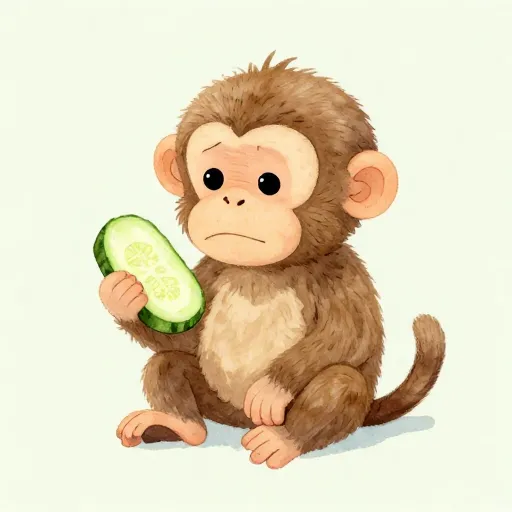
In the monkey experiment, the monkey getting the cucumber didn't mind the food itself at first. It was only when she saw the 'unfair' comparison that the cucumber became a problem. Scientists call this 'inequity aversion.'
Scientists have discovered that we are not the only ones who care about this. In a famous experiment, researchers gave two monkeys a task to complete.
When both monkeys got a piece of cucumber as a reward, they were perfectly happy. But when one monkey saw the other getting a delicious, sweet grape for the same job, everything changed.

Finn says:
"What if the monkey had a whole bucket of grapes but still got mad because her friend didn't have any? Does fairness work both ways?"
The monkey who still got the cucumber did not just look sad. She got angry, rattled her cage, and even threw the cucumber back at the researcher.
This shows that fairness is a deep reciprocity instinct. We expect our efforts and our rewards to match up with the people around us.
The First Rules Written in Stone
To find out where our modern ideas of fairness started, we have to travel back nearly 4,000 years to Ancient Mesopotamia. Imagine a bustling marketplace in the city of Babylon.
People are trading grain, wool, and silver under a hot sun. Because there were so many people living together, they needed a way to settle arguments without fighting.
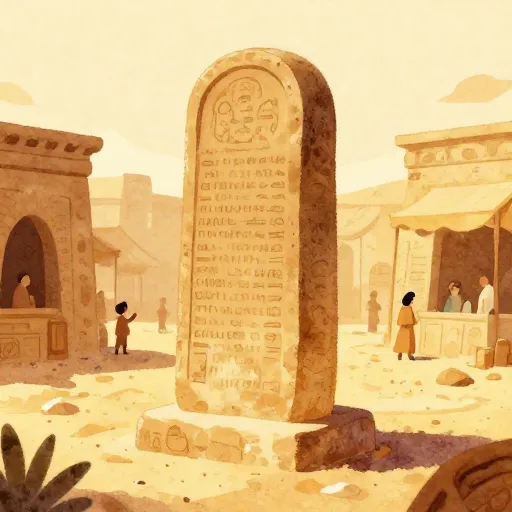
Imagine a seven-foot-tall black stone pillar standing in the center of a crowded city. Thousands of tiny wedge-shaped marks, called cuneiform, are carved into its surface. It stands there day and night, telling every citizen exactly what the price of fairness is.
A king named Hammurabi decided to write down 282 laws on a giant black stone called a stele. This was a radical idea because it meant the rules were the same for everyone who could read them.
Before this, a leader might just make up a rule on the spot depending on how they felt that morning. Hammurabi wanted his people to have a sense of justice that was predictable.
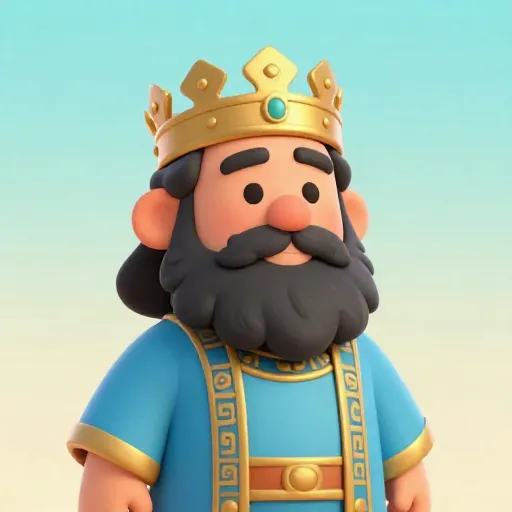
That the strong might not oppress the weak, and that they may give justice to the orphan and the widow.
However, Hammurabi’s version of fairness was very different from ours. His rules were based on a principle called Lex Talionis, which means "the law of retaliation."
If someone broke a neighbor's arm, the neighbor got to break theirs in return. This is where we get the phrase "an eye for an eye, a tooth for a tooth."
Who Deserves the Best Flute?
As time went on, people started to realize that simply trading one injury for another did not always feel like true fairness. About 2,300 years ago in Greece, a thinker named Aristotle spent his days walking and talking with his students.
He wanted to know how we should distribute things like honors, money, and even musical instruments. He called this distributive justice.
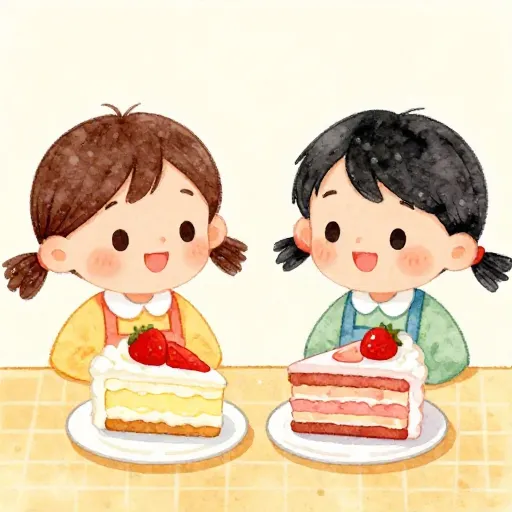
The 'I Cut, You Choose' rule: If you have to share a piece of cake with a friend, let one person cut the cake and the other person choose which piece they want. It is a perfect way to ensure the cutter tries their hardest to be exactly fair!
Aristotle used a famous example: Imagine you have a collection of the world's most beautiful, perfectly tuned flutes. To whom should you give them?
Should you give them to the richest people? Should you give them to the most popular people or the people who are the best-looking?

Mira says:
"Aristotle's idea is interesting, but what if someone is a great flute player only because they were rich enough to pay for lessons?"
Aristotle argued that the best flutes should go to the best flute players. He believed that the purpose of a flute is to be played well, so it is only fair that the person with the most merit gets the best tool.
In his mind, fairness was about matching the right thing to the right person. This is an idea we still use today when we give trophies to the fastest runners or lead roles to the best singers.

Justice is a sort of equality: it is giving people what they deserve.
The Great Forgettery
If we fast-forward to the 1970s, we meet a philosopher at Harvard University named John Rawls. He worried that people only choose rules that benefit themselves.
A tall person might think it is fair for everything to be on high shelves, while a short person would disagree. Rawls came up with a brilliant thought experiment called the original position.
Equality means everyone gets the same size box to stand on to see over a fence. It is simple and mathematically perfect.
Equity means the shortest person gets two boxes, and the tallest person gets none, so that they can both actually see the game.
Imagine you are floating in a cloud before you are born. You are behind a veil of ignorance, which means you have no idea who you will be in the world.
You do not know if you will be rich or poor, healthy or sick, a great athlete or someone who uses a wheelchair. Now, from behind that veil, you have to design the rules for society.
Finn says:
"The 'Veil of Ignorance' feels like the ultimate game of 'choose your character' but without getting to see the screen!"
Rawls believed that if you did not know your own place, you would choose rules that were fair to everyone. You would make sure even the poorest or weakest person was taken care of, just in case that person turned out to be you.
This idea moved fairness away from just "who is the best" and toward equality. It asks us to use our empathy to see the world through everyone's eyes at once.
Fairness Through the Ages
The Three-Way Tug of War
Even with all these great thinkers, fairness remains a puzzle. A modern philosopher named Amartya Sen tells a story about three children: Anne, Bob, and Carla.
They are arguing over a single flute, and they all have a very good reason for why they should be the one to keep it. This is where fairness gets really complicated.
- Anne says the flute should be hers because she is the only one who knows how to play it.
- Bob says it should be his because he is so poor that he has no other toys at all.
- Carla says it should be hers because she is the one who spent months making it.
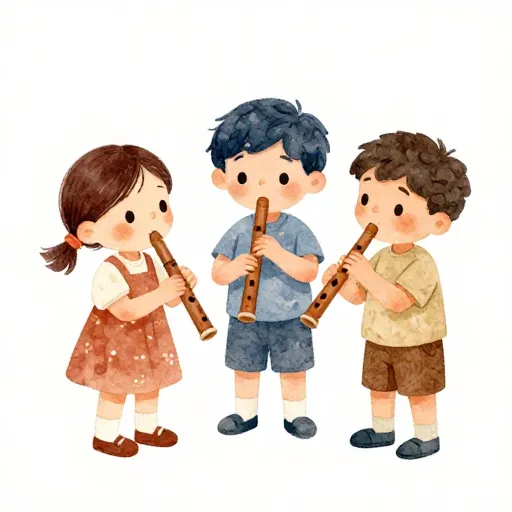
Look at the three children with the flute. Anne is holding her fingers over the holes, ready to play. Bob is looking at the ground, having nothing else to play with. Carla is holding the wood-carving tools she used to build it. Can you see how each of them feels right?
Who do you think is right? If you agree with Aristotle, you might pick Anne because she has the talent. If you agree with Rawls, you might pick Bob because he has the most need.
But if you believe in property rights, you would pick Carla because she did the work. Amartya Sen’s point is that all three of them have a legitimate claim to fairness.

There can be a plurality of reasons for justice, and they can all be right.
This shows us that there isn't always one "perfect" answer to what is fair. Sometimes, fairness is about listening to all the different sides and trying to find a solution that respects everyone.
It is a social contract we are constantly rewriting. Every time you share a snack or pick teams for a game, you are participating in this ancient human conversation.
Something to Think About
If you were behind the Veil of Ignorance, what is the one rule you would definitely make for the world?
There are no wrong answers here. Think about what would make you feel safe and happy no matter who you turned out to be.
Questions About Philosophy
Is 'fair' the same thing as 'equal'?
Why do I get so upset when things feel unfair?
Can life ever be 100% fair?
The Never-Ending Conversation
Fairness isn't a math problem with one final answer. It is a living, breathing idea that changes as we talk to one another and learn more about each other's lives. The next time you find yourself about to shout, "That's not fair!", take a second to wonder: Which type of fairness am I looking for? Is it merit, is it need, or is it equality? Just asking the question is the first step toward being a philosopher.
