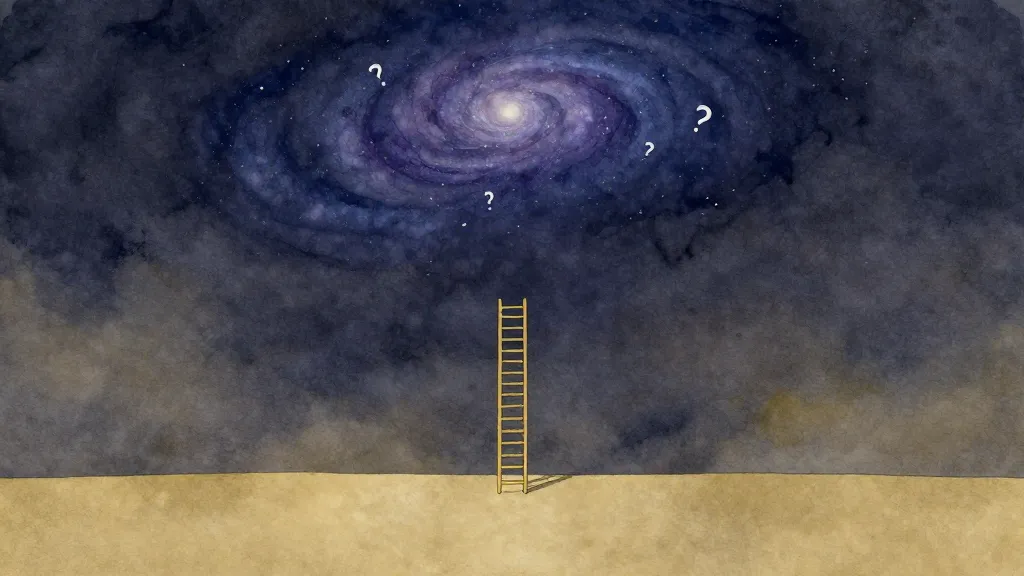
Have you ever wondered if the color red you see is exactly the same red your best friend sees?
This simple question is the start of philosophy, a way of exploring the world using reason and curiosity. It is not about finding quick answers, but about seeking wisdom through the toughest questions humans can ask.
Most people think philosophy is something done by very old men with long beards sitting in dusty libraries. They imagine it is a boring subject filled with thick books and confusing words.
In reality, philosophy is something you have been doing since you were a toddler. Every time you asked "why" or wondered if a rule was fair, you were stepping into a world of big ideas.

Finn says:
"Wait, so if I ask why I have to go to bed at 8:00 PM, am I actually doing philosophy? That sounds a lot better than just complaining!"
The word itself comes from two Greek words: philo, which means love, and sophia, which means wisdom. So, a philosopher is simply a "lover of wisdom."
Wisdom is different from being smart or knowing lots of facts. Wisdom is about understanding how to live, how to treat others, and how to tell what is true.
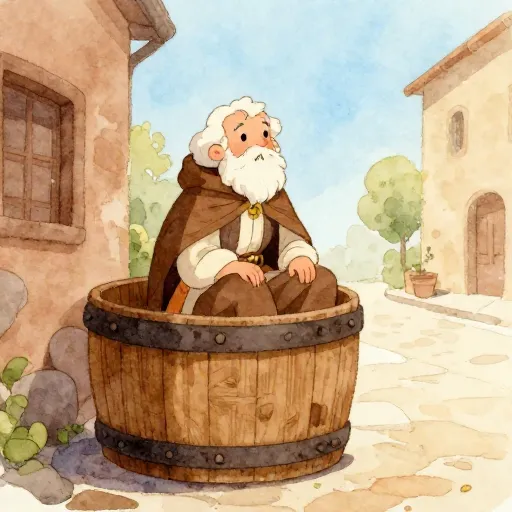
In Ancient Greece, some philosophers were so dedicated to their ideas that they lived in wooden barrels on the street! They were called Cynics, and they believed that owning 'stuff' just got in the way of thinking.
Where It All Began
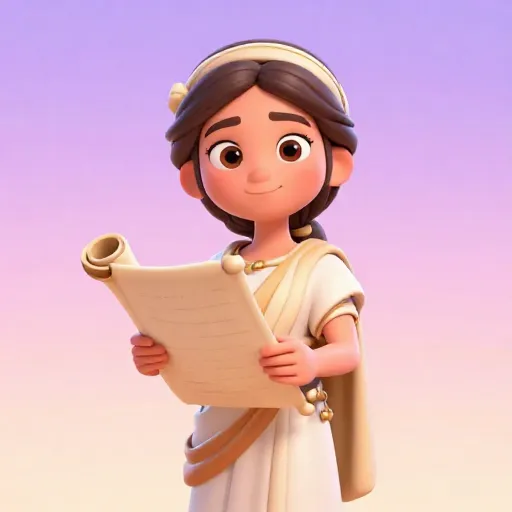
To find the roots of philosophy, we have to travel back over 2,500 years to a place called Ancient Greece. Imagine a city called Athens, filled with white marble buildings and sun-drenched town squares.
In the middle of the city was the agora, a busy marketplace. People didn't just go there to buy olives and fish: they went there to talk.
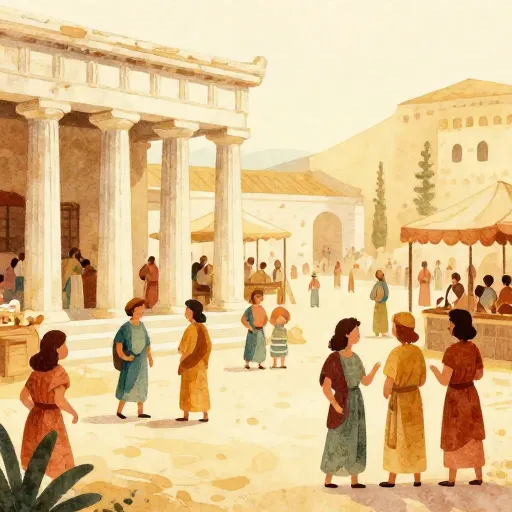
Imagine standing in the middle of a sun-baked marketplace. You hear the clink of silver coins and the smell of roasting lamb. Suddenly, a man stops you and asks: 'What is the most important thing in the world?' Everyone stops to listen. This was the birth of Western philosophy.
One man in particular, named Socrates, spent his whole day in the market asking people questions. He didn't claim to have the answers; instead, he wanted to see if people really knew what they thought they knew.
He might ask a soldier, "What is courage?" or ask a judge, "What is justice?" This method of questioning everything is now called the Socratic Method.
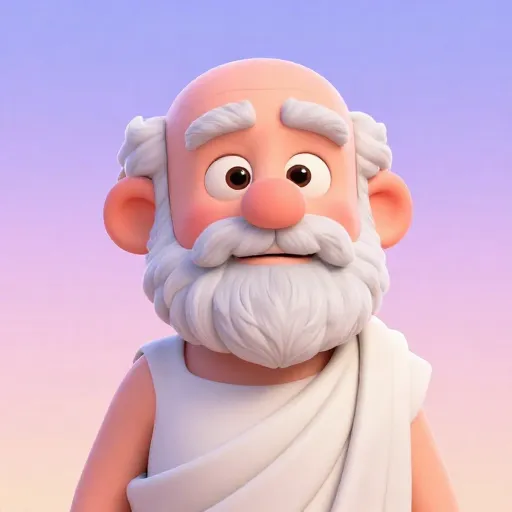
The unexamined life is not worth living.
Before Socrates and his friends, most people explained the world through myths and legends. If there was a thunderstorm, they said the god Zeus was angry.
Philosophers changed the game by suggesting that we could use our own minds to figure things out. They believed the universe followed certain rules that we could discover if we thought hard enough.

Mira says:
"It's like they stopped looking at the sky for monsters and started looking at the sky for patterns. I wonder if the stars look different when you're thinking about them that way."
The Three Big Branches
Philosophy is a massive forest of ideas, but it usually grows in three main directions. Think of these as the three big questions that every philosopher tries to answer.
The first branch is called epistemology. This is the study of knowledge: how do we know what we know?
Try the 'Three Whys' game. Pick a statement like 'I need to go to school.' Ask 'Why?' to the answer three times. You'll quickly move from a simple fact to a deep philosophical question about life and society!
Think about a dream you had recently. While you were in it, it felt completely real, didn't it?
How do you know that you aren't dreaming right at this very second? Epistemology helps us look for evidence to prove our reality is solid.
The second branch is ethics. This is the study of right and wrong, and how we should treat each other.
The only thing that matters is the result. If everyone is happy at the end, the action was good.
The rules are what matters. You should never lie, even if lying would make people feel better.
You deal with ethics every day at school and home. If you find a ten-dollar bill on the playground, what is the "right" thing to do?
Ethics asks if we should do things because they make us happy, or because they follow a rule, or because they help the most people. It's the search for a good life.
Reserve your right to think, for even to think wrongly is better than not to think at all.
The third branch is metaphysics. This sounds like a superpower, but it's actually about the nature of existence.
Metaphysics asks what things are actually made of. Is there a "soul" inside your body, or are you just a collection of atoms and electrical signals?
Finn says:
"If I'm just a bunch of atoms, does that mean my atoms are the ones that want pizza, or is that the 'me' part talking?"
Tools for Thinking
If a scientist uses a microscope, what does a philosopher use? Their main tool is logic, which is a way of connecting ideas so they make sense.
Logic helps us spot mistakes in thinking, which are sometimes called fallacies. It’s like a metal detector for bad arguments.

A paradox is a philosophical puzzle that seems to contradict itself. One famous example is the Liar's Paradox: If a person says 'I am lying,' are they telling the truth or a lie?
Another tool is the thought experiment. Since philosophers can't always test their ideas in a lab, they build scenarios in their minds.
They might ask: "If you had a ring that made you invisible, would you still be a good person?" By imagining the situation, they learn something about human nature.

I dreamed I was a butterfly... now I do not know whether I was then a man dreaming I was a butterfly, or whether I am now a butterfly, dreaming I am a man.
Why Bother Questioning?
It might seem easier to just accept things as they are. Why spend time worrying about whether chairs are real or if time is an illusion?
Philosophy matters because it gives you perspective. It teaches you that your way of seeing the world is just one of many.
When you study big ideas, you learn critical thinking. This means you don't just believe everything you hear on TV or read on the internet.
You learn to ask: "Is this true? Who said it? Why should I believe them?" This makes you a leader of your own mind.
Through the Ages
The Never-Ending Conversation
Philosophy is not a book that someone finished writing a long time ago. It is an ongoing conversation that has been happening for thousands of years.
Every time you disagree with a friend about what is fair, you are joining that conversation. Every time you look at the stars and feel small, you are a philosopher.
There are no final "correct" answers in philosophy. There are only better questions and deeper ways of understanding.
Something to Think About
If you could ask a 'Why' question that the whole world had to stop and think about, what would it be?
There is no 'correct' question to ask. Philosophy begins the moment you decide that your curiosity is more important than having a quick answer.
Questions About Philosophy
Is philosophy the same thing as religion?
Do I have to be a genius to do philosophy?
Can philosophy help me in real life?
Keep Wondering
Philosophy is a journey with no map and no destination. It is a way of traveling through life with your eyes wide open. The next time you see something that seems 'normal,' try looking at it like a philosopher. Ask why it is there, if it is fair, and how you know it is real. The world is much more interesting when you start asking the big questions.
