If you tell your teacher the dog ate your homework, but you don't actually have a dog, is that the opposite of truth?
We use the word truth every single day, yet it is one of the hardest things to define. Philosophers have spent thousands of years trying to figure out if truth is a fact we can see, a feeling we have inside, or something else entirely.
Imagine you are standing in a sunny marketplace in Ancient Athens over two thousand years ago. The air smells of roasted meat and dusty stone. You see a man with a messy beard and old sandals stopping people as they walk by.
He doesn't want to sell them anything. He wants to ask them a question: "What is truth?" This man was Socrates, and he realized that most people use the word truth without actually knowing what it means.
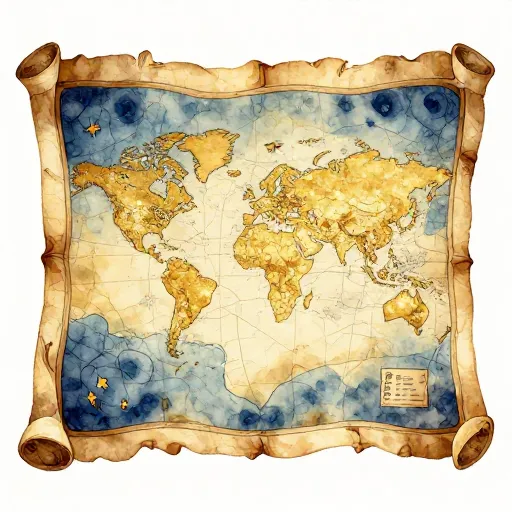
Imagine truth is a hidden treasure map. Some people think the map is folded in their pocket, while others think the map is still being drawn by every action we take. If the map is still being drawn, can it ever be 'finished'?
For many of us, truth seems simple: it is just the way things are. If I say, "The sky is blue," and you look up and see blue, then I am telling the truth. Philosophers call this the Correspondence Theory.
This means that a statement is true if it "corresponds" or matches up with the real world. If the words in my mouth match the things on the ground, we have found a truth.
Mira says:
"I wonder if truth is like a puzzle. I might have one piece, and you might have another, but we need both to see the whole picture."
But wait, is it always that easy? Think about a time you and a friend saw the same thing happen, but you both described it differently.
Maybe you thought a movie was exciting, but your friend thought it was scary. If you both say what you feel, are you both telling the truth? This is where the simple idea of truth starts to get a little bit wiggly.
To say of what is that it is, and of what is not that it is not, is true.
The Man Who Doubted Everything
Let’s jump forward about two thousand years to a cold winter night in 1641. A French philosopher named René Descartes was sitting by a fireplace, wearing a warm dressing gown.
He started to think about how often his senses lied to him. Have you ever seen a straight stick look bent when you put it in a glass of water? Or have you ever had a dream that felt so real you were surprised when you woke up?
Hold your finger close to your eyes and look at something across the room. Now, blink your left eye, then your right. Notice how your finger seems to jump back and forth? Your finger didn't move, but your eyes gave you two different 'truths' about where it was. Which eye was right?
Descartes wondered if he could be sure of anything at all. He imagined that a "malicious demon" might be playing a trick on him, making him see a world that wasn't actually there.
He decided to throw away everything he thought he knew and start from scratch. He wanted to find one single truth that was impossible to doubt: something so solid that no demon could trick him about it.
Finn says:
"If I'm dreaming right now, is the dream 'true' while I'm in it? It feels pretty real to me!"
Eventually, he realized that even if he was being tricked, he was still the one doing the thinking. He couldn't doubt his own existence because he was there, doubting!
This led to his most famous discovery: "I think, therefore I am." For Descartes, the first and most important truth wasn't outside in the world, it was inside his own mind.
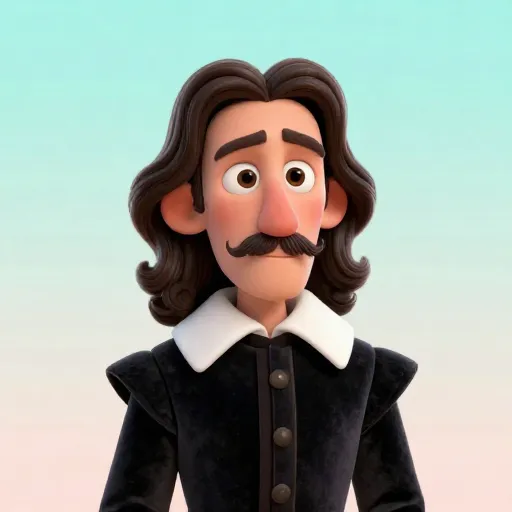
I think, therefore I am.
The Elephant in the Room
Sometimes, truth depends on where you are standing. There is a very old story from India about six blind men who come across an elephant for the first time.
One man touches the elephant's trunk and says, "The truth is that an elephant is like a thick snake." Another touches the ear and says, "No, the truth is that an elephant is like a giant fan."
Plato believed that our physical world is just a blurry shadow of a 'perfect' truth that exists somewhere else, like a reflection in a pond.
Aristotle believed that truth is right here in front of us, and we find it by looking closely at plants, animals, and stars.
Each man was telling the truth about what he felt. However, none of them had the Absolute Truth because they could only see one small part of the whole animal.
This teaches us about Perspective. Often, when we argue with someone about what is true, we are just looking at different parts of the same elephant.
The Tools for Finding Truth
How do we decide what to believe today? We have developed many tools to help us separate what is true from what is just a guess or a mistake.
One of the biggest tools is the Scientific Method. This is a way of testing the world over and over again to see if the results stay the same.
- We make an observation: "Ice melts when it gets warm."
- We form a hypothesis: "If I put ice in the sun, it will turn to water."
- We test it: We put the ice in the sun.
- We check the result: The ice melted!
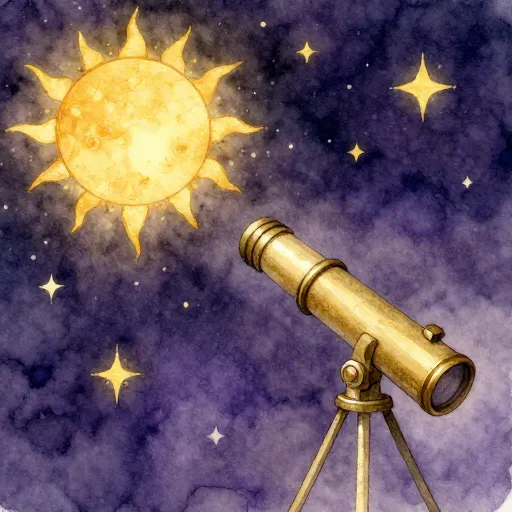
In the past, people 'knew' for a fact that the Sun moved around the Earth. They saw it move across the sky every day! It took hundreds of years and new tools like telescopes to prove that the opposite was true.
Even science doesn't claim to have the "final" truth forever. Scientists are always looking for new evidence that might change what we know.
Through the Ages: The Hunt for Truth
Language and Labels
Later in history, a philosopher named Ludwig Wittgenstein suggested that truth is tied up in the "games" we play with language. He believed that the meaning of words depends on how we use them together.
If we are playing a game of soccer and I say "That’s a goal!", it is a truth within that game. But if I say it while we are eating dinner, it doesn't make any sense.
Mira says:
"It's interesting that we can look at the same sunset and I call it 'beautiful' while you call it 'orange.' We're both right, aren't we?"
Wittgenstein thought that many of our big arguments about truth happen because we are using the same words to mean different things. We are like people trying to play chess using the rules of checkers.
The limits of my language mean the limits of my world.
Why Does Truth Matter?
If truth is so hard to find, why do we bother looking for it at all? Think about what would happen if nobody cared about the truth.
Maps wouldn't work, medicine wouldn't cure people, and we couldn't trust anything our friends told us. Truth is the glue that holds our world together.
Your brain sometimes creates its own truth. If you give someone a sugar pill but tell them it will cure their headache, they often feel better! This is called the 'Placebo Effect.' Their brain made the 'truth' of feeling better happen.
Even if we never find a perfect, final answer to "What is Truth?", the act of searching for it makes us better thinkers. It helps us stay curious and open to the idea that we might be wrong.
Knowing the truth isn't just about having the right facts in your head. It is about having the courage to keep asking questions, even when the answers are complicated.
Something to Think About
If everyone in the world believed a lie, would it eventually become the truth?
Think about this while you walk to school or right before you fall asleep. There isn't a secret answer in the back of a book for this one. What do you think?
Questions About Philosophy
Is a lie the same thing as 'not the truth'?
Can truth change over time?
Why do people disagree about what is true?
The Never-Ending Story
The search for truth isn't a race with a finish line. It's more like an ongoing conversation between humans across history. By asking 'What is Truth?', you are joining a club that includes some of the greatest thinkers who ever lived. Keep asking, keep doubting, and keep looking at the elephant from every side.
