If you look in a mirror, you see a face, but behind that face is a world that no one else can visit unless you let them in.
Scientists and thinkers have spent thousands of years trying to figure out if being human is about our evolution, our giant brains, or the way we treat one another. It is a question that starts with biology but quickly turns into philosophy, the study of the big 'whys' of life.
Imagine you are standing in a forest next to a chimpanzee, a robot, and a very smart dog. All of you can breathe, move, and react to the world, but there is something different about the way you experience the day.
Humans have a strange ability to think about things that are not right in front of them. We can remember a birthday party from three years ago, or imagine a city built on Mars that does not exist yet.
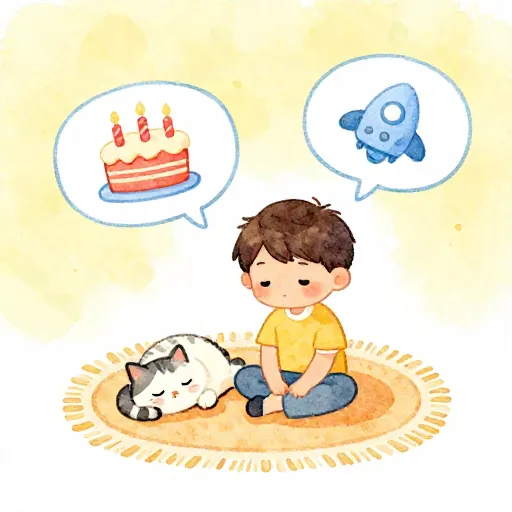
Imagine you are sitting in a quiet room with a cat. The cat is perfectly happy chasing a sunbeam. You, however, might be thinking about what you want for dinner, a joke you heard yesterday, and the fact that one day you will be a grown-up. You are 'time traveling' in your head, while the cat is just 'being' in the sun.
This ability to travel in time using only our minds is part of what makes us unique. We are not just living in the world: we are trying to understand it, change it, and tell stories about it.
But being human is not just one thing. It is a messy, wonderful collection of traits that developed over millions of years.

Finn says:
"I wonder if dolphins think they are the 'human' version of the ocean? They have names for each other and they play games, so maybe they have their own big questions too."
The Walking Ape
Long before humans wrote books or built cities, our ancestors lived on the vast grasslands of Africa. About six million years ago, some of our relatives started doing something very strange: they stood up on two legs.
This is called bipedalism, and it changed everything for our species. By standing up, our ancestors could see over tall grass to spot predators, and their hands were suddenly free to carry things.
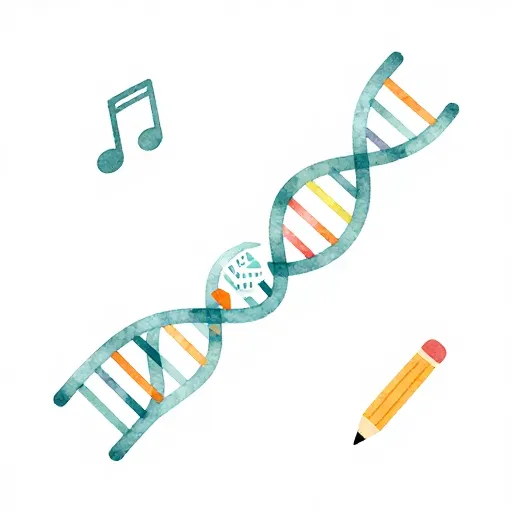
Our DNA is about 98.8% the same as a chimpanzee's. That tiny 1.2% difference is what gives us the ability to build skyscrapers, write symphonies, and invent the internet. It shows how a very small change in biology can lead to a massive change in how a species lives.
Free hands meant we could start playing with the world. We could pick up rocks, sharpen them, and create the first tools, which allowed us to get better food and survive in tough places.
As our hands got busier, our brains started to grow. Using tools and hunting together required a new level of thinking and planning that other animals did not need as much.
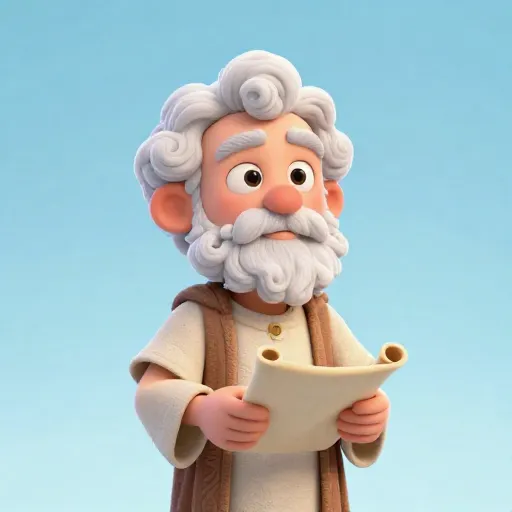
Man is by nature a social animal.
The Social Animal
About 2,400 years ago, a man named Aristotle walked through the dusty streets of Athens, Greece. He spent his days watching how people interacted in the marketplace and the gymnasium.
Aristotle noticed that humans almost never live alone. We live in families, tribes, and cities, and we rely on each other for almost everything we need to survive.
Some scientists believe what makes us human is our technology. We are the only animals that make complex tools to solve any problem we face, from hammers to computers.
Anthropologist Margaret Mead suggested the first sign of civilization was a 15,000-year-old human bone that had been broken and healed. It showed that someone stayed to help and care for the injured person instead of leaving them behind.
He called humans the "social animal." He believed that a person who lived completely alone would not really be human at all, because our nature is to be part of a group.
Think about your own life. Almost everything you know, from how to tie your shoes to how to solve a math problem, was taught to you by another human being.

Mira says:
"It is like we are all holding hands across time. I'm using an alphabet invented thousands of years ago to write a note to a friend who lives three houses away."
Being human means being part of a giant, invisible web of shared knowledge. We use language to pass ideas from one brain to another, so we do not have to figure out everything from scratch.
Because we can talk and write, we can learn from people who lived thousands of years ago. This creates culture, which is the collection of art, beliefs, and traditions that we share with our community.
The Storytelling Spark
If you walk deep into a cave in France or Indonesia, you might find something incredible: a handprint made of red clay on a wall from 40,000 years ago.
These early humans were not just looking for food and shelter. They were making art, which suggests they had abstract thought, the ability to think about symbols and meanings.
The Mirror Test: Put a small dot of washable paint on your forehead without noticing. If you look in a mirror and try to rub the dot off your own face, you have self-awareness. Most animals just think the reflection is another animal, but humans, great apes, and even magpies can pass this test!
Art is a way of saying, "I was here, and this is how I saw the world." It is the beginning of storytelling, and humans are the only animals that tell stories to explain why the sun rises or where we go when we die.
Stories help us practice empathy, which is the ability to feel what someone else is feeling. When you read a book about a kid in another country, your brain feels a little bit like you are actually there.
The Journey of the Human Idea
The Thinking Machine
In the 1600s, a philosopher named René Descartes sat in a small, heated room and tried to strip away everything he thought he knew. He wondered if his eyes were tricking him or if the whole world was a dream.
He eventually realized that even if everything else was fake, the fact that he was thinking proved he existed. This led to a huge focus on consciousness, the mysterious feeling of "being" you.
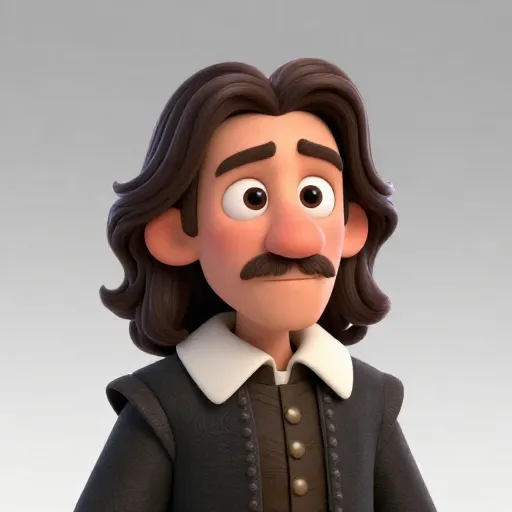
I think, therefore I am.
Consciousness is hard to define. It is the difference between a robot that is programmed to say "I am sad" and a human who actually feels a heavy, sinking feeling in their chest.
We have a sense of self-awareness that allows us to look at ourselves from the outside. You can think about your own thoughts, which is a bit like having two of you inside your head at once.
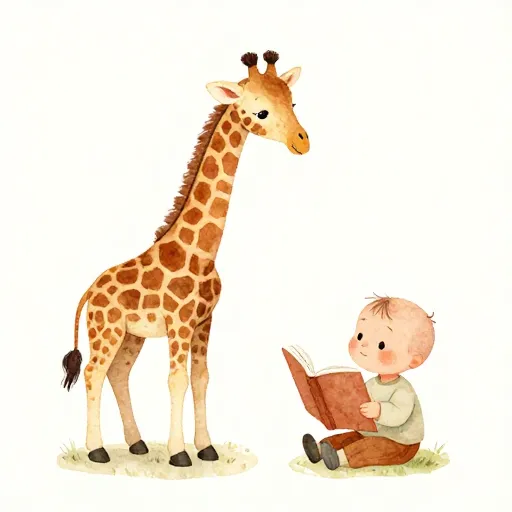
Humans are 'neotenous,' which is a fancy way of saying we stay 'baby-like' for a long time. While a baby horse can walk hours after birth, human babies need years of care. This long childhood gives our brains a huge amount of time to learn and soak up culture.
The Power of Connection
In Southern Africa, there is a word that describes a different way of being human: Ubuntu. It comes from the Zulu and Xhosa languages and means "I am because we are."
This philosophy suggests that you cannot be human in isolation. Your humanity is something you give to others, and they give to you through kindness and respect.
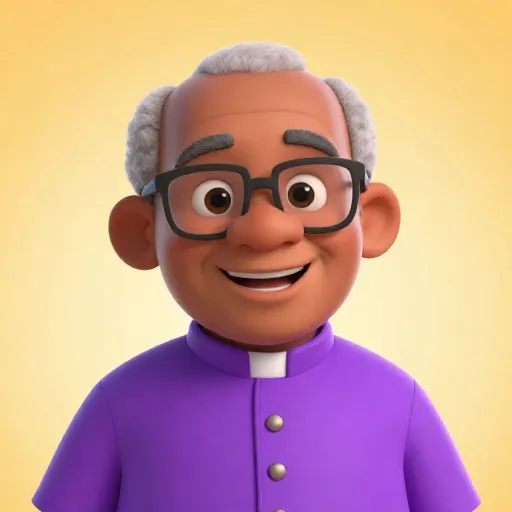
A person is a person through other persons.
When we show empathy to a friend who is crying, we are practicing Ubuntu. We are recognizing that their feelings are just as real and important as our own.
This suggests that being human is not just a biological fact you are born with. It is also a choice you make every day in how you treat the people around you.
Finn says:
"If a robot ever gets to the point where it can feel lonely or get its feelings hurt, would we have to start treating it like a person?"
The Unfinished Human
Today, we are entering a new era where we live alongside machines that can write poems and drive cars. This makes the question of "What makes us human?" more interesting than ever.
Is it our ability to feel physical pain? Is it our imagination? Or is it the fact that we are born, grow old, and eventually die, making every moment feel precious?
There is no single answer that everyone agrees on. Some people think it is our soul, some think it is our DNA, and others think it is our ability to ask questions about why we are here in the first place.
Maybe the most human thing of all is the fact that we keep asking the question. We are a species that is constantly trying to figure out what it means to be us.
Something to Think About
If you could keep only one thing that makes you human - your ability to think, your ability to feel, or your ability to create - which would you choose?
There is no right or wrong answer here. Each of these things is a different piece of the human puzzle, and different people might value them in different ways.
Questions About Philosophy
Are humans just animals?
Could a robot ever be human?
Why do we care about being human?
The Ongoing Adventure
Being human isn't a destination you reach: it's a process that happens every time you ask a question, help a friend, or imagine a new world. Whether you feel more like a 'thinking animal' or a 'storytelling animal' today, remember that you are part of a very old and very curious lineage. Keep wondering, keep exploring, and most importantly, keep being you.