What would happen if, starting tomorrow morning, every single rule for children simply vanished?
We often think of rules as walls that stop us from moving. In reality, the history of childhood is a long, winding experiment in how adults and children share space, safety, and autonomy.
Imagine waking up to a world where you could drive a car, stay up until 4:00 AM, and eat nothing but neon-blue frosting for breakfast. There are no bedtimes, no school requirements, and nobody to tell you to put on a coat in a snowstorm.
At first, this might feel like the ultimate victory. But quickly, things might get complicated. Without traffic rules for kids, the roads become dangerous: without health rules, your stomach starts to hurt: and without learning rules, the world becomes a very confusing place to navigate.
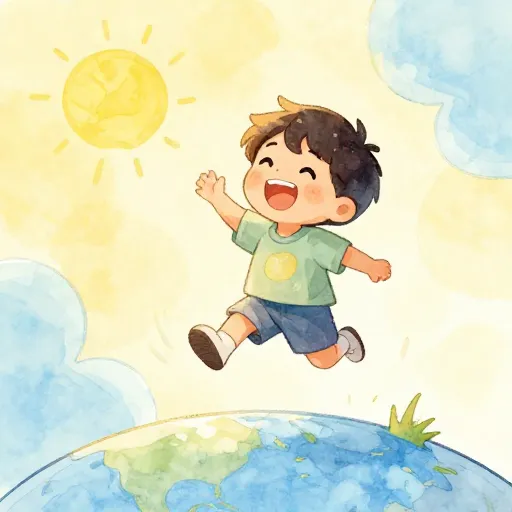
Imagine a playground where there is no gravity. Every time you jump, you float away into the clouds. Rules in life are a bit like gravity: they are a force that keeps your feet on the ground so you can actually run and play without drifting off into danger.
The Gardeners of the Mind
For a long time in history, people did not think of children as having their own special needs. In the Middle Ages, as soon as a child could talk and walk, they were often treated like "miniature adults." They wore the same clothes, did the same hard work, and followed the same harsh laws as everyone else.
Everything changed in the 1600s because of a thinker named John Locke. He looked at a child and did not see a small worker or a finished human. He saw a Tabula Rasa, which is a Latin term for a "blank slate."
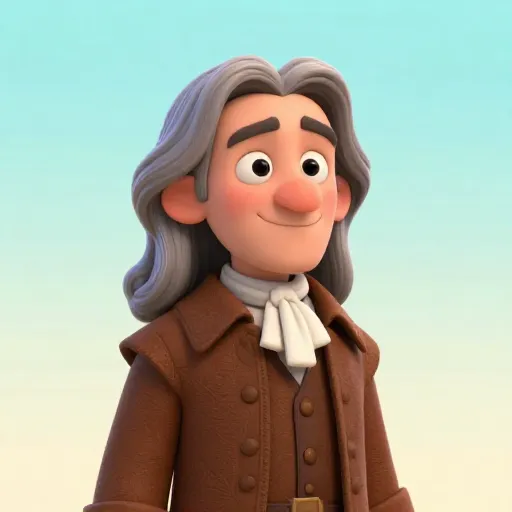
The little and almost insensible impressions on our tender infancies have very important and lasting consequences.
Locke believed that every child is born like a fresh sheet of paper. Everything you experience, see, and hear writes something onto that paper. This idea changed the way adults thought about rules.
If children are blank slates, then rules are not just about stopping bad behavior. They are about protecting the paper so it stays clean and strong. Locke believed adults have a duty to guide children until they are old enough to write their own stories.

Finn says:
"If I'm a 'blank slate,' does that mean I can choose what gets written on me? Or do I have to wait for an adult to pick up the pen?"
The Great Tug-of-War
About a hundred years after Locke, another philosopher named Jean-Jacques Rousseau had a completely different idea. He thought that children were born naturally good and wise. To Rousseau, the world and its strict rules were actually the things that messed kids up.
He believed in a concept called Natural Education. Instead of sitting in a stiff chair and memorizing facts, Rousseau thought children should learn from the world around them. If you break a window, you don't get grounded: you simply stay cold until you figure out how to fix it.
The 'Reverse Rule' Game: Pick one rule you find annoying, like 'No dessert before dinner.' Now, imagine that rule was reversed and everyone HAD to eat dessert before dinner every day for a month. Write down or discuss three things that would happen. Would it stay fun, or would it become a problem?
This creates a tug-of-war that still exists today. Should rules be a shield that protects you from the world (like Locke thought)? Or should rules be kept to a minimum so you can learn from your own mistakes (like Rousseau suggested)?
Most modern rules are a mix of both. We have rules about helmets because your brain is too important to leave to a "mistake." But we also have rules that give you room to play and explore, because that is how you build resilience.
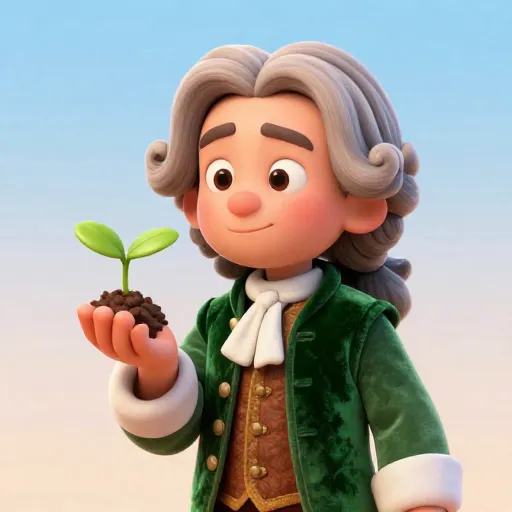
Nature would have them children before they are men. If we try to invert this order we shall produce a forced fruit that has no freshness and no flavour.
The Invisible Agreement
Why do we agree to follow rules even when we don't like them? Philosophers call this the Social Contract. It is like an unwritten deal we all sign to live together without everything turning into a giant mess.
Think about a game of tag. If one person decides they can never be "it" because they have invisible armor, the game breaks. The rules are what make the game possible. In life, rules like "don't hit" or "take turns" are the social contract that keeps the world from being one big, angry game of tag.
Children need many rules because they lack experience. Rules keep them safe from dangers they don't even know exist yet, like fire, traffic, or long-term health issues.
Children need very few rules so they can learn through trial and error. Over-protecting kids with rules makes them less capable of making their own decisions when they grow up.
Adults often use a concept called Paternalism to explain why they make rules for you. This word comes from the Latin word for father, but it applies to any adult in charge. It means making a decision for someone else "for their own good," even if that person disagrees.
It is why you have to eat vegetables or go to the dentist. The adult is looking at the "future you," while you are probably focusing on the "right now you." The challenge is that as you get older, you start to know your "future self" better than anyone else does.

Mira says:
"I noticed that rules are like the code in a video game. Without the code, you'd just fall through the floor, but if the code is too strict, you can't actually play the game."
Rules and Justice
Not all rules are good ones. Throughout history, many rules for children were unfair or even cruel. In the 1800s, there were rules that allowed children as young as six to work in loud, smoky factories for twelve hours a day.
People had to fight to change those rules. They argued that children have Natural Rights, which are things you deserve just because you are human. This led to a huge shift in how we think about Justice for kids.
In Ancient Rome, a father had a legal right called 'Patria Potestas.' This gave him total rule over his children for his entire life, even after they grew up! He could even decide who they married or what jobs they took. We've come a long way since then.
A History of Rules for Kids
Today, many countries follow the UN Convention on the Rights of the Child. This is a massive list of rules, but these rules are for the adults! They say that adults MUST provide you with health care, education, and a voice in matters that affect you.
This brings us to the idea of Consent. As you grow, the rules should shift from adults telling you what to do, to adults asking for your input. A rule that feels like a cage when you are five might feel like a helpful boundary when you are twelve.
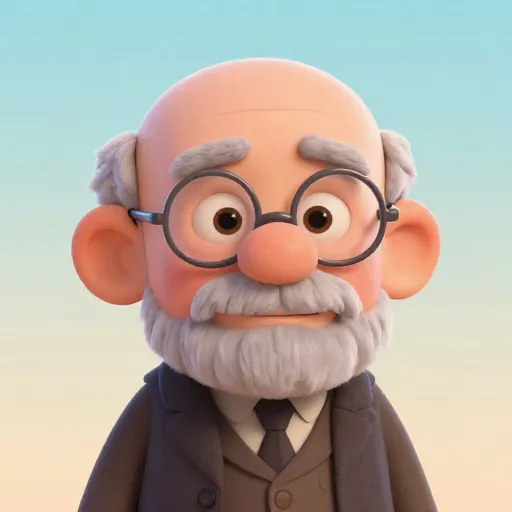
Children are not the people of tomorrow, but people today. They are entitled to be taken seriously.
The Art of the Boundary
Imagine a river. If a river has no banks, it just turns into a giant, shallow puddle that doesn't go anywhere. The banks of the river are like rules: they create a channel that allows the water to move with power and direction.
Rules provide Boundaries. They let you know where the "safe zone" ends so that you can move as fast as you want inside that zone. When you know nobody is allowed to steal your toys, you feel more comfortable playing with them.
The word 'discipline' comes from the Latin word 'discipulus,' which means 'learner' or 'student.' It wasn't originally about punishment: it was about the rules you follow to learn a new skill, like playing the piano or practicing karate.
However, boundaries are not permanent. In a healthy life, boundaries should be like the skin of a growing fruit. It has to be firm enough to protect the inside, but stretchy enough to expand as the fruit gets bigger.
When a rule feels too tight, it is often a sign that you are ready for more Responsibility. This is the secret side of rules: every time a rule is removed, a new responsibility takes its place. If your bedtime is removed, the responsibility to get enough sleep so you can function the next day becomes yours.
Finn says:
"If every rule I lose gives me a new responsibility, maybe having rules is actually easier than being totally free. Responsibility sounds like a lot of work!"
Rules are rarely about being "bossy" for the sake of it, though it can certainly feel that way. Most of the time, they are a way of saying: "The world is very big and sometimes very confusing, and I want to make sure you have what you need to handle it."
We may never find the perfect set of rules that everyone agrees on. What we can do is keep asking why they exist, who they help, and when it might be time for them to change. The "why" is often more important than the rule itself.
Something to Think About
If you could change one rule in your life, but you had to take on a new responsibility to replace it, which rule would you pick and what would your new responsibility be?
There isn't a right or wrong answer here. Some people prefer the safety of the rule, while others prefer the weight of the responsibility. Which one feels more like you?
Questions About Philosophy
Why do adults get to make rules but don't always follow them?
What is the difference between a rule and a law?
Who decides when a child is old enough to have fewer rules?
The Conversation Continues
Rules are not stone walls: they are more like the tracks for a train. They help us get where we are going without crashing, but eventually, the tracks might need to lead to a new destination. Keep asking 'why' and you'll find that the best rules are the ones that help you grow into the person you want to be.