Have you ever tried to describe the taste of a strawberry to someone who has never eaten one?
You might say it is sweet or a little tart, but the words never feel quite as real as the fruit. This mystery of how Language connects to our lives was the lifelong puzzle of Ludwig Wittgenstein, one of the most unusual thinkers in the history of Philosophy.
Imagine a city at the end of the 1800s where every street corner smells of roasted coffee and the sound of pianos drifts out of open windows. This was Vienna, a place of grand buildings and even grander ideas. Ludwig grew up in one of the wealthiest families in the world, living in a house so big it was called a palace.
His home was not just about money, it was about music and thinking. Great composers like Johannes Brahms came to his house to play music. Ludwig was the youngest of eight children, and his family expected him to be a genius, though he often felt like he was struggling just to understand the world.
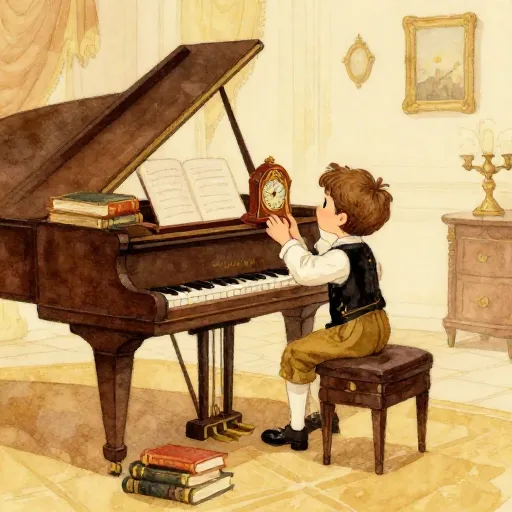
Imagine the Wittgenstein house in Vienna. There are seven grand pianos. One of Ludwig's brothers is playing a difficult piece of music, while another is arguing about a painting. The air is thick with the smell of old books and fresh flowers. In the middle of it all, young Ludwig is taking apart a pocket watch just to see how the gears click together.
As a young man, Ludwig was obsessed with how things worked. He studied how to build airplanes and engines, which led him to think about the most basic engine of all: Logic. He wanted to know if the human mind worked like a perfect machine or if it was something much messier.
He eventually moved to England to study with a famous philosopher named Bertrand Russell. Russell was amazed by Ludwig, calling him the perfect example of a genius. But Ludwig was never satisfied with just being smart, he wanted to find the absolute truth about how we speak and think.
The limits of my language mean the limits of my world.
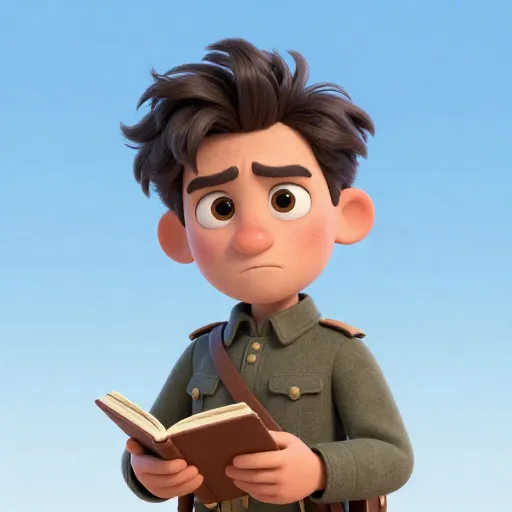
When World War I broke out, Ludwig did something very brave and very strange. He volunteered to fight, but while he was in the middle of the war, he carried a notebook with him. In the trenches, surrounded by noise and danger, he wrote down a series of short, powerful sentences about the nature of reality.
He believed that most of the problems in the world were actually just mistakes in how we use language. These notes became a famous book called the Tractatus. In this book, he argued that words are like pictures, and their job is to show us the facts of the world.
Mira says:
"So if I say 'The apple is red,' I am actually drawing a tiny map of that apple in your mind? That makes every sentence feel like a secret piece of art."
Ludwig called this the Picture Theory of language. Imagine you have a map of a park. The map is not the park itself, but it shows where the trees and the benches are. Ludwig thought that a sentence was just a map of a fact.
If you say, "The cat is on the mat," your brain builds a little picture of that fact. If the picture in your head matches the real world, the sentence is true. If it does not match, the sentence is false. It seemed so simple and so perfect.
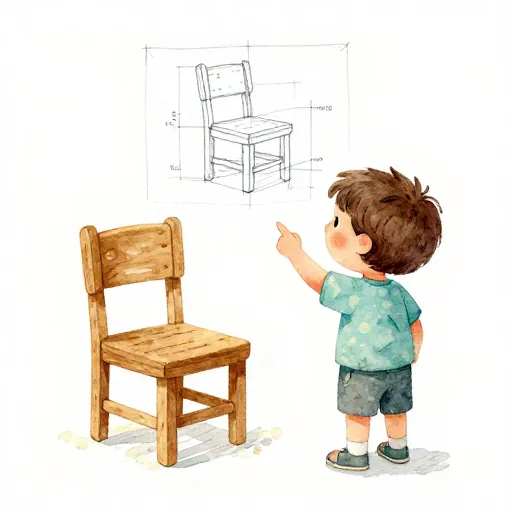
Look at an object in your room, like a chair. Now, try to describe it to someone using ONLY words that are 'pictures' of facts. You can say 'it has four legs' or 'it is blue.' But you cannot say 'it is comfortable' or 'it is my favorite.' Is it harder to talk about the world when you can only use 'fact-pictures'?
After he finished his book, Ludwig thought he had solved every problem in philosophy. He gave away all of his massive fortune to his siblings and artists because he thought money was a distraction. He decided he did not need to be a famous philosopher anymore.
He went to a tiny mountain village in Austria to become a primary school teacher for children just like you. He taught them how to build steam engines and how to look at the stars. But while he was teaching, something started to bother him about his own ideas.

Philosophy is a battle against the bewitchment of our intelligence by means of language.
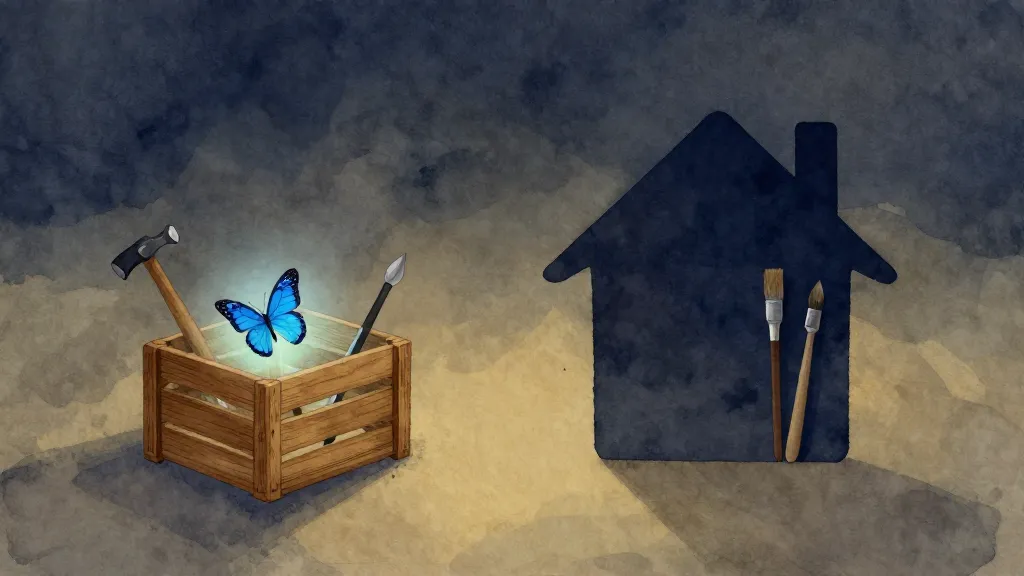
He noticed that when his students spoke to each other, they were not always making "pictures" of facts. They were telling jokes, asking for help, and making up games. Their language was not just a map, it was more like a toolbox full of different instruments.
Think about a hammer, a glue stick, and a ruler. You use them for very different things, right? Ludwig realized that words like "hello," "ouch," and "perhaps" are all like different tools. You cannot use a hammer to measure a piece of paper, and you cannot use a picture theory to explain a joke.
Finn says:
"I wonder if my friends and I have our own language games. Like, when we use a certain nickname, we're playing a game that only we know the rules to!"
This led Ludwig to his second great idea: Language Games. He realized that we are always playing different games with our words. The rules of language change depending on whether we are in a science lab, on a playground, or telling a story at bedtime.
If a referee in a soccer game shouts "Goal!" it means something very specific. But if you shout "Goal!" while sitting at your dinner table, it might not mean anything at all. The meaning of a word depends on the game you are playing and the people you are playing it with.
Language is a precise map. Each word corresponds to a specific thing in the world, and if we use the right words, we can perfectly describe reality.
Language is a messy toolkit. Words don't have fixed meanings; they change based on how we use them and the 'games' we play with other people.
Through the Ages
Ludwig returned to Cambridge as a professor, but he did not act like a typical one. He often sat in silence during his own lectures, thinking hard while his students watched. He realized that even the most private things, like our feelings, depend on these shared games.
He came up with a famous thought experiment called The Beetle in the Box. Imagine that everyone has a small box, and inside that box is something they call a "beetle." No one can ever look inside anyone else's box, they can only see their own.

The 'Beetle in the Box' is one of the most famous ideas in philosophy! It teaches us that while we all use the same words for feelings like 'sad' or 'excited,' we can never truly know if the feeling inside your 'box' is exactly the same as the one inside mine. We just have to trust the game!
Everyone says they have a beetle, but since no one can see the other beetles, the word "beetle" might mean something different to everyone. One person's beetle might be a pebble, and another's might be an actual insect. Or maybe some boxes are even empty!
Ludwig argued that if we can all talk about "pain" or "happiness," it is not because we can see inside each other's minds. It is because we have learned the rules of the game for using those words together. Our language is a bridge we build between our private boxes.

If a lion could speak, we could not understand him.
One of his most famous sayings was that if a lion could talk, we still would not be able to understand him. Why? Because a lion’s life is so different from ours. He has different needs, different fears, and a different way of moving through the world.
Language is not just about words, it is about a Form of Life. To understand someone, you have to understand how they live. This is why it is sometimes hard to understand people from different cultures or even people who have very different hobbies than you.
Mira says:
"If the lion could talk, maybe he’d talk about the 'golden hour' or the 'scent of the wind.' We’d be so confused because we don’t experience the world through our noses like he does!"
Ludwig never stopped questioning his own mind. He even spent time living alone in a small wooden cabin on the side of a fjord in Norway. He wanted to be away from the noise of the world so he could focus entirely on the puzzle of Certainty.
He wondered how we can be sure of anything at all. Do we know for sure that the earth has existed for more than five minutes? Most people would say yes, but Ludwig wanted to know why we find it so impossible to doubt. He realized that some things are like the hinges of a door: they have to stay still so the rest of the door can swing.
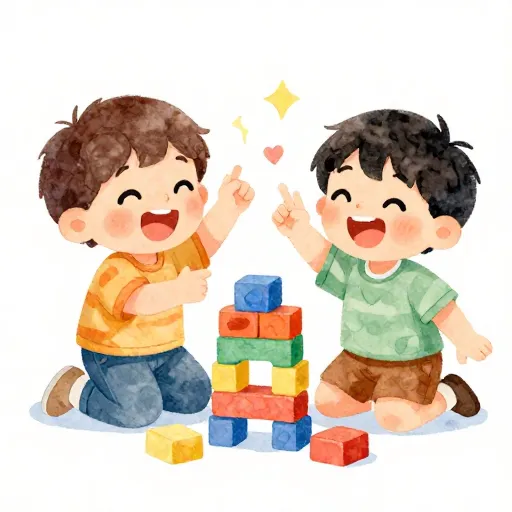
Find a partner and try to play a 'New Language Game.' You have to build a tower of blocks together, but you aren't allowed to use real words. You have to invent your own sounds for 'put it here,' 'more,' and 'watch out!' How long does it take for you both to understand the rules of your new game?
By the end of his life, Ludwig Wittgenstein had changed philosophy twice. First, he taught us that language is a picture of the world. Then, he taught us that language is a messy, beautiful set of tools that we use to live together.
He showed us that thinking is not about finding a single "right" answer. Instead, it is about looking closely at how we actually live and talk. He wanted us to stop being "bewitched" by complicated words and start noticing the wonder in the simple things we say every day.
Something to Think About
If you could invent a word for a feeling that doesn't have a name yet, what would it be, and how would you teach someone else the 'rules' for using it?
There is no right answer to this question. Wittgenstein spent his whole life realizing that language is something we build together, like a giant, invisible playground. Your new word is just the start of a new game.
Questions About Philosophy
Why did Wittgenstein change his mind about philosophy?
Was Ludwig Wittgenstein a difficult person?
How do 'Language Games' work?
The Never-Ending Game
The next time you talk to a friend, notice how you are both following invisible rules. You are playing a game that has been going on for thousands of years, and yet, every time you speak, you are making it something new. Keep exploring the toolkit of your mind!