
Have you ever felt a sudden heat rising from your chest to your face, making your hands clench into fists?
That feeling is anger, one of the oldest and most powerful tools in the human psyche. For thousands of years, philosophers and psychologists have tried to understand why we get mad and what we should do with all that internal energy.
Imagine you are standing in a crowded market in Ancient Rome. The air smells of roasted nuts and dust. Someone bumps into you, spilling your drink, and they don't even say sorry.
You feel a flash of heat. Your heart beats faster. Your jaw tightens. This exact feeling has been happening to humans since the beginning of time.

Imagine you are a sculptor in Ancient Greece. You are trying to carve a beautiful statue, but the marble keeps cracking. You feel the heat in your neck. Your tools feel heavy. Do you throw the hammer, or do you take a deep breath and look for a different piece of stone?
In those ancient streets, a philosopher named Seneca watched people lose their tempers every day. He saw merchants shouting and soldiers red-faced with fury. Seneca believed that anger was a choice we made when we felt we had been treated unfairly.
He called it a short madness because, for a few moments, the person is no longer in control of their own mind. He thought the best way to deal with it was to stop it before it even started.

Anger: a short madness.
Seneca lived in a world where being calm was seen as the ultimate strength. This was part of a school of thought called Stoicism. Stoics believed that the world is full of things we cannot control, like the weather or other people's rudeness.

Mira says:
"I like to think of anger as a tiny bodyguard. It's trying to protect me, even if it sometimes shouts a bit too loud or gets the wrong idea about what's dangerous."
If we let our anger explode, the Stoics thought we were letting the outside world win. They compared anger to a fire in a house: once it starts, it is very hard to put out. So, they spent their lives building mental firewalls to keep the heat away.
But is anger always a bad thing? If a fire keeps us warm or helps us cook, is it still dangerous?
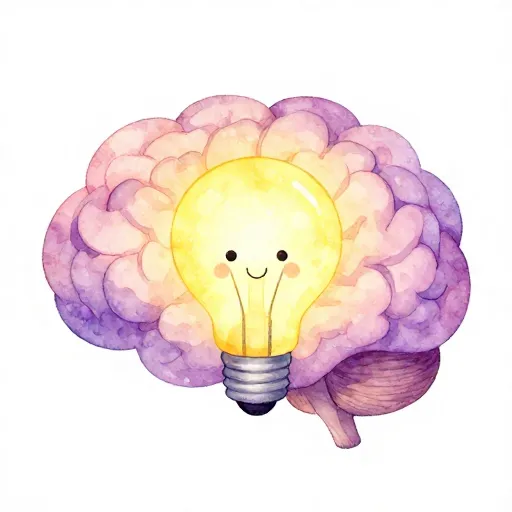
When you get angry, the part of your brain called the amygdala takes over. It acts like a smoke detector, sounding an alarm that tells your body to get ready for danger. It works much faster than the logical part of your brain!
Today, psychologists look at anger a bit differently than the ancient Romans did. They see it as a messenger. Anger is your brain's way of saying: This isn't fair, or I am being hurt, or something I care about is in danger.
Anger is part of our survival instinct. Thousands of years ago, if a hungry animal tried to steal a hunter's food, that flash of anger provided the energy needed to fight back. It is a protective shield that appears when we feel vulnerable.

Finn says:
"Sometimes my anger feels like a physical ball of fire in my stomach. It's weird to think that my body is just trying to give me energy to fight a lion, even if I'm just mad at a math problem."
When you feel angry, your body is actually preparing for a battle. This is called the fight or flight response. Your brain sends a chemical called adrenaline through your blood, which makes you feel stronger and faster for a short time.
Some people believe that if you are angry, you should 'let it all out' by shouting or hitting a pillow. They think this clears the air like a thunderstorm.
Others believe that expressing anger just makes you more practiced at being angry. They think it's better to wait for the feeling to pass before doing anything at all.
This brings us to a very important thinker named Donald Winnicott. He was a doctor who spent his life watching how children grow and how they handle big feelings. Winnicott had a very interesting idea about anger.
He believed that when a child gets angry, they are testing the world around them. They are asking: Can I be this loud and this mad, and still be loved? Can the people around me handle my big feelings without falling apart?

The infant's aggression is... a sign of life.
Winnicott talked about something called a holding environment. This isn't just a physical hug, though that can help. It is the idea that the adults around you can hold your anger safely, like a sturdy bucket holds water.
When you are angry, you might feel like you are breaking things or hurting people with your words. Winnicott believed that when the people we love stay calm and keep us safe while we are mad, we learn that our anger isn't strong enough to destroy the world.
The next time you feel that red heat rising, try to become a scientist. Instead of reacting, ask yourself: Where is the heat exactly? Is it in my hands? My face? My stomach? Sometimes, just describing the feeling makes it feel a little less bossy.
This leads us to another idea from a modern thinker named Adam Phillips. He suggests that we often get angry because we are frustrated. Frustration happens when there is a gap between what we want and what we actually have.

Frustration is a way of finding out what we are really after.
Phillips thinks that instead of trying to get rid of anger, we should be curious about it. If we are frustrated because we can't finish a puzzle, the anger is actually telling us how much we want to succeed. The anger is a map pointing to the things we care about.
Anger Through the Ages
Sometimes, anger is like an iceberg. On the surface, everyone sees the sharp, cold ice of the temper tantrum or the shouting. But underneath the water, there is a much bigger mass of other feelings.
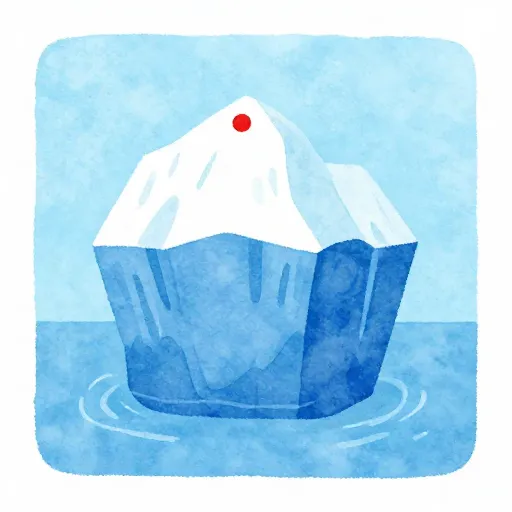
Picture a giant iceberg floating in the ocean. The small part you see above the water is labeled 'Anger.' Deep under the water are the much bigger parts labeled 'Fear,' 'Sadness,' 'Tiredness,' and 'Embarrassment.'
You might be angry because you are actually feeling grief or shame. Maybe you are tired, or hungry, or you feel lonely. Because anger feels powerful, it is often easier to show than the softer feelings that make us feel small.
Mira says:
"When I say 'sorry' after being mad, it doesn't mean I was wrong to feel angry. It just means I care more about the person than I do about the fire."
Learning to live with anger doesn't mean never getting mad. It means learning to recognize the heat before it becomes a wildfire. It means finding a way to say, I am feeling very angry right now, instead of throwing a shoe.
Psychologists call this emotional regulation. It is the ability to feel the big energy of anger without letting it drive the car. You are the driver: the anger is just a very loud passenger in the back seat.
Something to Think About
Can you remember a time when your anger was actually a helper?
Maybe it helped you stand up for a friend, or gave you the energy to try a difficult task again. There are no right or wrong answers, only your own story.
When the fire finally cools down, there is often a feeling of being very tired. This is the time for repair. Repair is what we do to fix the things that might have been bumped or bruised while we were angry.
Repairing a relationship after an argument is one of the most important skills a person can learn. It shows that the connection between two people is stronger than the temporary madness of a moment. Anger comes and goes, but the safety we build together can last a lifetime.
Questions About Psychology
Is it bad to be angry?
How can I stop being angry so fast?
What if I say something mean when I'm mad?
The Strength in the Storm
Understanding your anger is like learning to sail a boat. You can't control the wind, but you can learn how to move your sails. By being curious about your feelings and finding safe ways to hold them, you become the master of your own internal ocean.