
Have you ever wondered if adults actually understand what it feels like to be you?
For a long time, doctors and scientists treated children like they were just tiny, simple adults. Anna Freud changed all of that by proving that children have their own deep, complicated inner world that deserves to be studied and respected.
Imagine a tall, narrow house in Vienna, Austria, during the late 1800s. The air is thick with the smell of cigar smoke and the sound of serious people talking about the human mind. This was the home of Anna Freud, the youngest child of the famous doctor Sigmund Freud.
While her father was busy figuring out why grown-ups feel the way they do, Anna was watching. She was often the quietest person in the room, but she was the one paying the closest attention to how families actually worked.
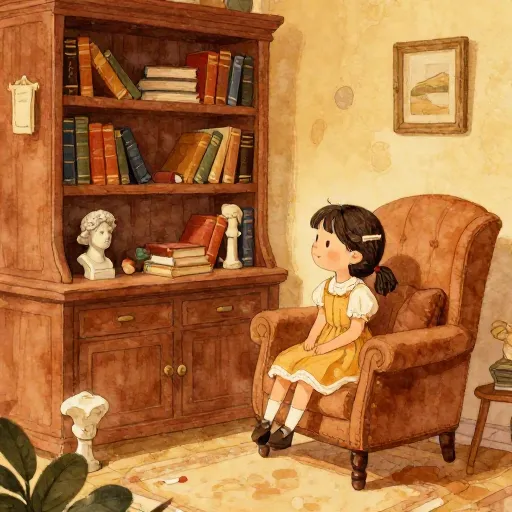
Imagine the Freud house in Vienna. It is filled with ancient statues from Egypt and Greece that Anna's father collected. There are books from floor to ceiling. Anna would sit in the corner of her father's study, watching the 'Grown-Up World' happen while she thought about the 'Child World.'
Anna did not just want to be 'Freud’s daughter.' She became a teacher first, working with very young children in schools. This gave her a superpower: she knew how kids actually behaved when they weren't in a doctor's office.
She realized that children do not always have the words to describe their big feelings. Instead, they show those feelings through their behavior, their games, and even their dreams.

Mira says:
"It is like Anna was a detective for feelings. She did not just look at what people did: she looked for the secret reasons why they did it."
The Discovery of the Shield
One of Anna's biggest ideas was about how our minds protect us. She called these protections defense mechanisms. Think of them like an invisible shield that your brain holds up when things feel too scary, embarrassing, or overwhelming.
She noticed that when we are stressed, we do not always face the problem head-on. Sometimes we use a trick called regression, where we act like a younger version of ourselves. Have you ever seen a kid start acting like a baby again when a new sibling arrives? That is a defense mechanism.
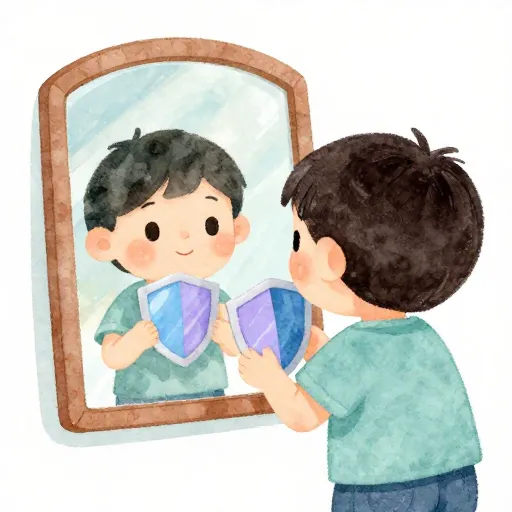
Next time you are feeling really frustrated, try to notice your 'Inner Shield.' Are you blaming someone else for something you did (Projection)? Are you acting like a much younger kid to get attention (Regression)? Just noticing it is the first step to being a self-psychologist!
Another shield she identified is called projection. This happens when you have a feeling you do not like, so you 'project' it onto someone else. Instead of admitting you are angry at a friend, you might say, 'Why is my friend being so mean to me today?'
Anna believed these shields were not 'bad' or 'wrong.' They are just the ways our minds try to keep us safe until we are ready to handle the truth. Understanding these shields helps us be kinder to ourselves and others.
Creative minds have always been known to survive any kind of bad training.
War, Nurseries, and Resilient Hearts
In 1938, the world became a very dangerous place. Anna and her family had to flee their home in Vienna to escape the Nazis. They moved to London, where Anna faced a huge challenge: World War II was starting, and children were being separated from their parents to keep them safe from bombs.
Anna did not think this separation was a good idea. She believed that a child's bond with their parents was the most important thing for their mental health. To prove it, she started the Hampstead War Nursery.
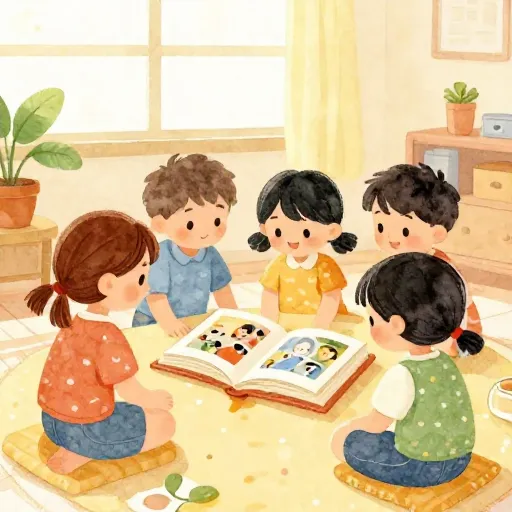
In the Hampstead War Nursery, Anna Freud let the children keep 'vivid memories' of their parents. Instead of telling them to forget their old lives, she encouraged them to talk about their families and look at photos, because she knew that keeping those memories alive helped their hearts stay strong.
In this nursery, Anna and her team looked after children who had lost their homes. She kept careful records of everything they did. She noticed that kids who had a steady, loving adult around them were much better at dealing with the scary sounds of sirens and explosions.
She was not just a scientist: she was a witness. She showed the world that even in the middle of a war, a child’s biggest need is not just food and blankets, but a sense of belonging and being understood.

Finn says:
"What if the way I play with my Lego is actually me working out a problem I do not even know I have? That makes my bedroom feel like a laboratory!"
The Great Debate: Anna Freud vs. Melanie Klein
While Anna was working in London, another famous woman named Melanie Klein was also studying children. They both agreed that kids had complex minds, but they disagreed on how to help them. This became one of the biggest debates in the history of psychology.
Children use toys as symbols for their deepest, darkest unconscious secrets. Every action in play has a hidden, heavy meaning.
Children are still developing and learning. Play is a way to build a bond with the child and help them learn to manage their real-life feelings.
Melanie Klein believed that when a child plays with a toy, it is a direct symbol of their deepest fears. If a child smashed two cars together, Klein might say they were expressing a secret wish to hurt someone. She thought kids could be analyzed just like adults.
Anna Freud disagreed. She thought play was just play, and that you had to build a relationship with a child first. She believed a psychologist should be more like a teacher or a mentor who helps the child's ego (the part of us that makes decisions) grow stronger.
We believe that the child's play is the child's work.
Seeing Through the Child's Eyes
Anna taught the world about child observation. Before her, people mostly guessed what kids were thinking. Anna said we should sit on the floor, watch how they play, and listen to how they talk to their dolls.
She created a special chart called a developmental profile. Instead of just saying a child was 'good' or 'bad,' she looked at how they were growing in different areas. Were they learning to be independent? Were they making friends? Were they able to control their impulses?
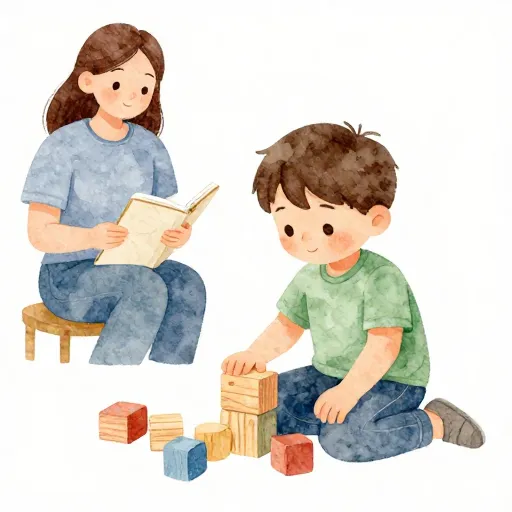
Picture an observation room. On one side of a special window, children are playing with dolls, drawing, and talking. On the other side, Anna and her students are taking notes. They aren't looking for 'naughty' behavior: they are looking for the 'aha!' moments where a child solves a problem for themselves.
This way of looking at kids changed everything. It changed how schools were run, how hospitals treated sick children, and even how judges made decisions in court. Because of Anna, the law started to care about the 'best interests of the child.'
She never stopped learning. Even as an older woman, she could be found at her center in London, listening to the stories of the children who came through the door. She knew that every child was a brand new mystery to be solved.
Mira says:
"I like that she thought we were complicated. Sometimes adults think we are simple because we are small, but our brains are actually very busy, aren't they?"
The Life of Anna Freud
Why Anna Freud Matters Now
Today, we take it for granted that children have rights and that their feelings are important. But we owe much of that to Anna. She was one of the first people to say that a child’s 'naughtiness' might actually be a cry for help or a way of dealing with a hidden fear.
She didn't want to give us easy answers. She wanted us to stay curious. When we see a child struggling, Anna Freud’s work reminds us to stop and ask: 'What is this child trying to tell me that they don't have the words for yet?'

When the feelings are not expressed, they are buried alive and will come forth later in uglier ways.
Something to Think About
If your 'Inner Shield' could talk, what would it be trying to tell you?
There are no right or wrong answers here. Just take a moment to wonder about the parts of yourself that you try to keep hidden, and if they might actually be trying to help you in their own strange way.
Questions About Psychology
Was Anna Freud just copying her father?
Did Anna Freud have children of her own?
What is the Freud Museum?
A Legacy of Listening
Anna Freud taught us that childhood is not just a 'waiting room' for becoming an adult. It is a vital, busy, and sometimes difficult stage of life all on its own. By learning to listen to children, she taught us how to be better humans. Next time you see a child playing, remember that you are watching a master at work, figuring out the world one game at a time.