Have you ever felt a strange, fluttering storm in your stomach right before a big test or a stage performance?
This feeling has a name that humans have been studying for thousands of years: anxiety. While it can feel like a heavy weight, it is actually a complex part of our evolution designed to keep us safe in an uncertain world.
Imagine you are standing at the edge of a deep, ancient forest. The trees are tall, and the air is quiet, but you have a feeling that something might be lurking in the shadows. Your heart starts to beat a little faster, and your breath becomes shallow.
This is not a mistake made by your body. It is actually your brain doing exactly what it was designed to do millions of years ago.
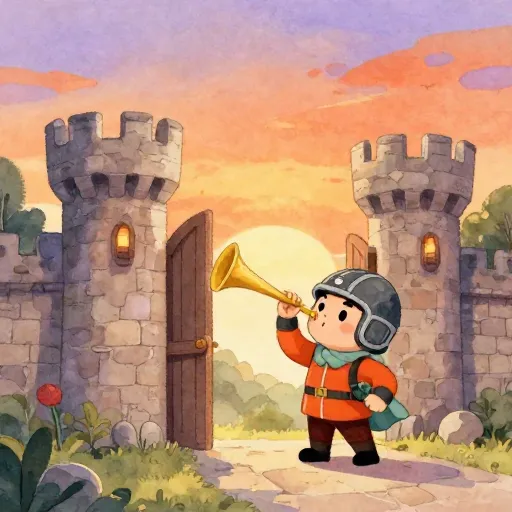
Imagine a tiny guard sitting at the gates of a stone castle. Every time he hears a twig snap, he blows a giant golden trumpet. He isn't trying to be annoying: he just wants to make sure everyone inside the castle is ready for a visitor. That guard is your amygdala.
The Ancient Guard in Your Brain
Long before we had schools, video games, or grocery stores, humans lived in a world filled with real, physical dangers. To survive, our ancestors needed a very fast alarm system. This system is centered in a tiny, almond shaped part of the brain called the amygdala.
When the amygdala senses a threat, it sends a signal to the rest of the body to prepare for action. This is often called the fight or flight response. It floods your system with a chemical called adrenaline, which makes your muscles strong and your heart fast.

The mind is its own place, and in itself can make a heaven of hell, a hell of heaven.
In the ancient past, this response saved lives. If a tiger was hiding in the tall grass, anxiety was the internal siren that told you to run. Today, we don't usually face tigers, but our brains still use that same old alarm for modern stresses.

Finn says:
"So, my brain is basically a smoke detector that goes off even when I'm just making toast? That explains a lot, but it's still really loud!"
Why Does It Feel Like a Heavy Fog?
If anxiety is supposed to be a helpful alarm, why does it feel so uncomfortable? The word anxiety comes from an old Latin word, angere, which means to choke or to strangle. This describes the physical feeling of being tight or restricted when we worry.
Unlike fear, which is usually about something happening right now, anxiety is about the future. It is a future-tense emotion that focuses on "What if?" scenarios. This can feel like walking through a thick fog where you can't see the path ahead.
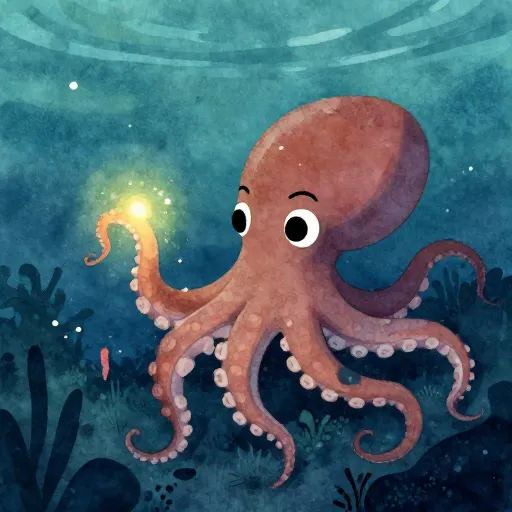
Did you know that humans aren't the only ones who feel anxiety? Scientists have found that almost all animals with complex brains, from dogs to octopuses, have systems that help them worry about potential danger. It's an evolutionary survival tool used across the whole animal kingdom!
Because we cannot see the future, our brains sometimes try to fill in the blanks with scary guesses. This is a process called imagination, and while it is great for writing stories, it can be tricky when it comes to our feelings.
The Dizziness of Freedom
In the 1800s, a philosopher named Søren Kierkegaard lived in the busy city of Copenhagen. He spent a lot of time thinking about why humans feel so much pressure. He came up with a famous idea: anxiety is the "dizziness of freedom."
Imagine standing at the top of a very tall mountain. You aren't just afraid of falling: you are also aware that you could jump, or you could climb down, or you could stay put. Kierkegaard argued that having so many choices makes us feel a bit dizzy.

Mira says:
"I like the idea that anxiety is the 'dizziness of freedom.' It means that when I'm worried about a choice, it's only because I have the power to make a choice in the first place."
This dizziness is actually a sign that you have power. You feel anxious because you care about what happens next and because you realize that your choices matter. It is the price we pay for being able to think about the future.
Anxiety is a warning system that tells us something is wrong and we need to fix it immediately.
Anxiety is a sign of freedom. It shows us that we have choices and that we care about our future.
The Safety Net: Donald Winnicott
During World War II, a doctor named Donald Winnicott worked with many children who had to leave their homes to stay safe. He noticed that kids felt best when they had what he called a holding environment. This wasn't just a physical hug, but a feeling that their big emotions were being held by someone steady.
He believed that we don't need to make anxiety disappear instantly. Instead, we need to feel safe enough to experience it. Winnicott taught that being "good enough" is better than being perfect, both for parents and for kids.

The capacity to be alone is the capacity to love. It may look paradoxical to you, but it's not.
When we feel anxious, we can imagine ourselves in that holding environment. It is a space where we can say, "I am feeling very worried right now, and that is okay." By acknowledging the feeling, we give it a place to sit instead of letting it run wild.
Next time you feel a 'worry storm' starting, try the 5-4-3-2-1 technique. Find 5 things you can see, 4 things you can touch, 3 things you can hear, 2 things you can smell, and 1 thing you can taste. This pulls your brain out of the 'What If' fog and back into the real room where you are safe.
Through the Ages
How we think about worry has changed as the world has changed. Let's look at how this idea traveled through time.
A History of Worry
The Stoic Secret: Real vs. Imagined
Ancient Roman thinkers, known as the Stoics, had a very practical way of looking at anxiety. They realized that humans often suffer more from their thoughts about a problem than from the problem itself.
One of these thinkers, Seneca, often told his friends that they were worrying about things that might never happen. He encouraged people to look closely at their fears and ask, "Is this happening right now?"
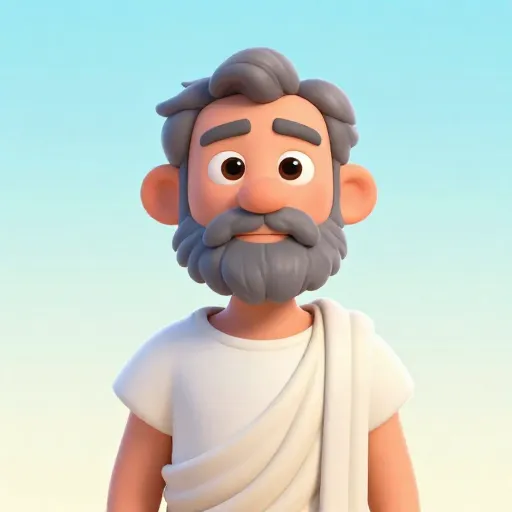
We suffer more often in imagination than in reality.
By focusing on the present moment, we can often calm the alarm system. This is a skill called mindfulness or grounding. It involves pulling your attention away from the "What if?" of the future and back to the "What is" of the now.
Finn says:
"Sometimes I try to imagine my worries are like clouds. They can be big and dark, but I'm the mountain that stays still while they float past. It doesn't make the clouds go away, but I feel less like I'm blowing away with them."
Living With Your Internal Watchman
Think of your anxiety as a very loud, slightly confused internal watchman. This watchman wants to protect you, but sometimes he mistakes a friendly neighborhood cat for a giant monster.
Instead of trying to fire the watchman, we can learn to talk to him. We can acknowledge his warning but also remind him that we are safe in this moment. This is how we build resilience, which is the ability to bounce back even when things feel hard.

Think of your feelings as guests coming to a house party. Happiness might be the loud guest with balloons, while Anxiety is the quiet guest who keeps checking the locks on the doors. You don't have to kick anyone out: you can just let them all sit on the sofa together.
We may never live in a world without any worry, and that is actually okay. A little bit of anxiety can help us prepare for a big game or study for a test. The goal is not to be fearless, but to be brave enough to hold our fears while we keep moving forward.
Something to Think About
If your anxiety had a voice, what would it be trying to protect you from today?
There are no right or wrong answers here. Sometimes just listening to what the 'watchman' is saying can help the feeling become a little smaller.
Questions About Psychology
Is anxiety a 'bad' emotion?
Why does my stomach hurt when I'm worried?
Will I ever stop feeling anxious?
Holding the Fog
Anxiety can feel like a mystery, but as we have seen, it is a very human experience with a long history. Whether it is the ancient amygdala protecting you or the 'dizziness' of making a choice, these feelings are part of your story. By learning to hold space for our worries, we become the steady ground that the fog rests upon.