
Have you ever wondered why you feel so safe with certain people, yet so worried when they leave the room?
This feeling isn't an accident. It is part of a big psychological idea called Attachment Theory, which explains how our earliest relationships create a map for how we love others for the rest of our lives. By looking at how children and their caregivers connect, scientists discovered that feeling safe is just as important as having food or a place to sleep.
The Mystery of the Invisible Bond
Imagine you are an explorer in a vast, unknown forest. You want to see the strange birds and tall trees, but the forest is also a little bit scary.
You keep one hand on a long, sturdy rope that leads back to your home base. As long as you can feel that rope, you feel brave enough to walk further and further into the trees.
Think of three people in your life who make you feel like you've reached 'home base.' What is it about them that makes you feel safe? Is it their voice, the way they listen, or maybe just the way they sit with you?
Psychologists call this rope Attachment Theory. It is the idea that every human is born with a biological need to be close to a specific person who keeps them safe.
When we are babies, we cannot take care of ourselves. We need someone to protect us, and our brains have a special way of making sure that happens.

Finn says:
"So wait, if this 'invisible string' is there to keep us safe, does it mean we're supposed to be attached to everyone? That sounds like a lot of strings to keep track of!"
London, 1940: A World in Pieces
To understand where these ideas came from, we have to travel back to London during World War II. The city was a noisy, dangerous place because of the Blitz, which was a series of bombings.
To keep children safe, the government sent them away from the city to live in the countryside. They were safe from the bombs, but they were separated from their parents for a very long time.
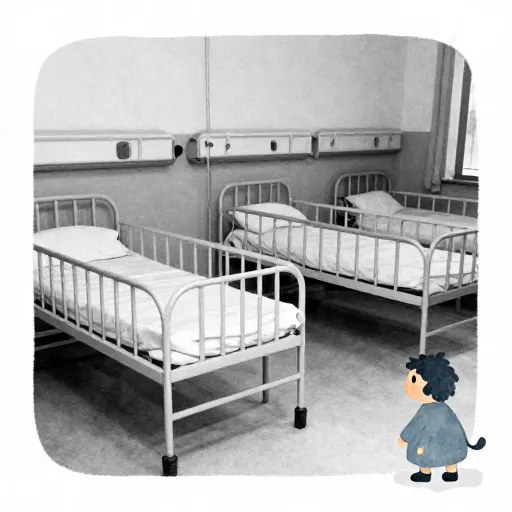
In the 1940s, many hospitals had a rule that parents could only visit their children for one hour a week! Doctors thought parents would bring germs or 'spoil' the kids. It was John Bowlby’s work that helped change these rules so parents could stay with their children in the hospital.
A doctor named John Bowlby was watching these children closely. He noticed something that surprised many people at the time.
Even though the children had clean beds and plenty of food, they seemed very sad and quiet. They weren't just missing their parents, they seemed to be losing their spark and their curiosity about the world.

Human beings of all ages are happiest and able to deploy their talents to best advantage when they are confident that, standing behind them, there are one or more trusted persons who will come to their aid should difficulties arise.
The Discovery of the Secure Base
Before Bowlby, most people thought babies only loved their mothers because mothers provided milk. They thought love was just about getting fed.
Bowlby disagreed. He realized that a child needs a Secure Base, which is a person who provides emotional safety.
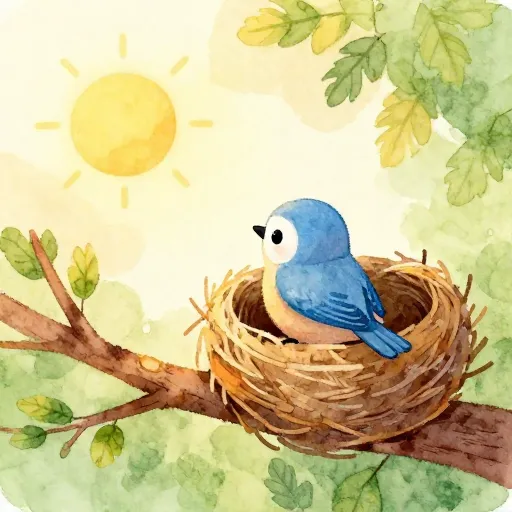
Imagine you are a little bird. Your nest is high in a tree. The nest is warm and soft (that's your attachment). Because you know the nest is there, you feel brave enough to flap your wings and fly to the next branch. If you didn't have a nest, you might be too scared to ever leave the ground.
When a child knows their caregiver will be there if they get hurt or scared, they feel free to explore. This is called Proximity Seeking.
It is the natural urge to stay close to the person you trust. When that person is gone, children feel Separation Anxiety, which is a loud, ringing alarm in the brain that says: "I am not safe!"

Mira says:
"I think the string is special because it's only for the people who really know us. It’s not just about being close, it's about knowing that if you call out, someone will actually hear you."
The Strange Situation
In the 1970s, a scientist named Mary Ainsworth wanted to see how this looked in real life. She designed a famous experiment called the Strange Situation.
She watched how toddlers reacted when their parents left them in a room with a stranger for a few minutes. She wasn't just interested in the crying, she was interested in what happened when the parent came back.

A child's world is a world of people... and the child's own sense of identity is inextricably bound up with his relationships with these people.
Ainsworth discovered that children developed different Attachment Styles. These are patterns in how we act when we are worried about our relationships.
- Secure Attachment: The child is upset when the parent leaves but is easily comforted and happy when they return.
- Anxious-Ambivalent: The child is very upset and has a hard time being comforted even after the parent comes back.
- Avoidant Attachment: The child seems like they don't care when the parent leaves or returns, but their heart rate shows they are actually quite stressed.
Attachment styles are like a set of instructions we are given as babies. They tell us exactly how to behave in all our future relationships, and they are very hard to change.
Our brains are flexible! While early attachment is important, we can learn new ways of relating to people through 'earned security' by finding healthy friendships and mentors later in life.
The Holding Environment
While Bowlby and Ainsworth were looking at the "what" and "how," a man named Donald Winnicott was looking at the "feeling." He was a pediatrician who worked with thousands of mothers and babies.
Winnicott talked about the Holding Environment. This isn't just about physically holding a baby, it is about how a caregiver "holds" a child’s feelings and makes them feel understood.
Mira says:
"It’s a relief to hear about being 'good enough.' Sometimes I worry that if I'm not a perfect friend, people will stop liking me. But maybe the 'repair' part is what makes the bond stronger."
Winnicott also had a very famous idea: the "Good Enough Mother." He wanted parents to know they didn't have to be perfect.
In fact, he thought it was better to be imperfect. When a parent makes a mistake and then fixes it, the child learns that relationships can survive a little bit of trouble.

The foundation of the health of the human being is laid down by the mother, or the substitute mother, in her ordinary, everyday, loving care.
Objects That Help Us Grow
Have you ever had a special blanket or a stuffed animal that you had to take everywhere? Winnicott called this a Transitional Object.
These objects are like a bridge. They help a child move from being totally dependent on a parent to being able to be alone.
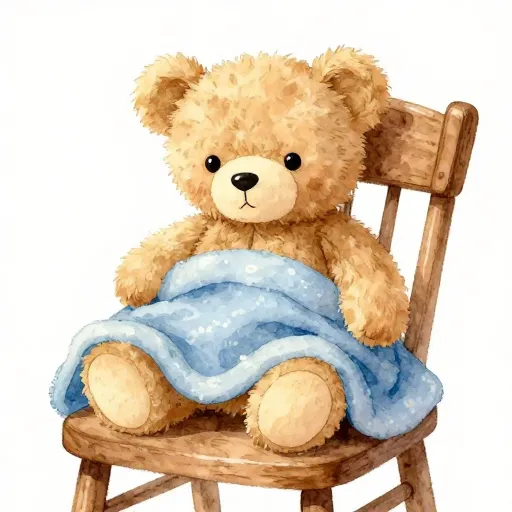
Donald Winnicott was the person who coined the term 'transitional object.' He realized that things like 'Linus's blanket' from the Peanuts comic strip weren't just toys, they were actually helping children learn how to be brave on their own.
The blanket carries the "smell" and the "feeling" of safety. It allows the child to carry their secure base with them into the bigger, scarier world.
This is how we begin to build our Internal Working Model. This is a mental map we carry inside us that tells us whether the world is a safe place and whether we are worth being loved.
Through the Ages: The Story of Connection
Why This Matters for You
Understanding attachment isn't about blaming anyone or feeling like you have the "wrong" style. It is about realizing that our feelings make sense.
If you feel nervous when a friend doesn't text back, or if you want to go off and play by yourself for hours, that is your attachment map at work.
We are all learning how to be close to others while also being ourselves. It is a lifelong project, and it's okay if it feels a little messy sometimes.
Something to Think About
If you were to draw your own 'Internal Working Model,' what would the map of your world look like?
There are no right or wrong maps. Some maps have lots of safe harbors, some have high mountains to climb, and some have hidden caves. Your map is allowed to change as you grow.
Questions About Psychology
Can you have different attachment styles with different people?
Is an 'Avoidant' or 'Anxious' style bad?
Can you change your attachment style when you get older?
Holding the Uncertainty
Attachment isn't a puzzle to be solved, it's a way of being alive. Sometimes the string feels tight and strong, and other times it feels like it might snap. But as Winnicott taught us, it's the 'good enough' connections - the ones that weather the storms and keep showing up - that help us become who we are meant to be. Keep exploring your forest, knowing that your home base is always a part of you.