
Have you ever felt like you were just 'not a math person' or 'bad at drawing'?
Carol Dweck, a famous psychologist, spent her life studying why some people love challenges while others give up. She discovered that our mindset, or what we believe about our own intelligence, changes how our brain actually works.
Imagine a classroom in Brooklyn, New York, in the 1950s. The air smells like chalk dust and old paper. A young girl named Carol sits at her desk, watching her teacher carefully.
In this classroom, the teacher has a very specific way of seating the students. She puts the children with the highest IQ scores in the front row. The children with the lowest scores have to sit in the very back.
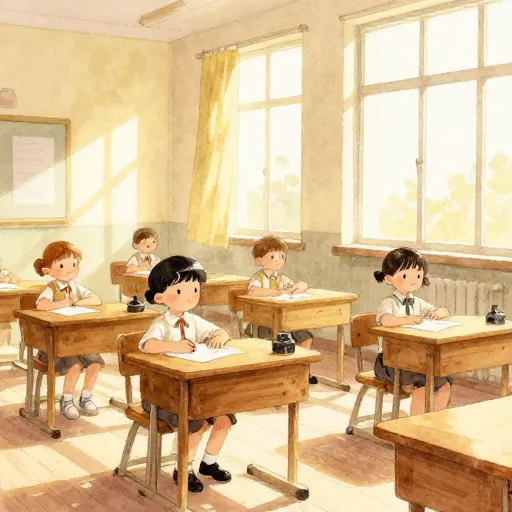
Imagine a room where your worth is decided by a single number on a test. In the 1950s, many people believed that intelligence was something you were born with and could never change. If you were in the back row, people assumed you would stay there forever.
Carol noticed something strange about this seating chart. The kids in the front row were terrified of making a single mistake. They didn't want to lose their 'smart' status.
This experience stayed with Carol for a long time. She started to wonder: does being told you are smart actually help you, or does it make you afraid to try new things?

Mira says:
"If those kids in the front row were so smart, why were they the most worried? It’s like being the king of a hill but being afraid of every little breeze."
Years later, Carol became a scientist who studied the human mind. She wanted to know why some people see a hard puzzle and get excited, while others see it and feel like quitting.
She decided to set up a famous experiment with hundreds of school children. The results would change the way we think about the brain forever.

Becoming is better than being.
In her study, Carol gave children a series of puzzles. Some were easy, and some were very, very difficult. She watched how the children reacted when they got stuck.
Some children loved the hard puzzles. One boy even rubbed his hands together and said, 'I was hoping this would be informative!' These children had what Carol called a growth mindset.
I'm not good at this. This is too hard. I should stop before I look silly.
I'm not good at this yet. This is a challenge! What can I try differently next time?
Other children felt miserable when they couldn't solve the puzzle immediately. They felt like they were failing, and they wanted to give up. Carol realized these children had a fixed mindset.
To a child with a fixed mindset, intelligence is like your eye color. You are born with a certain amount, and you can't get any more. If you fail at a task, it must mean you aren't smart enough.

Finn says:
"So, if I'm bad at soccer right now, it doesn't mean I have a 'bad soccer brain'? It just means my brain hasn't learned the soccer patterns yet?"
But to a child with a growth mindset, intelligence is more like a muscle. You can build it by exercising it. When a task is hard, it just means you are 'working out' your brain.
Carol realized that the way we talk about success matters. If we praise kids for being 'smart,' we might actually be teaching them to have a fixed mindset.
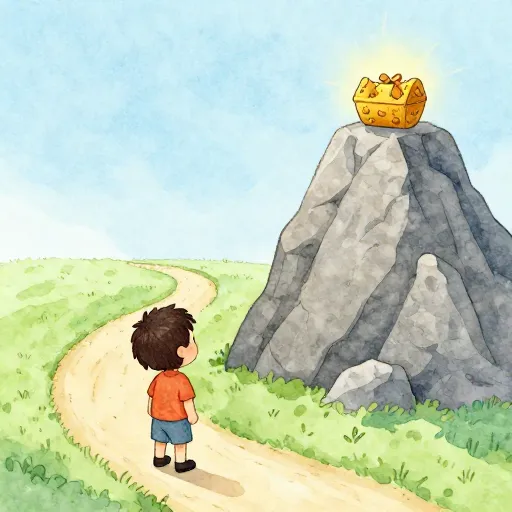
Scientists found that when you praise a child's intelligence (like saying 'You're so smart!'), they often choose easier tasks afterward. They are so afraid of failing and losing their 'smart' label that they stop taking risks!
When we are praised for our talent, we start to think that talent is the only thing that matters. We become afraid of challenges because if we fail, we think it proves we aren't talented after all.
Carol suggests we should praise the process instead. This means noticing the hard work, the strategies, and the focus someone uses, rather than just the final grade.
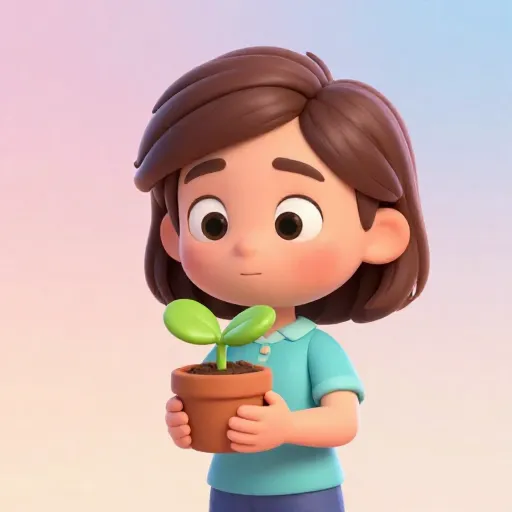
We can't just tell ourselves 'I can do it' if we don't have the strategies.
One of the most powerful tools Carol discovered is a tiny word: 'Yet.' This word acts like a bridge between where you are now and where you want to be.
Imagine you are trying to learn a new song on the piano, and you keep hitting the wrong notes. Instead of saying 'I can't do this,' Carol suggests saying 'I can't do this yet.'
The 'Yet' Challenge: Fold a piece of paper in half. On the left side, write 3 things you can't do. (Example: I can't ride a unicycle). On the right side, write those same 3 things, but add the word 'YET' at the end. Notice how your feelings change when you read the right side!
This simple word changes the whole story. 'I can't' is a dead end, but 'not yet' means you are on a path. It acknowledges that learning takes time and effort.
Scientists have even found that our brains physically change when we practice this way. This is called neuroplasticity. When you struggle with a hard problem, your brain's neurons are creating new, stronger connections.
Mira says:
"It’s like a video game. You don’t get mad when you lose a life on Level 10. You just realize you haven't figured out the boss's secret move yet!"
Carol's work has traveled all over the world, from schools in Chicago to businesses in London. But the idea that we can grow our abilities wasn't always accepted throughout history.
For a long time, many people believed that your future was decided the moment you were born. They thought your potential was a fixed box that you could never step out of.
Through the Ages: Can Minds Change?
Today, Carol's ideas help us understand that mistakes are not 'bad.' In fact, a mistake is just information. It tells you exactly where you need to put more effort.
She believes that our potential is unknown and unknowable. We can't tell what someone is capable of achieving until they have spent years of their life working hard and learning.
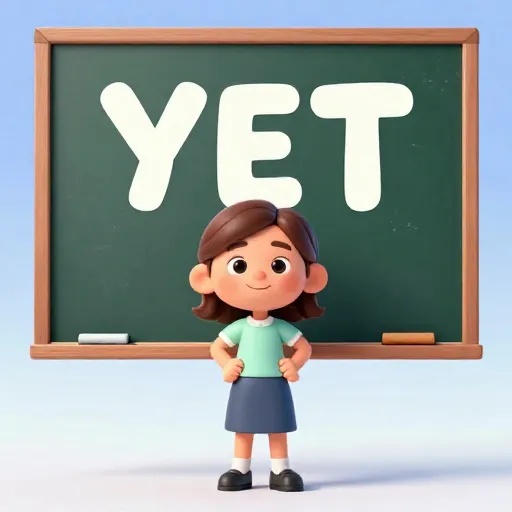
The passion for stretching yourself and sticking to it, even (or especially) when it’s not going well, is the hallmark of the growth mindset.
Next time you feel frustrated, try to imagine your brain growing new branches. Each time you push through a 'stuck' moment, you are literally making yourself smarter for the future.
Learning isn't about proving how smart you are. It is about the wonder of discovering what your brain is capable of doing next.
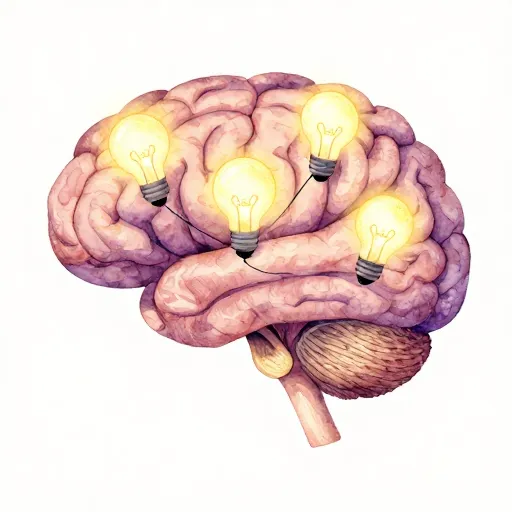
Dweck’s research found that students who learned about how the brain grows like a muscle actually got better grades in math! Just knowing that their brains could change made them work harder when things got tough.
Something to Think About
If you knew for certain that you could eventually learn anything, what is the very first thing you would try to master?
There are no wrong answers here. Whether it's rocket science or baking the perfect cookie, your brain is ready to start growing.
Questions About Psychology
Is it bad to have a fixed mindset?
Can adults change their mindset too?
What if I try really hard and I still can't do it?
The Infinite Garden
Carol Dweck showed us that our minds aren't stone statues: they are more like gardens. They need time, the right tools, and plenty of patience. The next time you feel like you've reached your limit, remember the little girl in the Brooklyn classroom and the power of 'not yet.' Your story is still being written, and your brain is still growing.
