Have you ever been absolutely certain you were right about something, only to find out you were completely wrong?
Our brains are the most complex machines in the universe, but they have a secret: they love taking shortcuts. These mental 'glitches' are called cognitive biases, and they shape everything from the friends we choose to the cereal we eat.
Imagine you are walking through a thick forest. You need to get to the other side quickly because the sun is setting. You could measure every tree and map every rock, or you could follow a rough path that someone else already cleared.
Your brain chooses the path every single time. These paths are called heuristics, which is a fancy word for mental shortcuts. They help us make decisions fast, but sometimes they lead us in the wrong direction.
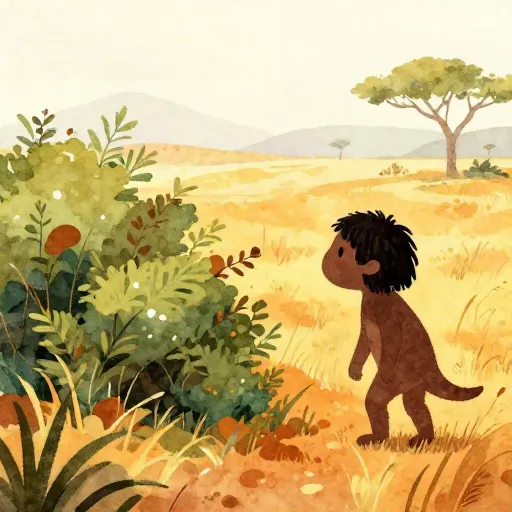
Imagine you are a human living 50,000 years ago. You hear a snap in the bushes. If you think 'It's a tiger!' and run, you live. If you think 'Let me analyze the sound frequencies to be sure,' you might get eaten. Our brains are descendants of the fast runners, not the slow thinkers.
In the late 1960s, at the Hebrew University of Jerusalem, two psychologists named Daniel Kahneman and Amos Tversky began to notice something strange. They were both very smart people, yet they kept making the same silly mistakes in their thinking.
Instead of being embarrassed, they were delighted. They realized that if two experts could be tricked by their own minds, then everyone else must be too. They spent years researching why we think the way we do.
We are blind to our blindness. We have very little idea of how little we know. We’re not designed to know how little we know.
They discovered that our brains aren't just one single thinker. Instead, it is more like there are two different systems working together, though they don't always get along.
Kahneman called these System 1 and System 2. One is like a fast-moving athlete who reacts instantly, while the other is like a slow, careful librarian who double-checks the facts.
System 1 is fast, automatic, and emotional. It helps you catch a ball, read a facial expression, and react to danger instantly. Without it, we couldn't function.
System 2 is slow, effortful, and logical. It helps you solve a math problem, learn a new language, or realize that an 'amazing' sale is actually a rip-off.
Most of the time, System 1 is in charge. It tells you that a shadow is a monster or that a smiling person is friendly. It is very fast, but it is also where cognitive biases live.
These biases are like optical illusions for your thoughts. Even when you know the trick, your brain still wants to believe the shortcut because it is easier than doing the hard work of thinking slowly.
Finn says:
"If our brains are designed to make mistakes, does that mean we can never really trust what we think? That feels a bit like trying to walk on wobbly jelly!"
One of the most powerful shortcuts is called Confirmation bias. This is when our brains act like a giant magnet, pulling in any information that proves we are already right and pushing away anything that proves us wrong.
If you believe that your soccer team is the best in the league, you will remember every amazing goal they scored. You might conveniently 'forget' the games where they played poorly or the times the other team was just better.

Mira says:
"It is like having a pair of glasses that tints everything purple. You forget you are wearing them until someone points it out, then you start seeing the real colors again."
We see this every day on the playground and on the news. People tend to hang out with others who agree with them, which makes their bias even stronger. It makes us feel safe and smart, but it also makes us a bit blind to the truth.
Go to a search engine with a parent. Type in 'Are dogs better than cats?' and look at the results. Then type in 'Are cats better than dogs?' You will see how the internet helps feed our confirmation bias by giving us exactly what we asked for!
Then there is the Anchoring effect. This happens when your brain gets 'stuck' on the first piece of information it hears. Imagine you walk into a store and see a toy for one hundred dollars.
You think that is way too expensive. But then you see another toy on sale for fifty dollars. Suddenly, fifty dollars feels like a total bargain, even if that toy is actually only worth ten dollars. Your brain 'anchored' to the first high price.
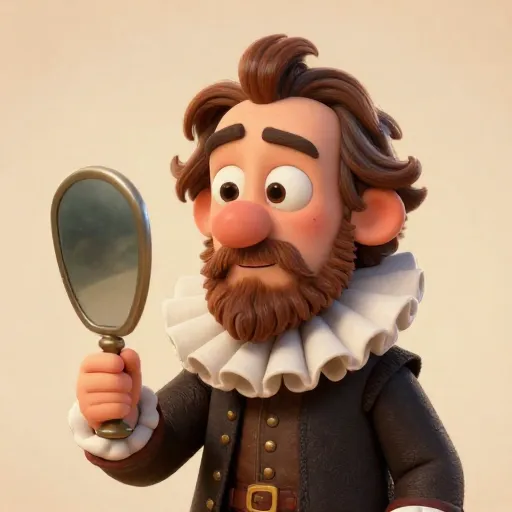
The human understanding is like a false mirror, which, receiving rays irregularly, distorts and discolors the nature of things.
Long before modern psychology, people were already noticing these traps. In 1620, a philosopher named Francis Bacon wrote about 'Idols of the Mind.' He believed that human understanding is like a crooked mirror that distorts everything it reflects.
He wanted people to realize that our senses and our feelings often get in the way of clear science. He knew that to find the truth, we have to admit that our own minds might be tricking us.
Through the Ages
Another strange glitch is the Availability heuristic. This is when we think something is more likely to happen just because we can easily remember an example of it.
If you just watched a movie about a shark attack, you might be terrified to go in the ocean. Even though you are much more likely to be hurt by a falling coconut than a shark, the 'available' memory of the movie makes the shark feel like a bigger threat.
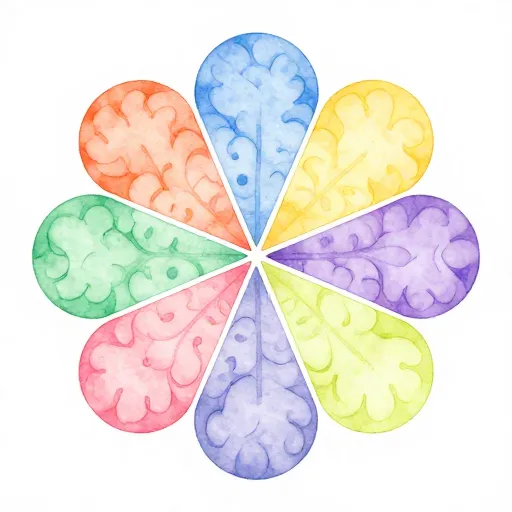
There are over 180 recognized cognitive biases! Some people have tried to map them all out into a giant circle. It looks like a huge, complicated flower of all the ways our brains can go a little bit sideways.
Have you ever started a book or a movie that was really boring, but you finished it anyway because you had already spent an hour on it? This is the Sunk cost fallacy.
Your brain tells you that you shouldn't 'waste' the time you already spent. But the time is already gone! By staying until the end, you are actually wasting even more time. It is a logic trap that keeps us stuck in bad situations.
Finn says:
"I wonder if animals have biases too. Does my dog think I am the best cook in the world just because I am the only one who feeds him? That is definitely a bias."
There is also the famous Dunning-Kruger effect. This is the funny, and sometimes annoying, tendency for people who know very little about a topic to be the most confident that they are experts.
When you first start learning chess, you might think you are a genius after winning one game. It is only after you learn more that you realize how much you actually don't know. Real experts are often less confident because they know how complicated the world really is.
The next time you are arguing with a friend, try the 'Steel Man' challenge. Instead of attacking their idea, try to explain their point of view so well that they say: 'Yes, that is exactly what I mean!' It is the best way to break through your own confirmation bias.
Finally, we have the Framing Effect. This is how the way a choice is described changes how we feel about it. Would you rather eat a burger that is '80 percent lean' or one that is '20 percent fat'?
Most people pick the '80 percent lean' option, even though they are exactly the same thing. Our brains react to the words used, not just the facts. Advertisers and politicians use this bias all the time to nudge us toward certain choices.
The brain is a machine for jumping to conclusions.
So, why do we have these biases at all? If they make us make mistakes, wouldn't we be better off without them? Not necessarily. In the wild, a brain that stops to think slowly about whether a rustle in the grass is a lion or the wind might get eaten.
Biases are the price we pay for having a brain that can make life-saving decisions in a heartbeat. The goal isn't to get rid of them, because we can't. The goal is to notice them, like a captain noticing a current in the ocean, and adjust our steering.
Something to Think About
Which cognitive bias do you think you use the most in your daily life?
There isn't a right or wrong answer here. We all have these biases. Noticing them is like becoming the detective of your own mind.
Questions About Psychology
What is a cognitive bias in simple terms?
Can you 'cure' or fix cognitive biases?
Are cognitive biases always bad?
The Adventure of Thinking
The world is a complicated place, and your brain is doing its best to help you navigate it. By learning about these biases, you aren't just learning psychology: you are learning how to be a better friend, a fairer judge, and a more curious explorer of the truth. Keep questioning your first impressions, and don't be afraid to be wrong. That is where the real learning begins.