Have you ever looked at a toddler trying to put a square block into a round hole and thought, "Why can't they see that won't work?"
That is because their brain is currently in a different stage of Cognitive Development. This is the fascinating process of how we learn to think, reason, and solve the mysteries of the world around us.
Think back to when you were five years old. You probably thought the moon was following your car specifically, or that your stuffed animals had secret lives when you left the room.
Today, you know those things are not true, but that does not mean you were "wrong" back then. It means your mind has traveled through a series of upgrades that allow you to see the world in higher resolution.

Finn says:
"What if my brain never stops growing? Does that mean when I'm eighty, I'll be able to understand things that seem like magic to me right now?"
The Scientist of the Snail Shells
Our story begins in Switzerland in the early 1900s with a man named Jean Piaget. Before he became the world's most famous expert on children, he was a biologist who spent his days staring at water snails.
He noticed that snails from the same family grew different types of shells depending on whether they lived in calm water or rough, wavy water. This gave him a big idea: living things do not just grow, they adapt to their surroundings.
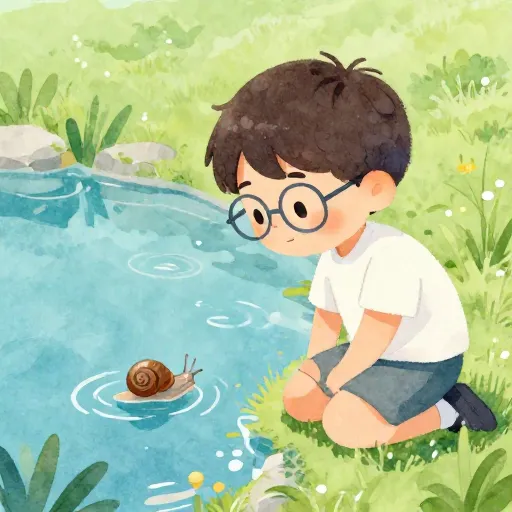
Imagine a young Jean Piaget kneeling by a pond in the Swiss Alps. He is carefully picking up snails and noticing how their shells are shaped by the wind and waves. He realized that minds, like shells, are shaped by the world they live in.
Piaget began to wonder if children’s minds worked the same way. At the time, most adults thought children were just "small adults" who simply knew less information, like a half-full bucket waiting to be topped up.
Piaget realized this was not true at all. He saw that children think in fundamentally different ways than adults, and he began to map out the stages of Cognitive Psychology to prove it.
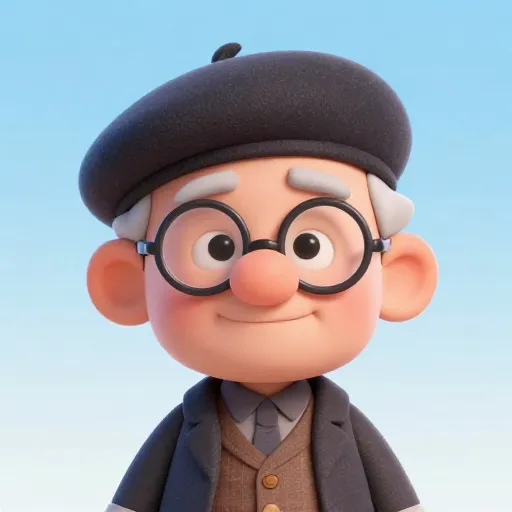
Intelligence is what you use when you don't know what to do.
Building Your Internal Library
Piaget believed that every time you learn something, you create a Schema. Think of a schema as a mental folder or a "thinking-brick" that helps you organize information about a specific topic.
For example, if you see a furry animal with four legs and a wagging tail, you create a "Dog" schema. Your brain uses this folder to store everything you know about dogs so you do not have to relearn what a dog is every time you see one.
Think of a 'Dax.' A Dax is a creature from a planet far away. It is purple, has six legs, and loves to eat library books. Now that you have this 'Dax Schema,' what happens if I tell you that some Daxes have wings? Does your brain just add wings to the folder, or do you need a new folder for 'Flying Daxes'?
When you meet a new animal, your brain does one of two things. First, it tries Assimilation, which is when you fit new information into a folder you already have, like seeing a Poodle and saying, "Aha, that fits in my Dog folder!"
But if you see a creature that does not fit, like a tiny horse, your brain has to perform Accommodation. This is the hard work of changing your old folders or creating a brand new one to make sense of the world.

Mira says:
"I noticed that when I first learned about fractions, I tried to treat them like normal numbers. I had to 'accommodate' my math folder because the old rules didn't fit anymore!"
The Russian Revolution of Ideas
While Piaget was studying snails in Switzerland, another thinker named Lev Vygotsky was working in Russia. He agreed that children were active learners, but he thought Piaget was missing something huge: other people.
Vygotsky’s big idea was Social Constructivism. He believed that we do not just learn by exploring the world alone: we learn by talking, playing, and working with others.

Through others we become ourselves.
He argued that language is the most powerful tool humans have ever invented. When you talk to yourself while solving a puzzle, or when a teacher explains a tricky math problem, you are using language to build a bridge from what you know to what you do not know yet.
This led to one of the most famous ideas in the history of psychology: the Zone of Proximal Development (or ZPD for short). It is the "magic space" where the best learning happens.
Children are like 'Little Scientists' who learn best by exploring and experimenting on their own.
Children are like 'Social Apprentices' who learn best through conversation and culture.
The Magic Bridge and the Scaffolding
Imagine three circles. The inner circle is everything you can do by yourself. The outer circle is everything that is too hard for you right now, like flying a rocket ship to Mars.
The middle circle is the ZPD. This is the area where you can do something, but only with a little bit of help from a "More Knowledgeable Other," like a parent, a teacher, or a friend who is slightly better at chess than you are.
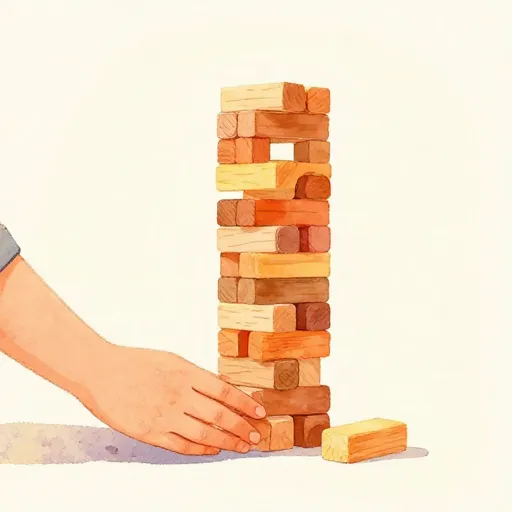
The word 'Scaffolding' was not actually used by Vygotsky himself. It was introduced later by Jerome Bruner and other researchers to explain Vygotsky's ideas using a word everyone could visualize.
To help you move through this zone, adults use a technique called Scaffolding. Just like builders use temporary metal frames to hold up a new skyscraper, teachers provide temporary support to hold up your thinking while you learn a new skill.
Once you are strong enough to stand on your own, the scaffolding is taken away. This is how you learned to ride a bike with training wheels, or how you learn to write an essay by using a checklist first.
Finn says:
"So, a teacher is basically like a construction worker for my mind? They help me build the bridge, but I'm the one who has to walk across it."
The Spiral of Knowledge
In the 1960s, an American psychologist named Jerome Bruner took these ideas even further. He believed that no subject was "too hard" for a child if it was explained in the right way.
He came up with the idea of the Spiral Curriculum. Instead of learning a topic once and moving on, he thought we should revisit the same big ideas over and over again, adding more detail and complexity each time we come back around.

Any subject can be taught effectively in some intellectually honest form to any child at any stage of development.
Bruner also identified different Modes of Representation. He said we start by learning through action (Enactive), then through pictures (Iconic), and finally through symbols like words and numbers (Symbolic). Your brain keeps all three ways of thinking available, even as you get older.
Through the Ages: The History of the Mind
Your Brain is a Shape-Shifter
Today, we know that your brain is incredibly flexible, a quality called Neuroplasticity. Every time you struggle with a hard problem, your brain is actually growing new connections between neurons.
During your childhood, you go through Critical Periods where your brain is extra hungry for certain types of information, like language or music. It is like your mind has a "super-learning" mode enabled.
When you are a baby, your brain has way more connections (synapses) than it needs. As you grow, your brain 'prunes' the ones you don't use, like a gardener trimming a hedge, to make the important paths faster and stronger!
Having a Growth Mindset means understanding that your intelligence is not a fixed number you are born with. It is more like a muscle that gets stronger and smarter the more you use it, especially when you make mistakes.
When you find something difficult, it is not a sign that you are not smart. It is actually the feeling of your brain doing "Accommodation," rewriting its own code so you can understand something bigger and better than before.
Something to Think About
What is something that used to feel like 'magic' to you, but now feels like simple logic?
There are no right or wrong answers here. Think about how your 'folders' have changed over time.
Questions About Psychology
Does everyone's brain grow at the same speed?
Can I grow my brain by doing hard things?
Why do adults think so differently than kids?
Your Ever-Changing Mind
The next time you find yourself stuck on a problem, remember Piaget's snails and Vygotsky's bridge. You aren't just 'failing' at a task: you are in the middle of a mental upgrade. Your schemas are stretching, your scaffolding is being built, and your brain is becoming something entirely new. The wonder of cognitive development is that you are never finished becoming you.
