Have you ever felt a sudden, itchy need to know how a toaster works, or why the moon looks like a slice of lemon?
That feeling is curiosity, a powerful force that drives us to explore the unknown. It is not just a habit: it is a biological phenomenon that has shaped human history for thousands of years.
Imagine you are walking through the narrow, dusty streets of Florence, Italy, in the year 1490. You pass a man with long, flowing hair and paint-stained fingers named Leonardo da Vinci.
Leonardo is not just looking at the world: he is interrogating it. In his notebook, he has a list of things to do today. It does not say 'buy milk' or 'clean the floor.' Instead, it says: 'Describe the tongue of the woodpecker.'

Imagine opening a notebook from 500 years ago. On one page, there are sketches of flying machines. On the next, a drawing of how a human heart pumps blood. Leonardo's curiosity didn't have boundaries: he didn't care if it was 'art' or 'science,' he just wanted to know how it worked.
Leonardo wanted to know how a woodpecker’s tongue could be long enough to wrap around its own brain. He wanted to know how water moved in a stream and why the sky was blue.
This man lived during the Renaissance, a time when people started to believe that asking questions was the most important thing a person could do. For Leonardo, curiosity was a hunger that could never be satisfied.
Finn says:
"Wait, what if Leonardo had run out of paper? Would he have started drawing on the walls just to get the ideas out of his head?"
Curiosity is often described as an 'itch' because it actually feels like a physical sensation. When you don't know something, your brain feels a tiny bit of tension or discomfort.
When you finally find the answer, your brain releases a chemical called dopamine. This is the same chemical that makes you feel happy when you eat your favorite snack or win a game.
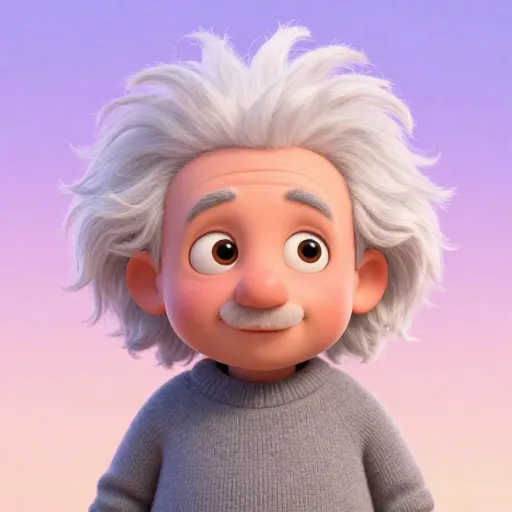
I have no special talent. I am only passionately curious.
Your brain is built to love learning because it helps you survive. Thousands of years ago, the humans who were curious about what was over the next hill were the ones who found new food and safer places to sleep.
Today, we don't always need curiosity to find food, but we use it to build spaceships and write poems. Scientists call this intrinsic motivation, which means doing something because the act itself is the reward.
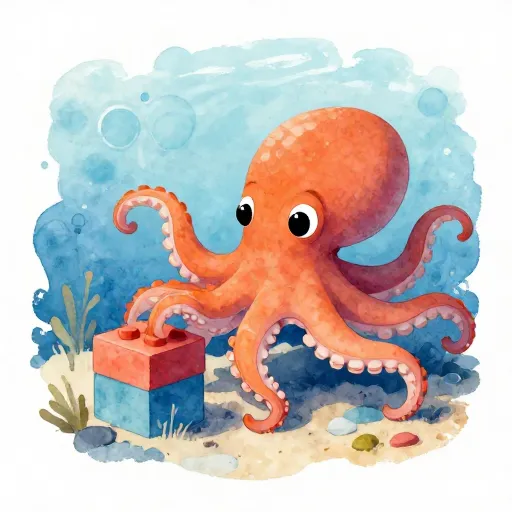
Humans aren't the only curious ones! Scientists have found that octopuses are incredibly curious. If you put a new object like a LEGO brick or a jar in their tank, they will spend hours touching it, tasting it with their suction cups, and trying to take it apart just to see what it is.
Psychologists believe there are actually two different 'flavors' of curiosity that we feel at different times.
The first is diversive curiosity, which is that restless feeling when you are bored. It is the reason you scroll through videos or look for something new to do just to stay busy.
The second is epistemic curiosity, which is much deeper. This is the directed, focused desire to truly understand a difficult concept, like how gravity works or why people get angry.

Mira says:
"I think I have a lot of diversive curiosity when I'm bored in the car, but when I'm reading about space, it turns into that deep epistemic kind."
Deep curiosity is like a muscle: the more you use it, the stronger it gets. Every time you learn a new fact, your brain creates a new connection through a process called neuroplasticity.
These connections make it easier for you to learn even more things later on. It is as if your brain is building a giant web, and every new piece of information gives you a place to hang another one.
Many old myths warn that curiosity is dangerous. They suggest that some things are better left unknown, and that 'prying' into secrets can lead to disaster.
Modern thinkers argue that curiosity is our greatest tool. Without it, we wouldn't have medicine, electricity, or the ability to understand our own history.
Curiosity has not always been seen as a good thing. For a long time, many leaders and even some religions were suspicious of people who asked too many questions.
They worried that if people were too curious, they might stop following the rules or discover secrets that were 'meant to stay hidden.' In some old stories, curiosity is what gets characters into trouble, like Pandora opening her box.
Through the Ages
During the Enlightenment in the 1700s, this started to change in a big way. Thinkers began to argue that the scientific method was the best tool we had for understanding the world.
The scientific method is basically curiosity with a plan: you observe, you ask a question, you guess an answer, and you test it. Instead of being dangerous, curiosity became a virtue that helped doctors find cures and engineers build engines.
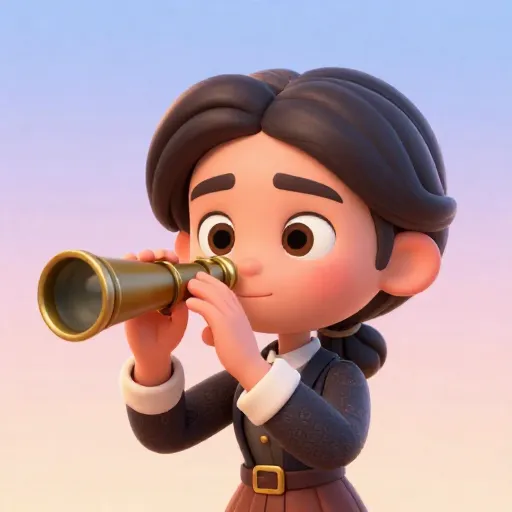
We have a hunger of the mind which asks for knowledge of all around us, and the more we gain, the more is our desire.
Curiosity is also a bridge that connects us to other people. When we are curious about how someone else feels, we are practicing empathy.
Instead of just deciding that someone is 'mean' or 'weird,' a curious person asks: 'I wonder why they are acting that way?' This kind of social curiosity helps us solve arguments and make deeper friendships.
Finn says:
"If I stay curious forever, does that mean I'll never be bored? That sounds like a pretty good deal."
One of the hardest parts of being curious is dealing with uncertainty. Sometimes, there isn't an easy answer to our questions, and that can feel frustrating.
However, being able to sit with that 'I don't know' feeling is a huge part of being a great thinker. Psychologists call this 'tolerance for ambiguity,' and it means you are okay with the world being a bit messy and mysterious.
Go on a 'Wonder Walk.' Walk around your block or backyard and find three things you see every day but don't actually understand. Why are the leaves on that specific tree turning brown? How does the sidewalk stay flat? Once you find your three things, go look up the answers or make up your own creative theories first!
Great explorers and scientists often rely on their intuition as much as their books. This is that 'gut feeling' that tells you there is something interesting hidden just out of sight.
If you follow that feeling, you might end up in a place nobody else has ever been. Curiosity is the quiet voice that says: 'Wait, look closer at that,' or 'That doesn't seem quite right.'
Curiosity is innocence in action: it's a wandering of the soul.
Even today, curiosity is taking us to places we have never physically touched. We have sent robots to other planets specifically to be our eyes and ears.
One of the most famous robots on Mars is even named Curiosity. It spends its days climbing dusty red craters and drilling into rocks, looking for signs that life might have existed there billions of years ago.
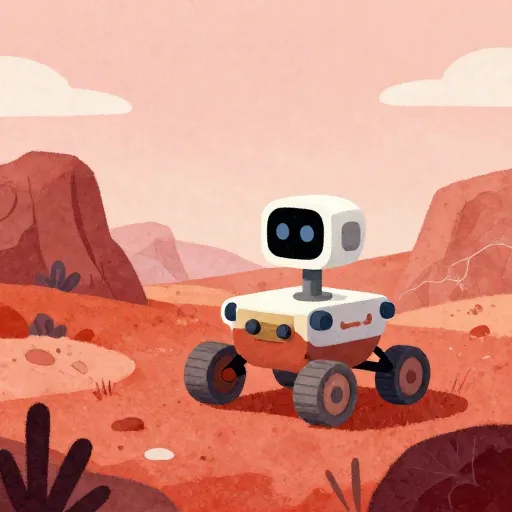
The Mars Rover 'Curiosity' was named by a 12-year-old girl named Clara Ma. She won a contest by writing an essay about how curiosity is an everlasting flame that burns in everyone's mind and makes us who we are.
You don't need a billion-dollar robot or a notebook like Leonardo's to be an explorer. All you need is the willingness to look at something ordinary and find the mystery inside it.
Next time you feel that little 'itch' in your mind, don't ignore it. That is your brain inviting you to go on an adventure without ever leaving your chair.
Something to Think About
Is there anything in the world that you are glad you *don't* know yet?
Think about something you want to discover for yourself later in life. There is no right answer: sometimes the mystery is just as important as the discovery.
Questions About Psychology
Can you have too much curiosity?
Why do some people seem more curious than others?
How do scientists use curiosity?
Stay Wondering
Curiosity is a journey that never truly ends. Whether you are looking at a star through a telescope or looking at a bug through a magnifying glass, you are participating in a grand human tradition. Keep asking questions, keep being okay with not knowing, and most importantly, keep looking closer.
