
Have you ever found yourself blaming a sibling for something you actually did, or pretending you don't care about a race you just lost?
These aren't just accidents: they are part of a complex system of defense mechanisms. These are the invisible shields your unconscious mind uses to protect you from anxiety and difficult truths.
Imagine you are walking through a crowded, noisy city. To keep yourself from being overwhelmed, you might put on headphones or pull your hoodie up. Your mind does something very similar when life gets emotionally noisy.
It builds psychological structures to keep you feeling safe and steady. These structures were first mapped out by a group of thinkers in the early 20th century who were fascinated by the world inside our heads.
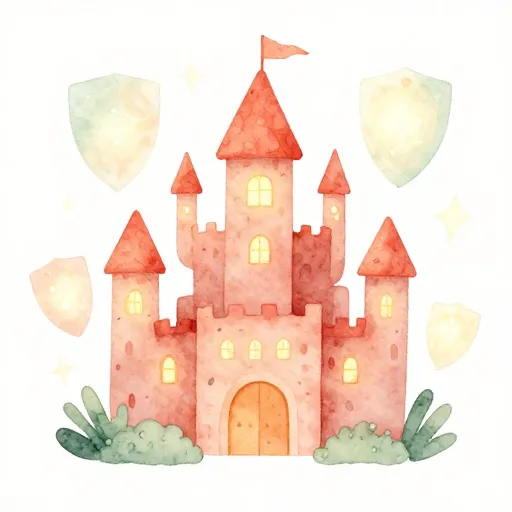
Imagine your mind is a grand castle. The 'You' that you know lives in the central tower. But all around the castle are guards, walls, and hidden trapdoors. These guards are your defense mechanisms. Their only job is to make sure no 'bad news' or 'scary feelings' reach the central tower too quickly.
In the 1930s, in a house filled with books and the smell of old paper in Vienna, Austria, a woman named Anna Freud was watching children play. She noticed that when children faced something scary or embarrassing, they didn't always cry or run away.
Instead, their minds seemed to perform a magic trick. They would push the scary thought deep down where they couldn't see it anymore. She realized that we all have an ego, which is the part of us that tries to navigate the real world while keeping our inner world balanced.

Finn says:
"So, is a defense mechanism like a power-up in a game? Like a bubble shield that pops when things get too intense? I wonder if some people have stronger bubbles than others."
Anna’s father, Sigmund Freud, had talked about these ideas before, but Anna was the one who really organized them. She saw that these defenses weren't just mistakes or lies. They were tools.
She described them in her famous book, The Ego and the Mechanisms of Defence. She believed that without these shields, the world would feel far too intense for us to handle as we grow up.

The ego is not master in its own house.
To understand a defense mechanism, you first have to understand the unconscious mind. This is the part of your brain that works behind the scenes, like the OS on a computer that you never actually see.
When you feel a spark of anxiety, which is a nervous, tight feeling about something that might happen, your unconscious mind reacts instantly. It doesn't wait for you to decide what to do. It just deploys a shield.

Anna Freud wasn't always a famous psychologist. She started her career as a primary school teacher! This is why she was so good at understanding how children's minds worked, she spent years watching them learn, play, and navigate their feelings in the classroom.
One of the most common shields is called denial. This is when your mind simply refuses to admit that something is true.
If a pet passes away, a child might keep setting out their food bowl as if they are still there. It isn't that they are being silly: it's that their mind is using denial to let the sadness in slowly, rather than all at once in a giant wave.

Mira says:
"It's like the mind is an artist. It doesn't just see the world, it paints over the bits it doesn't like. I wonder if we ever see things exactly as they really are, or if there's always a little bit of 'shield' in the way."
Another very clever trick is called projection. Think of a movie projector casting an image onto a screen. When we project, we take a feeling we don't like about ourselves and we "project" it onto someone else.
If you are feeling very grumpy and mean, you might suddenly point at your friend and say, "Why are you being so mean to me?" Your mind has moved the bad feeling from you to them so you don't have to feel like the "bad guy."

We serve the child best if we help him to reach a higher level of control over his own inner life.
Then there is displacement. This happens when you have a big feeling toward someone powerful, but you take it out on someone safer.
If a teacher is unfair to you, you might not be able to tell them how you feel because you’re worried about getting in trouble. So, you go home and yell at your younger brother about a toy. The anger was for the teacher, but it got "displaced" onto your brother.
Denial is a helpful tool. It acts like a shock absorber for the brain, letting us process bad news in small, manageable bites instead of being crushed by it.
Denial is a dangerous trap. If we keep pretending things aren't true, we can never fix problems or learn how to be brave in the face of reality.
Sometimes, the mind uses a defense called reaction formation. This is when you turn a feeling into its exact opposite.
If a child is very jealous of a new baby in the house, they might feel guilty about being angry. To hide that anger, they might become "super-helpers," acting incredibly loving and protective toward the baby. They are acting the opposite of how they actually feel deep down.
Mira says:
"If I'm using a shield and I don't even know it, who is actually in charge of my brain? It's like having a secret bodyguard who never tells me what they're doing."
Through the Ages
Not all defense mechanisms are about hiding or pushing things away. Some are about changing the energy of a feeling into something useful. This is called sublimation.
Anna Freud and other psychologists thought this was one of the most successful ways to use a defense. If you are feeling very frustrated or aggressive, you might go out and play a very intense game of soccer or paint a wild, swirling picture.
Next time you feel a 'heavy' emotion like anger or sadness, try the Sublimation Challenge. Instead of pushing it down, try to move it into something else. Draw a 'feeling map' with wild colors, write a story about a character who feels exactly like you, or run as fast as you can to the end of the block. Notice if the feeling changes shape afterward.
Sublimation takes the "raw material" of a difficult emotion and manufactures something beautiful or productive out of it. It’s the mind’s way of recycling.
Instead of letting the feeling sit inside like a heavy weight, you use the energy to move. This is why many of the world's greatest artists and athletes are people who had very big, difficult feelings when they were young.

Defenses are ways we have of telling ourselves stories so that we can keep going.
As we get older, we might also use rationalization. This is when we create a logical-sounding reason for why something happened to hide the real, more painful reason.
If you don't get invited to a party, you might tell yourself, "I didn't want to go anyway: those people are boring." This sounds like a fact, but it's actually a shield to protect you from the sting of feeling left out.

Psychologists have identified over 50 different types of defense mechanisms! Some are very simple, like 'crying,' while others are very complex, like 'intellectualization,' where you use big words and logic to avoid feeling your emotions.
So, are these shields good or bad? That is a question that psychologists still talk about today.
If we didn't have any defenses, we might feel every bit of pain and fear at full volume all the time. But if our shields are too thick, we can't see the truth of who we are or how others feel. The goal of growing up is often learning how to gently set the shields down when it is safe to do so.
Something to Think About
If you could design a brand new defense mechanism for your mind, what would it look like and what would it protect you from?
There are no right or wrong answers here. Your mind is your own private world, and it has been finding ways to take care of you since the day you were born.
Questions About Psychology
Is it bad to use defense mechanisms?
Can I choose which defense mechanism I use?
How do I know if I'm using projection?
The Brave Work of Knowing Yourself
Understanding defense mechanisms isn't about catching yourself doing something 'wrong.' It's about becoming a curious explorer of your own inner world. When you notice a shield popping up, you don't have to fight it. You can simply say, 'Oh, look, my mind is trying to protect me right now. I wonder why?' That little bit of curiosity is the first step toward a very big kind of wisdom.
