
Have you ever wondered why your favorite old teddy bear feels like more than just a toy?
Donald Winnicott was a pediatrician and psychoanalyst who spent his life studying how children grow. He realized that to be happy, kids don't need perfect parents or perfect lives: they just need to feel safe enough to be themselves.
Imagine a busy hospital in London during the 1920s. The air is thick with the smell of medicine and the sound of crying babies. Among the rush of doctors, there is one man who is not in a hurry.
He is sitting very still, watching a mother hold her child. This is Donald Winnicott. While other doctors were busy checking temperatures and fixing broken bones, Donald was interested in something invisible: the way people feel together.
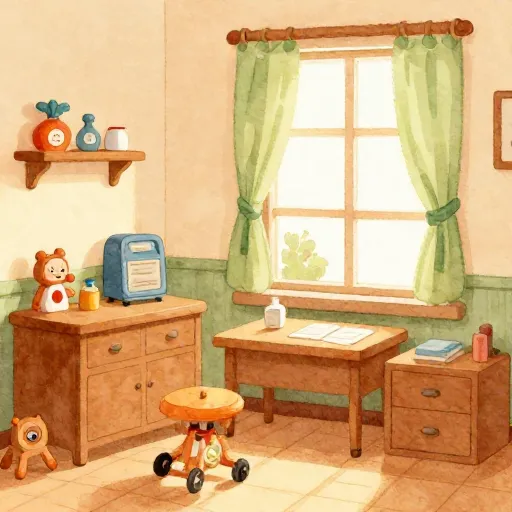
Imagine walking into a hospital clinic where there are no bright lights or loud machines. Instead, there is a low table, some paper, and a doctor who seems to have all the time in the world just to watch you play with a toy train.
Donald was born in a big house in Plymouth, England, in 1896. He grew up as the youngest child in a family with many sisters and a very busy father. Because he was often surrounded by people, he became an expert at watching how humans interact.
He eventually became a baby doctor, or a pediatrician. Over his long career, he saw over 60,000 children and their parents. This taught him a secret that many other doctors missed.
Finn says:
"So, Winnicott didn't just look at my throat? He wanted to know if I felt safe at home? That feels like a lot for a doctor to think about."
Donald realized that a child isn't just a body that needs food and sleep. A child is a person who needs a special kind of emotional safety. He called this the holding environment.

There is no such thing as a baby.
The Space Between Two People
Donald’s most famous idea was that "there is no such thing as a baby." This sounds funny at first: of course there are babies! But what he meant was that you never find a baby all by themselves.
Whenever you see a baby, you also see someone looking after them. The baby and the caregiver are like two pieces of a puzzle that fit perfectly together. The way the adult holds the child makes the child feel like the whole world is a safe place.

During World War II, many children were sent away from London to the countryside to stay safe from bombs. Donald worked with these children and noticed how much they missed their 'holding environment.' He even did radio broadcasts to help parents understand how to support their kids during this scary time.
This "holding" isn't just about using your arms. It is about how an adult understands what a child is feeling. When you are sad and someone sits with you, they are "holding" your feelings so they don't feel so heavy.
Donald noticed that when kids feel held, they start to relax. They stop worrying about whether they are safe and start doing something very important: they start to play. For Donald, play was the most serious work in the world.

Mira says:
"I like the idea of a 'holding environment.' It’s like when you’re worried and someone just stays near you without trying to fix everything right away."
Being Good Enough
Many parents in Donald's time were worried about being perfect. They wanted to follow every rule and never make a mistake. Donald thought this was a terrible idea.
He invented a term that changed everything: the good-enough parent. He believed that if a parent is perfect, the child never learns how to deal with the real world. Real life is full of small mistakes and delays.
A perfect parent never makes a mistake, always knows why the baby is crying, and never loses their temper.
A good-enough parent tries their best but sometimes gets tired or confused. They make mistakes, but they fix them and keep caring.
By being "good enough" rather than perfect, parents give children a chance to grow. If your lunch is five minutes late, or if your dad forgets to bring your favorite toy, you learn how to handle a little bit of frustration.
These small bumps in the road are actually good for you. They help you realize that you are your own person, separate from the people who take care of you. It is the beginning of finding your own strength.
It is a joy to be hidden, but a disaster not to be found.
The Magic of the Teddy Bear
Have you ever had a blanket or a stuffed animal that you had to take everywhere? Maybe it had a specific smell or a corner that was perfectly soft for rubbing. Donald was the first person to explain why these things are so important.
He called them transitional objects. They are called "transitional" because they help you move from the world of your parents to the world of your own. The bear is part of you, but it is also a real thing in the world.
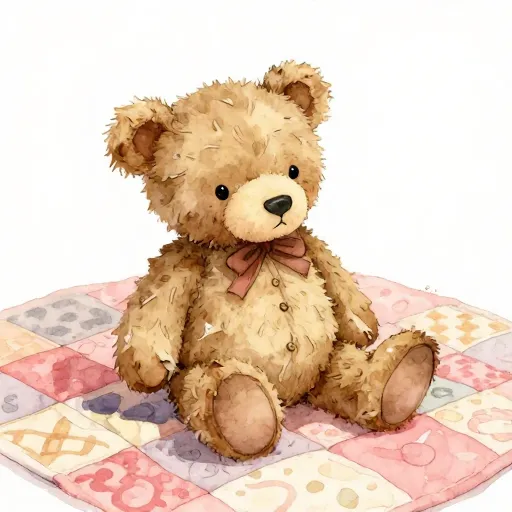
Picture a well-loved teddy bear. One eye is missing, the fur is matted from years of hugs, and it smells faintly like home. To anyone else, it’s a bit of a mess, but to the child, it’s a powerful bridge between their dreams and the real world.
When you are scared at night, the bear stays with you. It doesn't judge you, and it doesn't leave. It helps you keep that feeling of being "held" even when no one else is in the room.
Donald told parents never to wash these objects unless the child asked. He knew that the smell and the wear-and-tear were part of the object's magic. It was a tool that helped the child become brave enough to explore the world alone.
Finn says:
"Wait, does my old blue blanket count as a 'transitional object'? I used to think it was just a rag, but it really did help me sleep when the house felt too quiet."
True Self and False Self
One of Donald’s deep worries was that children sometimes feel they have to be "good" to be loved. If a child always has to be polite, quiet, and helpful, they might lose touch with how they really feel.
He called this the False Self. It is like wearing a suit of armor that looks perfect to others but feels stiff and uncomfortable to you. The False Self is a way of protecting yourself when you don't feel safe being real.
Through the Ages
The True Self, on the other hand, is the part of you that is messy, loud, and full of weird ideas. It is the part of you that feels spontaneity: that sudden spark of wanting to dance, draw, or make a joke.
Donald believed the whole point of growing up was to feel safe enough to let your True Self come out. He spent his life helping people find that spark again, often by playing games with them in his office.
Find a partner and play the Squiggle Game! Draw one messy, random line on a piece of paper. Pass it to your partner and ask them: 'What could this be?' They add a few lines to turn it into a picture, then they give you a squiggle to finish. Remember, it’s not about making good art: it’s about what you see together.
The Squiggle Game
To help children express their True Self, Donald invented the Squiggle Game. He would take a piece of paper and make a random, messy line. Then he would ask the child to turn it into something.
Then it was the child's turn to make a squiggle for him. There were no points and no winners. It was just a way of communicating through drawing. It showed that even a mess can become something interesting if you look at it together.

Playing is itself a therapy.
Donald Winnicott died in 1971, but his ideas are still used by doctors, teachers, and parents today. He reminded us that the most important things in life aren't things you can buy. They are the quiet moments of being together and the freedom to be exactly who you are.
Something to Think About
If you were to draw a squiggle right now that showed how you feel inside, what would it look like?
There are no right or wrong shapes here. Your feelings are like a weather pattern: they are always changing, and they are always allowed to be there.
Questions About Psychology
Is it okay to have a 'False Self' sometimes?
What if I don't have a teddy bear or a blanket?
How can I tell if I am in a 'holding environment'?
The Joy of Being Real
Donald Winnicott didn't want us to be the best or the brightest. He wanted us to be the most 'alive' we could be. By accepting that we are imperfect and messy, we open the door to true creativity and connection. Next time you feel like you've made a mistake, remember Donald: you're probably doing just fine.
