Have you ever felt a sudden rush of heat in your cheeks when you're embarrassed, or a heavy, quiet stillness in your chest on a rainy afternoon?
These experiences are emotions, the complex signals our bodies and minds use to communicate with us. For centuries, thinkers have tried to map this inner landscape, moving from ancient ideas about body fluids to modern psychology which helps us understand that our feelings are not just 'moods,' but essential parts of our survival and our identity.
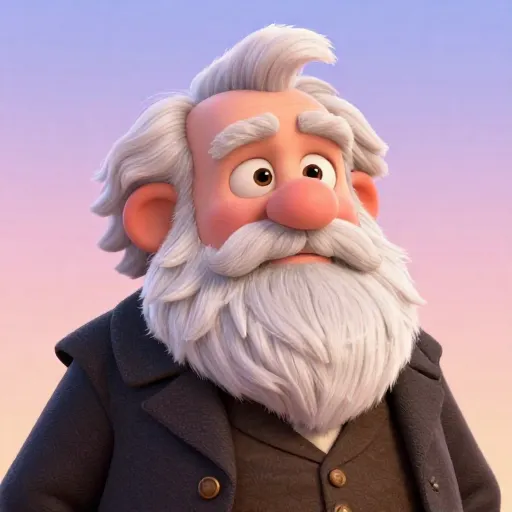
Imagine standing on the deck of a wooden ship in 1872. The air is salty, and a bearded man named Charles Darwin is sitting in a cramped cabin, surrounded by sketches of dogs, monkeys, and human faces.
Darwin was famous for his ideas about how animals change over time, but he was also obsessed with why we make faces. He noticed that a toddler in England and a person in a distant land both scrunched their eyes the same way when they cried.
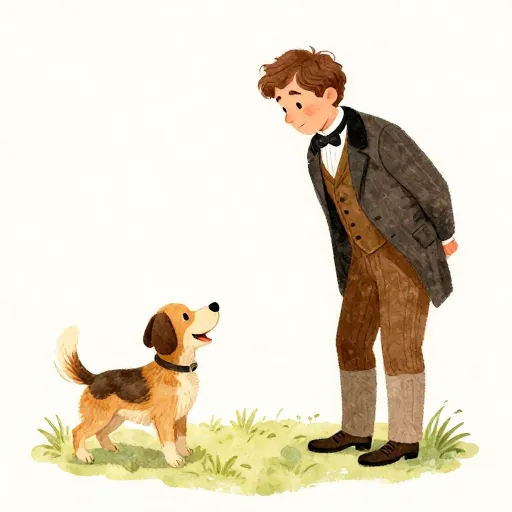
Imagine Darwin's dog, Polly. When she was happy, she didn't say 'I am pleased.' She wagged her tail and lowered her ears. Darwin realized that animals use their bodies to show their inner world, just like we do when we smile or frown.
He realized that emotions were not just random accidents. They were tools. They were the body's way of telling a story without using any words at all.
The Intelligence of Feeling
For a long time, many people thought that being 'emotional' was the opposite of being 'smart.' They believed that logic was like a steady captain and emotions were like a wild storm that the captain had to fight.
But as we began to study the human mind more closely, we realized that feelings actually have their own kind of intelligence. They are like scouts sent ahead of the army to report on what is happening in the world.

The emotions are not just 'feelings' but are a form of evaluative thought.
When you feel fear, your brain is telling you to pay attention to a potential danger. When you feel joy, your brain is highlighting something that is good for your well-being.
Without these signals, we wouldn't know what we value or who we care about. Emotions are the data our brain uses to make the most important decisions in our lives.

Finn says:
"Sometimes I get so angry that my hands shake, and I don't know what to do with all that energy. Is it okay to just feel like a volcano for a bit?"
The Holding Environment
In the middle of the 1900s, a doctor named Donald Winnicott spent a lot of time watching how parents and children interacted. He noticed that babies often had very 'big' feelings that they couldn't control.
He came up with a beautiful idea called the holding environment. This isn't just about physically picking up a child, though that is part of it.
Next time you have a very big feeling, try to imagine it as a weather pattern. Is it a thunderstorm? A heavy fog? A breezy sunny day? Instead of trying to stop the 'weather,' just watch it move across your mind. Does the storm eventually run out of rain?
It is about creating a space where a child feels safe enough to have their feelings without being overwhelmed by them. It is the feeling that 'I am upset right now, but the world is not ending.'
Winnicott believed that when we are 'held' in this way, we learn how to hold ourselves. We start to understand that our feelings are like waves: they might be tall and scary for a moment, but they always reach the shore and wash away.

It is a joy to be hidden, but a disaster not to be found.
The Naming Game
One of the most powerful tools in psychology is called affect labeling. This is a fancy way of saying 'naming your feelings.'
When we give a feeling a name, like 'frustration' or 'loneliness,' something interesting happens in our brain. The part of the brain that feels the emotion, the amygdala, starts to quiet down, and the part that thinks, the prefrontal cortex, wakes up.
- Take a deep breath and notice where you feel the sensation in your body
- Try to find the most accurate word for that feeling
- Say it out loud: 'I feel disappointed'
- Wait and see if the feeling changes its shape

Mira says:
"I've noticed that when I tell my mom 'I'm feeling left out,' the feeling doesn't hurt quite as much. It's like the word is a little house for the feeling to sit in."
Naming a feeling doesn't make it go away instantly, but it makes it more manageable. It turns a scary monster into a guest who has come to visit for a little while.
The Messy Middle
It is tempting to divide emotions into 'good' ones (like happiness) and 'bad' ones (like anger). But psychologists today argue that all emotions are useful, even the ones that feel uncomfortable.
Anger can be a signal that something is unfair. Sadness can be a way of showing ourselves and others that we have lost something important and need time to heal.
Emotions are like wild horses that need to be controlled by our reason and logic, or they will lead us into trouble.
Emotions are essential guides that tell us the truth about our world. We should listen to them more than our logic.
If we try to push away the 'bad' feelings, we often end up losing the 'good' ones too. It is like trying to mute the loud instruments in an orchestra: eventually, you just end up with silence instead of music.
Learning to live with the 'messy middle' means being curious about every feeling that pops up. Instead of saying 'I shouldn't feel this,' we can try saying 'That's interesting, I wonder why this feeling is here?'
A History of Feelings
Why We Hide
Sometimes, our feelings feel too big or too dangerous to show. This is where defense mechanisms come in. These are like invisible shields our mind uses to protect us when we aren't ready to face a feeling.
- Denial: Pretending a feeling isn't there at all
- Projection: Thinking someone else is angry at you when really you are angry at them
- Displacement: Being mad at your toy because you are actually upset with your teacher
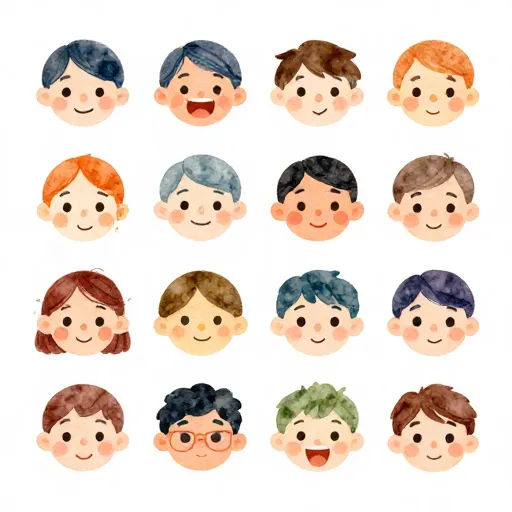
There are some facial expressions that are exactly the same for every person on Earth, regardless of where they live or what language they speak. These 'universal' emotions include joy, sadness, fear, disgust, and anger.
These shields are very helpful when we are in a crisis, but if we keep them up all the time, they start to block out the people who want to help us. Part of growing up is learning when it is safe to put the shield down.
Expression of emotion is an inherited movement that was once useful.
The Mystery of the 'Self'
Even the smartest scientists in the world don't fully understand everything about emotions. We don't know exactly why some people feel things more intensely than others, or why a memory can trigger a feeling years later.
This uncertainty isn't a bad thing. It means that you are the world's leading expert on your own inner world. No one else can know exactly what it feels like to be you.
Finn says:
"I still don't really get why I can feel happy and sad at the exact same time, like on the last day of school. It's confusing, but I guess it's also kind of cool."
Your emotions are part of your subjective experience. They are the unique colors you use to paint your life. Even when they are confusing, they are yours.
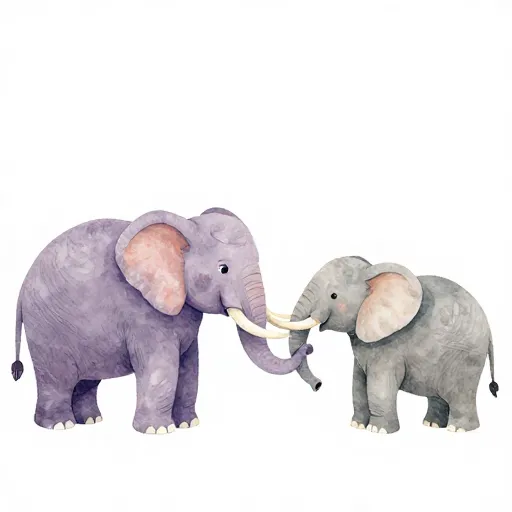
Humans aren't the only ones with complex emotions. Scientists have found that elephants seem to grieve for their family members, and rats actually make 'laughter' sounds (too high for humans to hear) when they are tickled or playing!
At the end of the day, emotions are simply a part of being alive. They are the price we pay for caring about things and the reward we get for connecting with others.
Something to Think About
If your emotions could speak with a human voice, which one would have the most to say to you today?
There is no 'right' or 'wrong' emotion to pick. Sometimes the quietest feelings have the most interesting stories to tell.
Questions About Psychology
Is it bad to feel angry?
Why do I cry when I'm happy?
How long do emotions last?
The Ever-Changing Sky
Your emotions are not a problem to be solved, but a world to be explored. Like the weather, they will change, and like the weather, they are all part of the natural beauty of being alive. Keep noticing, keep naming, and keep being curious about your own big, beautiful inner world.
