Have you ever looked at a photo of yourself as a toddler and wondered where that little person went?
It is a strange mystery that while your body grows bigger, your mind is also busy building something invisible called an identity. A tall, wandering artist named Erik Erikson spent his life mapping out how we grow from tiny babies into wise adults through a process called psychosocial development.
Imagine it is the year 1927 in Vienna, Austria. The streets are filled with the sound of horse-drawn carriages and the smell of strong coffee and chocolate cake.
A young man with bright blue eyes and a shock of blond hair is walking through the city with a sketchbook under his arm. This is Erik Erikson. He is not a scientist or a doctor yet, he is a traveling artist who loves to draw portraits of children.
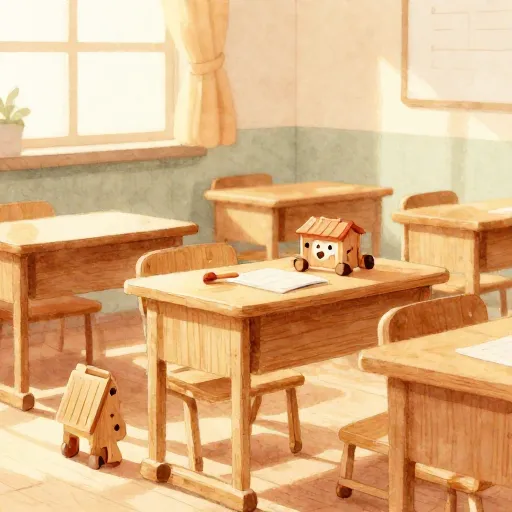
Imagine standing in a sunlit classroom in Vienna. On the floor are wooden blocks, clay, and dolls. A tall man is sitting right there on the rug with the kids, not telling them what to do, but simply watching how they build their towers. He isn't interested in the tower itself, but in how the child feels when the tower falls down.
Erik was a bit of a wanderer because he was trying to figure out where he belonged. He was born in Germany, but his mother was Danish and his biological father had left before he was born.
He often felt like an outsider, never quite fitting into one specific group or country. This feeling of being 'in-between' would eventually lead him to invent one of the most famous phrases in psychology, the identity crisis.

Finn says:
"If Erik Erikson felt like an outsider, does that mean being confused about where you fit in is actually a superpower for a psychologist?"
While in Vienna, Erik was invited to teach at a tiny, experimental school. The school was run by Dorothy Burlingham and Anna Freud, the daughter of the famous Sigmund Freud.
Erik noticed something fascinating while watching his students. They weren't just learning math or reading, they were using play to work through their biggest fears and hopes.
The Discovery of the Life Map
Erik began to realize that growing up wasn't just a straight line toward being an adult. It was more like a video game with different levels.
Each level has a specific challenge you have to solve before you can truly master the next one. He called these challenges 'conflicts,' but they aren't bad things. They are more like growth spurts for your personality.

Children play not just for fun, but to master reality.
He believed that our environment, the people and world around us, changes what we need at different ages. A baby needs to know the world is safe, while a ten-year-old needs to know they are good at making things.
Erik eventually moved to America and wrote a book called Childhood and Society. In it, he laid out his big idea: the Eight Stages of Development.
Erik Erikson actually chose his own last name! He was born Erik Homburger, but when he became a US citizen, he named himself 'Erik's son.' It was his way of defining his own identity since he never knew his biological father.
Level One: The Seed of Hope
Every human starts at the same place: Stage One. This happens when you are a tiny baby, and your main job is to figure out if you can trust the world.
If your grown-ups take care of you when you cry and feed you when you are hungry, you develop a sense of trust. Erik said this creates a tiny spark of 'hope' inside you that stays for the rest of your life.
Level Two: The Power of 'No'
When you become a toddler, you suddenly realize you are a separate person from your parents. This is the stage of autonomy, which is a fancy word for independence.
This is why toddlers love to say 'No!' or 'I do it!' Erik thought this was wonderful because it means the child is building their own will.

Mira says:
"I remember my little brother's 'No!' phase. It was annoying, but Erikson makes it sound like he was just busy building his own kingdom."
Level Three: The Explorer
By the time you reach preschool age, you start to have big ideas. You want to build a spaceship out of couch cushions or put on a play for your family.
Erik called this 'initiative.' If you are encouraged to try these things, you learn that your ideas have power. If you are told you are being 'bad' for being curious, you might feel a sense of guilt instead.
Start an 'I Can Do It' journal. For one week, write down one new thing you learned or practiced, no matter how small. It could be a new skateboard trick, a difficult math problem, or even making a really great sandwich. This is how you build your sense of 'Industry'!
Level Four: The Maker
This is likely the stage you are in right now! Erik called this the stage of industry versus inferiority.
Between the ages of about six and twelve, you are busy learning how the world works. You are discovering how to read, how to play sports, how to code, or how to draw.
You are building a sense of competence, the feeling that you are 'good at stuff.' It is a time of incredible hard work, even if it feels like just going to school.

The more you know who you are, the less you'll let things upset you.
Level Five: The Great Puzzle
As you head toward your teenage years, you hit the most famous level of all: Identity. This is where you start to ask, 'Who am I, really?'
You might try out different styles of clothes, different music, or different groups of friends. Erik believed this was a healthy 'crisis' because it helps you find out what you truly value.
Some people think we are born with our personalities already set, like a seed that can only be one type of flower.
Erikson believed that the people we meet and the culture we live in 'water' different parts of us, changing how we grow.
Erikson was one of the first thinkers to say that we don't stop growing when we hit eighteen. He argued that our lifespan is a continuous journey of change.
Even your parents and grandparents are still on the map! They are dealing with their own stages, like figuring out how to care for others or looking back on their lives with a sense of peace.
The Art of Play
Erik never lost his artist's eye. He spent hours on the floor playing with children, using dolls and blocks to see how they saw the world.
He believed that play was a 'safe space' where kids could practice being adults. If a child was worried about a doctor's visit, they might play 'hospital' with their teddy bear to feel more in control.
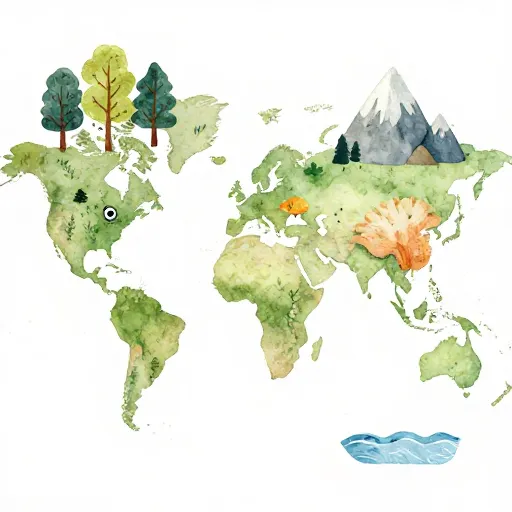
Picture a 'Stage Map' of your life. Behind you are the lands of Trust and Independence. Right now, you are in the Forest of Learning (Industry). Ahead of you is the Great Identity Mountain. It might look steep, but everyone has to climb it, and the view from the top is where you finally see who you are.
By watching kids play, he realized that our unconscious mind, the part of our brain we aren't always thinking about, uses toys to tell stories.
These stories help us bridge the gap between our inner feelings and the outer world. Erik’s wife, Joan Serson Erikson, was also a brilliant collaborator who helped him develop these ideas and even added a ninth stage later in her life!
The Way We See Children
Why Erikson Matters Today
Before Erikson, many people thought children were just 'small adults' or 'empty buckets' to be filled with facts.
Erik showed us that every child is a hero on a grand adventure. Every 'no,' every 'why,' and every 'who am I?' is a vital step in building a strong, healthy self.
Finn says:
"What if someone gets stuck on a level? Erikson says we can keep growing, so I guess we can always go back and find the 'hope' or 'trust' we missed."
His work reminds us to be patient with ourselves. We don't have to have all the answers right now because we are still 'under construction.'
The map of your life is still being drawn, and you are the artist holding the pencil. There is plenty of room for mistakes, changes, and brand-new paths.
Anything that grows has a ground plan.
Something to Think About
If you could add a brand-new stage to the map of life for people who are 100 years old, what would the challenge be?
Erikson believed we never stop growing. Imagine a very old person. What is something new they might still be learning about themselves or the world? There are no wrong answers in the map of the mind.
Questions About Psychology
What is an identity crisis?
Did Erikson study only kids?
What happens if you 'fail' a stage?
The Adventure Continues
Next time you feel frustrated because you can't do something yet, or confused about which group of friends you belong with, remember Erik Erikson. He would tell you that you are right on schedule. You aren't just getting older; you are mastering the art of being you. Keep exploring, keep playing, and keep drawing your own map.
