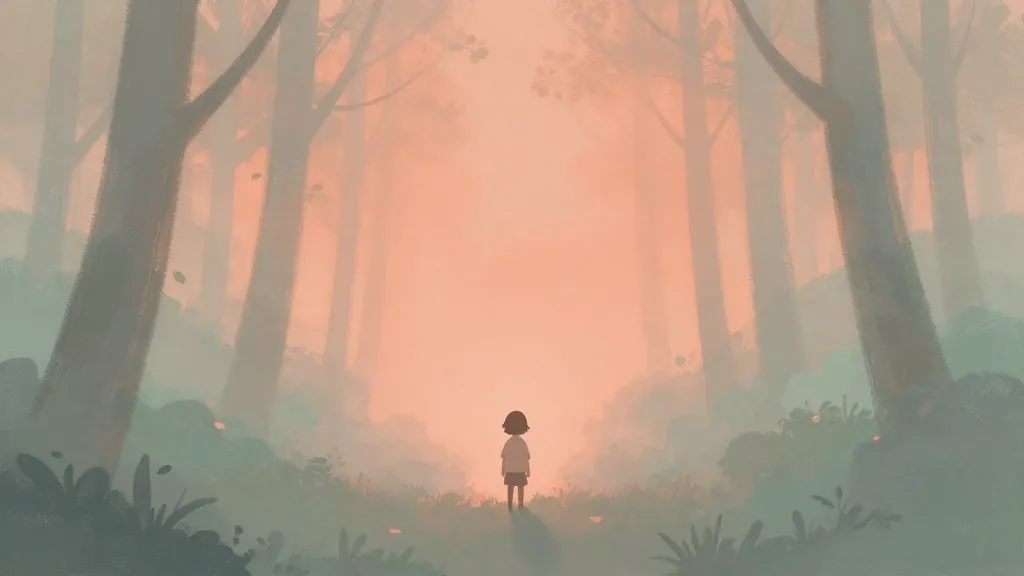
Have you ever wondered why your heart beats like a drum when you hear a strange noise at night?
Fear is one of the oldest feelings in human history. It is a powerful survival instinct designed to keep us safe, but it can also feel like a loud, bossy guest who won't leave the party. By looking at how humans have understood fear through the ages, we can learn how to live with this internal alarm without letting it take charge.
Imagine you are sitting by a small, crackling fire fifty thousand years ago. The sun has dipped below the horizon, and the world outside the firelight is a deep, velvety black.
Every snap of a twig or rustle of leaves makes your ears prick up. Your body is ready to jump, run, or hide in an instant. This is fear in its oldest, purest form: a guardian protecting you from the shadows.
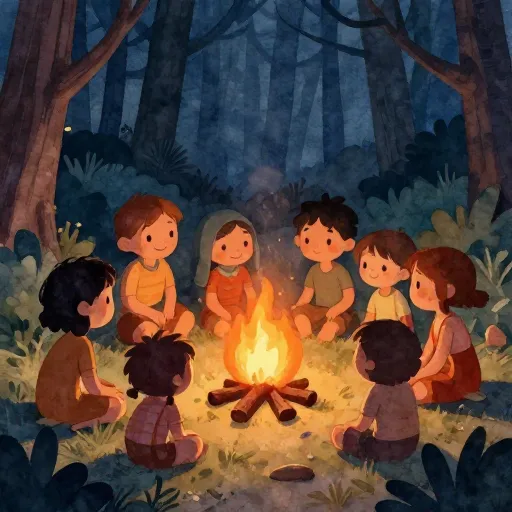
Imagine you are a traveler in the distant past. The forest around you is full of sounds you don't recognize. Your fear is like a golden thread connecting you to the rest of your tribe: it keeps you all together, alert, and safe in a world that is much bigger than you are.
In these ancient times, fear was not something people tried to "get rid of" or fix. It was a tool, as useful as a sharpened stone or a warm fur cloak.
If your ancestors had not felt that sharp jolt of terror when they saw a predator, they might not have survived to tell their stories. Fear was the reason they stayed alert, worked together, and lived to see the next sunrise.
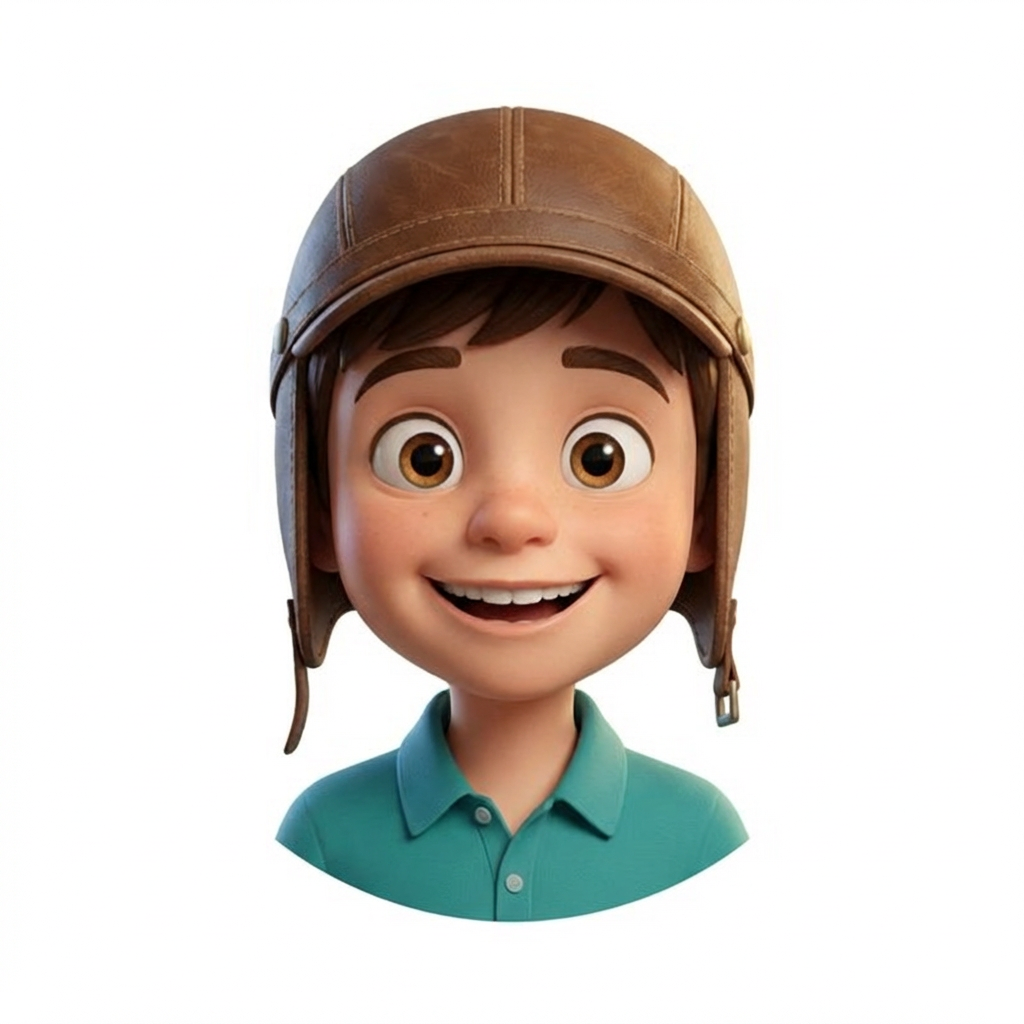
Finn says:
"My heart is doing that thumpy thing right now just thinking about that prehistoric campfire. Is it weird that I can feel it in my chest even when nothing is actually happening?"
The Alarm System in Your Brain
Even though we don't usually face sabre-toothed cats anymore, our brains still use the exact same hardware. Deep inside your head is a tiny, almond-shaped part called the amygdala.
Think of the amygdala as your body's personal security guard. Its only job is to scan the world for danger and press the "Panic" button whenever it finds something suspicious.
When that button is pressed, your body goes through a massive change. Your heart pumps faster to send blood to your muscles, and your breathing speeds up to get more oxygen.
Scientists call this the fight-or-flight response. It is a biological miracle that transforms you from a quiet student into a high-speed machine ready for action.
The young and the old of widely different races, both with man and animals, express the same state of mind by the same movements.
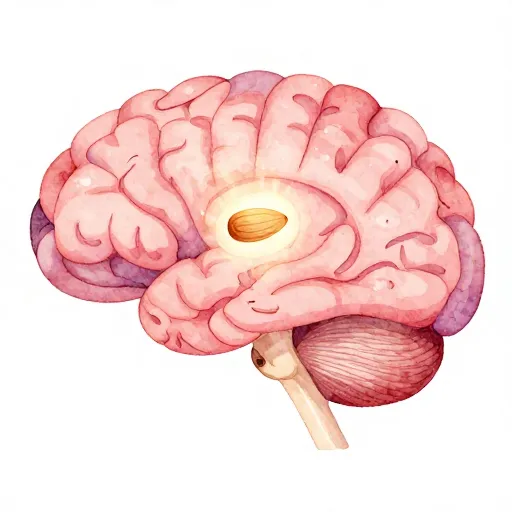
Your amygdala can react to a threat in just 20 milliseconds. That is faster than the blink of an eye! It sends signals to your body before your 'thinking' brain even realizes what you are looking at.
The Stoic Secret: Real vs. Imagined
Around two thousand years ago, thinkers in Ancient Greece and Rome began to notice something strange about fear. They realized that we aren't just afraid of real things, like falling or getting bitten by a snake.
We are often afraid of things that haven't even happened yet. These philosophers were called Stoics, and they spent a lot of time studying the human mind.
A famous Stoic named Seneca noticed that our minds are like master storytellers. They can take a small worry and turn it into a giant monster.
If you have a test tomorrow, your amygdala might react as if a wolf is at the door. The Stoics taught that while we cannot always stop the feeling of fear, we can look at the "story" our mind is telling and ask if it is true.

Mira says:
"It's like the Stoics were saying we have a built-in movie theater in our heads. Sometimes the movies are just too scary, and we have to remind ourselves that we're the ones holding the remote."

We are more often frightened than hurt: and we suffer more from imagination than from reality.
The Stoics believed that fear is a mistake of the mind. If we use logic and reason, we can see that most of our fears aren't based on reality.
Modern psychologists often say that fear is a vital signal. We shouldn't try to think it away: we should listen to it, feel it, and then decide what to do.
Fear Through the Ages
As centuries passed, the way humans viewed fear began to shift. In the Middle Ages, people often thought of fear as something that came from outside themselves, like spirits or monsters.
But during the Enlightenment, scientists began to look inward. They wanted to understand the mechanics of the human heart and why we react the way we do.
In the 1800s, Charles Darwin traveled the world to study animals and humans. He noticed that fear looks the same in almost every creature.
A frightened dog tucks its tail, and a frightened human pulls their shoulders up. Darwin realized that these expressions are a universal language. Fear is a bridge that connects us to every other living thing on Earth.
Through the Ages
The Power of Understanding
By the early 1900s, scientists like Marie Curie were proving that the best way to handle fear was to replace it with knowledge. Curie was a brilliant physicist who studied radioactivity, which was a mysterious and scary force at the time.
She believed that many of the things that terrify us only do so because we don't understand how they work. Once we shine a light on the unknown, it becomes much less powerful.

Nothing in life is to be feared, it is only to be understood. Now is the time to understand more, so that we may fear less.
Curie didn't mean that we should never be careful. She meant that understanding the things we fear gives us agency, which is the power to make our own choices.
When you understand that the "ghost" in your room is actually the shadow of a tree, the fear doesn't just go away: it transforms into information. You go from being a victim of the dark to being an explorer of your environment.
The next time you feel a 'phantom fear' (like being scared of the dark), try to become a scientist like Marie Curie. Turn on the light and describe exactly what you see. 'The shadow is being made by my chair.' Naming the things around you helps your thinking brain take back control from your alarm system.
The Holding Environment
In the mid-20th century, a psychologist named Donald Winnicott introduced a beautiful idea called the holding environment. He was interested in how children learn to handle big, messy feelings like fear.
Winnicott suggested that when a child is scared, they need a safe space where they can feel that fear without it overwhelming them. This space is "held" by the adults in their lives.
Containment doesn't mean the adult makes the fear vanish. It means the adult stays calm and steady, like a sturdy container for a splashing liquid.
They help you hold the feeling until you are strong enough to hold it yourself. Over time, you learn that you are bigger than your fear. You can feel the heartbeat and the shaky hands, and you can say, "I feel scared right now, and that is okay."
Mira says:
"I like the idea of a 'holding environment.' It’s like when you’re learning to ride a bike and someone holds the back of the seat. You're still doing the riding, but you're not doing it alone."
The word 'fear' comes from an old word meaning 'danger' or 'sudden attack.' But the word 'courage' comes from 'cor,' the Latin word for 'heart.' To have courage is to bring your whole heart to a scary situation.
Living With the Alarm
Today, we know that fear is not a sign of weakness. In fact, you cannot have courage without fear. Courage isn't the absence of feeling scared: it is the decision that something else is more important than the fear you feel.
Think of fear as a loud, nervous friend who is trying to protect you. You can listen to what they have to say, but you don't have to let them drive the car.
You can acknowledge the alarm, check to see if there is a real fire, and then decide how you want to move forward. This is the goal of psychology: not to be fearless, but to be brave while we are afraid.
Something to Think About
If your fear could speak in a calm, quiet voice, what do you think it would be trying to tell you?
There is no right or wrong answer to this. Sometimes fear is trying to protect us, and sometimes it is just practicing for the future. What do you think your fear wants you to know?
Questions About Psychology
Why am I afraid of things that aren't actually dangerous?
Is it possible to never feel afraid?
How can I help a friend who is feeling scared?
The Explorer’s Path
Fear is a permanent part of the human journey. It is the guardian at the gate of the unknown, reminding us that we are alive and that the world is a big place. By understanding where it comes from and how it works, we don't become 'fearless,' but we do become much better at exploring the shadows with our hearts wide open.